Instagram
 Facebook
 Tiktok
 Youtube
 X
X LinkedIn
 (501) 224-1044

You’ve thought about this for a while now. Maybe the consultation is already on your calendar, or maybe you’re still turning the idea over in your head. Either way, there’s a quiet worry that keeps showing up, the kind you haven’t quite said out loud yet: what if something goes wrong?
Please know that worry doesn’t make you overly cautious, and it doesn’t mean you’re second guessing yourself. It means you care about your body and your future, and you want to make this decision with your eyes open. That’s exactly the right place to start.
Here’s something that might help settle some of that unease. In a study of more than 55,000 tummy tuck patients, only 2.1 percent experienced a major complication, meaning 97.9 percent recovered without serious issue. For the small number who did run into a concern, most were resolved with straightforward follow-up care, the kind of attentive support a good surgical team provides as a matter of routine.
At Dr. Suzanne Yee Cosmetic & Laser Surgery Center in Little Rock, your questions about safety aren’t treated as an obstacle to work around. In the sections ahead, we’ll look at what the research actually says about tummy tuck risks, who tends to face higher odds, and the concrete steps, many of them simpler than you’d expect, that keep those odds low.
Key takeaways
- The overall major complication rate for abdominoplasty is two to four percent across large studies, with the most common concerns being fluid collection, minor bruising beneath the skin, and temporary changes in sensation.
- Smoking, a BMI over 30, and combining multiple procedures at once are the strongest predictors of complications, but each of these factors can be managed or reduced before surgery.
- Choosing a board-certified cosmetic surgeon who operates in an accredited facility is the single most impactful step you can take to lower your risk.
- Normal side effects like swelling, tightness, and temporary numbness are part of healing and typically resolve within a few weeks to a few months.
- Most patients return to desk work in two to three weeks and resume full exercise by six to eight weeks after surgery.
What are the most common risks and complications of a tummy tuck?
Every surgical procedure carries some degree of risk, and a tummy tuck is no exception. The good news is that serious concerns are genuinely uncommon. Most of what patients experience falls into the category of expected, manageable side effects rather than true medical emergencies. Most of these risks tie directly to the muscle tightening and skin removal that define plastic surgery tummy tuck, so understanding the procedure helps you weigh them.
Here’s a quick look at how common each concern tends to be, based on published research.
| Concern | How often it occurs | Typical management |
|---|---|---|
| Seroma (fluid collection) | 10 to 25 percent | Drainage with a small needle, resolves in days |
| Infection | 1 to 3.8 percent | Antibiotics, wound care |
| Hematoma (bruising under skin) | 0.7 to 5.8 percent | Compression, occasionally minor drainage |
| Numbness or sensation changes | Common, temporary | Resolves over weeks to months |
| Wound healing delay | 6 to 10 percent | Follow-up wound care |
Anesthesia
General anesthesia is standard for a tummy tuck, and it’s one of the safest parts of the process. Common reactions like mild nausea, a sore throat, or brief shivering after waking up typically resolve within 24 hours.
Serious anesthesia events are rare. Your Certified Registered Nurse Anesthetist (CRNA) reviews your full medical history beforehand to catch anything that needs special attention.
Bleeding, infection, and fluid collection
These are the concerns patients ask about most, and they’re also among the most well-studied.
Fluid collection, sometimes called seroma, is the most common issue. It happens when your body produces extra fluid in the area where tissue was repositioned. Your surgeon manages this with drainage techniques, though in many cases your body reabsorbs the fluid on its own.
Infections occur in a small percentage of patients and are typically caught early at follow-up visits. Preventive antibiotics and proper wound care reduce the risk even further.
Scarring and sensation changes
A horizontal scar below the underwear line is a lasting part of the procedure, but it fades significantly over the first year. Your surgeon places the incision low enough that clothing and swimwear cover it completely.
Changes in skin sensation are common in the weeks after surgery. Because a tummy tuck can affect nerves in the abdominal area, a lot of patients report feeling tingling or losing sensation in the surgical area. Normal sensations usually come back in the months after the surgery.
Wound healing and revision
Poor wound healing, where the incision edges separate slightly or take longer to close, affects roughly six to 10 percent of patients. Smokers and patients with diabetes face higher odds here. Following your surgeon’s wound care instructions carefully makes a meaningful difference.
Revision procedures for minor scar irregularities are not unusual. Many patients choose a small touch-up procedure at some point, often years later, to refine the scar or address a minor cosmetic detail.
Feeling concerned about these possibilities is completely natural. Knowing what to watch for, and knowing that each of these concerns has a clear management plan, can ease some of that worry.
If you’re weighing these risks against your goals, reach out to our team for a straightforward conversation about what to expect.
Who is at higher risk for tummy tuck complications?
Not everyone faces the same odds. Certain factors can shift your personal risk profile, and understanding them beforehand gives you a chance to address what you can and make an informed decision about timing.
Smoking and elevated BMI
These are the two risk factors that come up most in the medical literature. Smoking narrows blood vessels and slows healing, and the National Library of Medicine reports that it increases the risk of complications arising after surgery. Most surgeons tend to agree, and require patients to stop smoking at least six weeks before surgery.
A BMI of 30 or higher increases the chance of complications by about 1.3 times. Reaching a stable, healthy weight before your procedure is one of the most effective things you can do to lower your risk.
Combined procedures
Combining liposuction or other body contouring with your tummy tuck is common and, with careful planning, safe for well-chosen patients. More extensive combinations do ask a bit more of your body. The ASPS analysis noted that 65 percent of the procedures in their database were combined cases.
That said, a more recent analysis of 55,000 patients found no significant difference when a tummy tuck was combined with breast surgery specifically. The risk depends on the type and extent of what’s being combined. Your surgeon evaluates this on a case-by-case basis.
Age, diabetes, and prior abdominal surgery
Patients over 55 face a moderately higher relative risk, about 1.4 times the baseline. Diabetes also increases wound healing concerns, with one meta-analysis of 79,000 patients finding wound-related issues at roughly 2.5 times the rate seen in patients without diabetes.
If you’ve had prior abdominal surgery, scar tissue from earlier procedures can affect healing. This isn’t a disqualifier, but it’s something your surgeon needs to know about and plan around.
None of these factors are absolute deal-breakers. They’re pieces of a puzzle that your surgeon uses to create a safer, more personalized plan for you.
Kim, a Dr. Suzanne Yee Cosmetic & Laser Surgery Center patient who is over the age of 55, was still able to have her surgery and describes her experience:
“I’m 62 and decided I needed some changes. I had a breast reduction/lift, tummy tuck and liposuction. My experience at this clinic was amazing. My pain was minimal. Which was one thing I worried about beforehand. The staff was so kind and very helpful. Answered all my questions. I did my research before coming to the decision to use Dr. Yee. I would recommend Dr. Yee for all my cosmetic surgeries.”
How can you lower your tummy tuck risks?
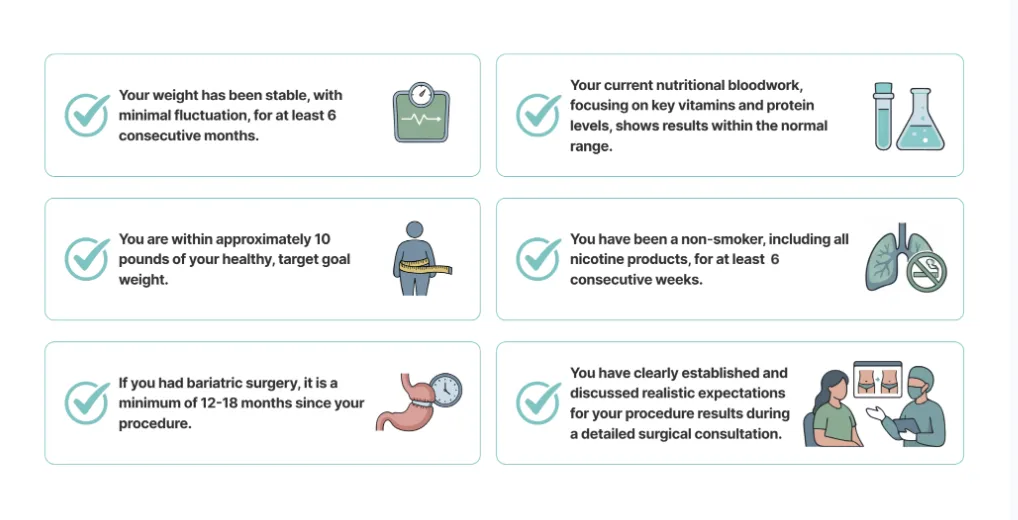
It’s understandable if you’re intimidated by the thought of putting your life in someone else’s hands, but luckily, you have more power than you might think. The gap between a smooth recovery and a complicated one often comes down to preparation. The choices you make before and after surgery have a direct impact on your outcome, and most of them are within your control.
Choosing your surgeon
This is the single most important decision you’ll make. A board-certified cosmetic surgeon who operates in an accredited facility brings training, experience, and safety infrastructure that directly reduces your risk. Certification through organizations like the ABCS requires comprehensive exams and a practice dedicated to cosmetic surgery.
Among board certified plastic surgery clinic options in Little Rock, Dr. Yee’s AAAHC-accredited surgical center includes recovery room nurses certified in advanced cardiac life support. Patients are connected to monitoring equipment throughout the procedure and recovery. This level of infrastructure is something worth asking about when evaluating any practice.
An in-person consultation is your chance to evaluate the surgeon just as much as they evaluate you. It’s a two-way conversation, not an audition. You’ll see the facility where your procedure would take place, meet the team, and ask every question that’s on your mind.
Pre-surgery preparation
Lab testing, a medical evaluation, and adjusting certain medications are standard steps. If you take blood thinners, aspirin, or certain supplements, your surgeon will likely ask you to pause them to reduce bleeding risk.
Optimizing your nutrition in the months leading up to surgery gives your body the best foundation for healing.
Quitting smoking and maintaining weight
If you smoke, stopping at least six weeks before surgery can reduce your infection risk by roughly three times and your pneumonia risk by six times. This is one of the highest-impact changes you can make.
Reaching and holding a stable weight for at least six months before your procedure means your results are more likely to last, and your body is in a stronger position to heal.

Post-operative care
Wearing your compression garment for six weeks, keeping incisions clean, and taking prescribed medications all play a role in preventing fluid collection and infection. Early walking, starting the day after surgery, promotes blood flow and reduces the risk of blood clots.
Your surgeon’s post-op instructions exist for a reason. Following them closely is the most effective thing you can do during recovery.
Taking the time to prepare, both physically and by choosing the right team, puts you in the strongest possible position. To help make your goals more accessible, the office offers flexible financing through Cherry, Alphaeon Credit, CareCredit, PatientFi, and Alle, so you can choose a payment plan that fits your budget.
Schedule a consultation to discuss your options in a comfortable, no-pressure setting.
What side effects and recovery challenges should you expect?
One of the kindest things you can do for yourself before surgery is to learn what recovery actually looks and feels like, not the worst case version your imagination might come up with, but the real, day-by-day picture most patients experience. When you know what’s normal and when to expect it, the process feels a lot less scary. It also helps you recognize the difference between “this is part of healing” and “I should call my surgeon.”
Pain, swelling, and bruising
Let’s be honest: the first few days aren’t the most comfortable. Most patients feel the peak of their discomfort within the first three to five days, and then it steadily gets better from there. Your surgeon will make sure you have what you need to stay comfortable, whether that’s prescription pain medication, over-the-counter options as you improve, or long-acting numbing agents placed during surgery that can keep soreness at bay for up to 48 hours.
Swelling and bruising can look alarming when you first see them, but they’re actually signs that your body is doing exactly what it’s supposed to do. They tend to be most noticeable in the first one to two weeks and then gradually fade over the following months. By around the three-month mark, most patients see a real difference, and the swelling that worried them early on has largely resolved.
Numbness and tightness
Temporary numbness across parts of your abdomen is one of the most common things patients notice, and it can feel unsettling if you’re not expecting it. It happens because small sensory nerves in the area are affected during surgery, and your body needs time to restore those connections. For most people, sensation gradually returns over the weeks and months that follow. Some patients notice subtle differences in how certain areas feel for up to a year, but this is normal and not something to worry about.
That tight, pulling feeling across your midsection? Also completely normal. It comes from the muscle repair and skin tightening that are central to your results. It can feel strange at first, almost like your body is adjusting to its new shape, because that’s exactly what’s happening. It eases steadily as your tissues settle into place.
Activity restrictions and returning to daily life
For the first couple of weeks, you’ll want to rest in a slightly bent position to take tension off your incision, and that’s a good excuse to let the people around you take care of you for a little while. Light walking, even just around the house, starts on day one. It might not feel like much, but those short, gentle walks are one of the most important things you can do. They support circulation, help prevent blood clots, and give your body a signal that recovery is underway.
Most patients feel ready to return to desk work within two to three weeks. If your job is more physical or you’re eager to get back to the gym, that typically takes four to six weeks. Your surgeon will clear you for full activity, including workouts and swimming, around the six to eight week mark.
Follow-up visits begin the day after your procedure and continue in the weeks that follow. These check-ins are there to catch anything early and to give you space to ask the questions that come up as you heal. Arranging post-surgery care and help at home before your procedure, even something as simple as having meals prepared and a comfortable resting spot set up, can make those first few days feel much more manageable.
Here’s something almost every patient says afterward: the hardest part of recovery wasn’t the pain. It was waiting. Healing takes time, and when you’re in the middle of it, the days can feel long. But your body is doing incredible work beneath the surface, and the results are worth the patience.
How safe is a tummy tuck overall?

When you step back and look at the data as a whole, the picture is encouraging. Abdominoplasty is one of the most researched cosmetic procedures, and decades of published data consistently show that the vast majority of patients have straightforward recoveries.
Different procedure types carry slightly different risk profiles. A fleur-de-lis abdominoplasty, which involves an additional vertical incision for patients with significant skin laxity, shows similar overall complication rates to the traditional approach, around five percent for major concerns.
If you’re still getting familiar with the basics, our complete guide to what a tummy tuck involves breaks down each step.
For patients with elevated risk factors, a staged approach, where procedures are done separately, is often the safer path. Your surgeon evaluates each patient individually, matching the procedure plan to your anatomy, your health profile, and your goals.
But numbers only tell part of the story. What the data can’t capture is what it actually feels like to go through the process, the nerves beforehand, the relief afterward, and the moment you realize your recovery is going better than you expected.
Kayla B., a Dr. Suzanne Yee Cosmetic & Laser Surgery Center patient, knows that feeling well. As someone who struggles with anxiety, the idea of surgery carried an extra layer of worry:
“In June of 2024 I had a tummy tuck. Dr. Yee and her staff were very kind and caring. I struggle with bad anxiety and they always make me feel relaxed and comfortable before and after surgery. My recovery went very smoothly, I was shocked that I experienced little to no pain in the days after surgery. My scar is now over a year old and it’s way less visible than I ever expected. So happy with my results and I will continue services with Dr. Yee and her staff in the future.”
Doing this research, reading the data, and asking tough questions is the right approach. Request an appointment to discuss how these numbers apply to your specific situation.
Conclusion
If you’ve made it this far, it probably means you came here carrying a question that felt heavier than it sounds: is this safe enough for me?
That’s not a small question, and you deserve more than a vague reassurance in response. Hopefully, after walking through the research, the risk factors, and the real steps that keep complications low, that weight feels a little lighter now. You don’t have to make this decision from a place of fear. You have the information to make it from a place of clarity.
And you don’t have to figure out the rest on your own, either. Browsing real patient photos that match your starting point is one of the most grounding things you can do next. There’s something powerful about seeing someone who looked like you before and seeing where they are now. When you’re ready to take the next step, a personal consultation fills in the details that no amount of online research can, like how your specific body, your health history, and your goals all come together into a plan that’s truly yours.
At Dr. Yee’s Little Rock office, the belief is simple: every patient deserves to feel heard, respected, and genuinely confident in the choices they’re making. The philosophy here is enhancement, not transformation, which means your safety and your goals aren’t competing priorities. They carry equal weight, every single time.
Whenever you’re ready, the team is here. Schedule your personal consultation or call (501) 365-9319 to start the conversation.
Frequently asked questions
What is seroma and how is it treated?
Seroma is a collection of clear fluid that can build up under the skin after surgery. It’s the most common concern after a tummy tuck. Your surgeon treats it by draining the fluid with a small needle, although in many cases, your body reabsorbs it naturally within a few days.
Is infection common after a tummy tuck?
Infections after abdominoplasty are uncommon. Preventive antibiotics given before and after surgery, along with proper wound care, keep the odds low. When an infection does occur, it’s typically caught early at a follow-up visit and treated with antibiotics.
Does a tummy tuck increase blood clot risk?
Any surgery that involves general anesthesia and reduced mobility carries some blood clot risk. Walking on the first day after surgery and continuing light movement throughout recovery is one of the most effective ways to lower this risk. Compression garments also help promote healthy blood flow.
Can a tummy tuck cause permanent numbness?
Changes in skin sensation are common after a tummy tuck and usually improve over several months as nerves heal. Some patients notice subtle, lasting differences in how certain areas of their abdomen feel, but complete permanent numbness is rare.
What percentage of tummy tucks have major complications?
Major complications, including significant bleeding, infection requiring intervention, and blood clots, occur in roughly two to four percent of cases. The vast majority of patients recover without any serious concerns.
Can I get a tummy tuck if I smoke?
Smoking significantly increases the risk of poor wound healing, infection, and tissue damage. Most cosmetic surgeons require patients to quit at least six weeks before surgery. Quitting also improves your overall recovery timeline.
Are tummy tucks safe if I have a higher BMI?
A BMI of 30 or above increases complication risk, so most surgeons recommend reaching a stable, healthy weight before scheduling surgery. Working toward a lower BMI before your procedure gives you better healing odds and more satisfying results.
Should I avoid a tummy tuck if I’m planning a pregnancy?
Pregnancy can stretch the skin and muscles that were tightened during surgery, potentially undoing your results. Most cosmetic surgeons recommend waiting until you’re done having children before scheduling an abdominoplasty.
How does a surgeon’s experience affect safety?
A surgeon’s training, certification, and case volume all play a role in outcomes. Board certification through organizations like ABCS requires dedicated training in cosmetic procedures. Operating in an accredited facility with an experienced support team brings an additional layer of safety infrastructure to every procedure.
*Disclaimer: This content is for educational purposes only and does not constitute medical advice. A consultation with a qualified board-certified surgeon is required to determine the best treatment plan for your individual needs and any questions you may have about a medical condition or procedure.