
 (501) 224-1044
BREAST IMPLANTS · LITTLE ROCK, AR
Breast Augmentation
Small breasts can affect how you feel in your clothes, in photographs, and in your own skin. Breast augmentation changes the size and shape of your breasts to complement your figure. Dr. Homayoun Pournik, a fellowship-trained cosmetic surgeon at Dr. Suzanne Yee Cosmetic & Laser Surgery Center, offers personally tailored breast implants.
1–2 hrs
Time for most procedures under general anesthesia
~5–7 days
Back to desk work for most patients
3–6 mos
Implants settle into final position
What breast implants can improve
Breast augmentation is one of the most commonly performed cosmetic procedures in the country, with about 300,000 women choosing it each year. Patients come in wanting to increase the size of naturally small breasts, even out asymmetry, restore volume lost after pregnancy or weight loss, or bring their proportions into balance.
SIZE
Volume you have never had, or lost
Whether you have had underdeveloped breasts since adolescence or lost volume after pregnancy or weight loss, a full range of implant sizes is available to reach the cup size you want while keeping the result natural.
SHAPE
Projection and contour
If your breast tissue is unbalanced, or your breasts lack the shape you want, implants can give a more pleasing, feminine projection.
BALANCE
Breasts that match
Many women are self-conscious that their breasts are different sizes. Implants are selected individually to restore balance and create a proportionate bustline.
How clothes fit
Silhouette
Underdeveloped breasts can leave your figure out of proportion. Augmentation can create the hourglass shape many women want, which changes how clothing fits.
Silicone vs. saline implants
The practice offers both. Both come in many sizes and profiles to fit different body types, and your surgeon will help determine the right implant type, placement, and incision location at your consultation.
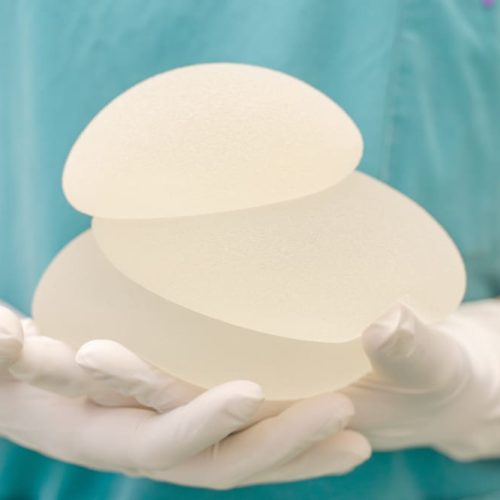
Silicone implants
Pre-filled with silicone gel. Typically more expensive than saline, but many patients prefer the natural look and feel. They sit higher on the chest and are usually undetectable to the touch. If one ruptures it can take time to deflate, and because silicone gel is not absorbed by the body it should be removed or replaced promptly.
- Feel: most natural
- Cost: higher
- Rupture: slow, needs prompt removal

Natrelle® 410 gummy bear
Teardrop-shaped implants made of a highly cohesive gel. Their shape and composition make them feel like natural breast tissue and give a natural contour, mimicking the droop that occurs in the lower half of the breast.
- Shape: teardrop
- Feel: like breast tissue
- Contour: most natural droop

Saline implants
Filled with a safe saline solution after insertion, so they need smaller incisions and cost less. Natural in shape and soft, though firmer than silicone, and they can show rippling in women with very little existing breast tissue. A rupture is obvious within minutes or hours, and the saline is safely absorbed.
- Cost: lower
- Incision: smaller
- Rupture: obvious and safe
Are you a candidate?
You are considered a good candidate if you are:
- In good overall health. Pre-existing conditions raise surgical risk. You should be at a stable weight and not smoking, or willing to quit before surgery.
- Finished having children. Pregnancy and breastfeeding significantly affect results, so completing your family first is the recommendation.
- Realistic about what it can do. Augmentation can dramatically change your breasts, but it has limits. Clear communication about your goals is what produces the highest satisfaction.
- Unhappy with your breast size or shape, and doing it for yourself. If small, asymmetrical, or deflated breasts cause you daily stress, you are likely a good candidate. But this should be your decision, not someone else’s.
Concerned about sagging?
Breast augmentation alone does not address significant sagging or excess skin from pregnancy or weight loss. Your surgeon will evaluate your skin elasticity and talk through the options; a lift may be the better answer, or the two together.
What to expect on procedure day
- Step 1 – Anesthesia: Breast augmentation is performed under general anesthesia in the practice’s accredited surgical facility in Little Rock. Most procedures take about an hour, though that varies with technique and whether anything else is done at the same time.
- Step 2 – Incisions: Discreet incisions are placed based on your anatomy and implant type, inframammary, under the breast fold, which is the most common route for natural results; or periareolar, around the nipple.
- Step 3 – Placement: Implants are positioned either submuscular, under the pectoral muscle for a more natural appearance and easier mammogram reading, or subglandular, above the muscle and under the breast tissue. Saline implants are filled after placement to reach the exact size.
- Step 4 – Closure: Once the implants are positioned, the incisions are closed with meticulous suturing to minimize scarring.
- Step 5 – Recovery: You wear a supportive surgical bra during initial recovery to support healing and implant positioning. You will see the size change right away, but the final result may take up to a year as the implants settle lower and begin to look more natural.
Recovery and results
Recovery is gradual. Most patients are back to work within a week, while final results settle over several months.

- FIRST WEEK
Mild to moderate swelling and bruising, tightness in the chest, some discomfort managed with prescribed medication, and restrictions on lifting and strenuous activity. You return to the Little Rock office about a week after surgery for your first follow-up. - DAYS 3 TO 5
Many patients return to desk work. - WEEKS 2 TO 3
Light exercise is approved. You will wear a supportive post-surgical garment for several weeks. - WEEKS 4 TO 6
Upper body workouts resume. Most patients are back to all activities by six weeks. Back sleeping is typically needed for 4 to 6 weeks; side sleeping usually resumes after 6. - UP TO 1 YEAR
Implants settle into their permanent position and the result reaches its most natural appearance. Supportive bras and a stable weight protect it.
Why choose a board-certified surgeon
Breast augmentation is a procedure where judgment matters as much as technique. Implant size, profile, and placement above or below the muscle all interact with your existing anatomy, and the wrong combination shows up years later rather than in the first month.
Serious complications are uncommon, but risks exist, including capsular contracture, changes in nipple sensation, and the likelihood that implants need revision at some point. Dr. Pournik reviews your specific risks at consultation so you can decide with full information.
WHAT SETS DR. POURNIK APART?
- Board certified by the American Board of Surgery
- High-volume fellowship training in breast augmentation, lift, and reduction
- Experience with asymmetry correction and post-weight-loss breast reconstruction
- Honest guidance on implant size and profile, rather than defaulting to the largest option

Related breast and body procedures
Many breast augmentation patients are considering more than one thing. Implants are often combined with a lift for a perkier projection, and mommy makeover patients frequently pair breast work with abdominal contouring. Dr. Pournik’s fellowship training covers all of it.
- Breast Lift
- Breast Reduction
- Mommy Makeover
- Tummy Tuck
- Liposuction
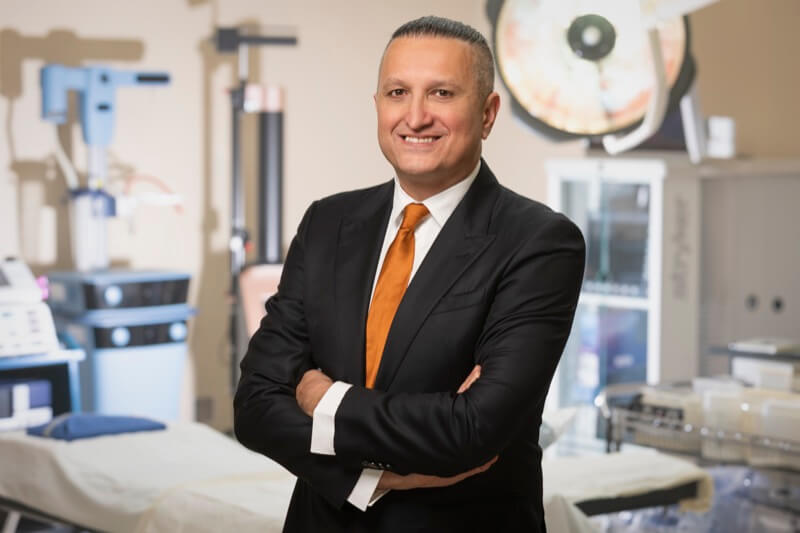
WHY CHOOSE DR. Pournik
Homayoun Pournik, MD
- Fellowship-Trained Cosmetic Surgeon
For twelve years, Dr. Pournik performed some of the most technically demanding surgery in modern medicine, such as removing kidneys from living donors with robotic precision and transplanting them into patients whose lives depended on it. He completed around 300 organ transplants and became the first surgeon to perform robotic kidney transplant in both California and North Carolina.
That precision is what he now brings to cosmetic surgery. His fellowship, through the American Academy of Cosmetic Surgery at one of the country’s highest-volume body contouring centers, took in roughly 1,800 procedures in a single year with breast augmentation, lift, and reduction among them, including refinements for asymmetry and post-weight-loss reconstruction.
“It’s very hard to scare me in the operating room, because I’ve taken the engine out and put it back in.”
He asks every patient the same question at every follow-up, day one, one week, six months out. Are you happy? “Nobody knows their body better than the patient,” he says. “I see them for five minutes. They’re seeing themselves for the rest of their life.”
BOARD CERTIFICATIONS & AFFILIATIONS

REAL PATIENTS
Before & After
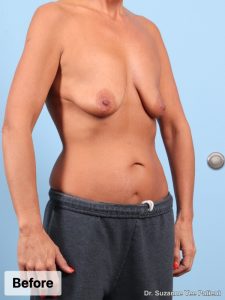

Sensitive Content
These before and after photos contain nudity. Please click/tap to view the images.


Sensitive Content
These before and after photos contain nudity. Please click/tap to view the images.


Sensitive Content
These before and after photos contain nudity. Please click/tap to view the images.
Sensitive Content
These before and after photos contain nudity. Please click/tap to view the images.


Sensitive Content
These before and after photos contain nudity. Please click/tap to view the images.
CONTACT US
Schedule your breast augmentation consultation
You will be treated with discretion and respect. Dr. Pournik will talk through your goals, your health history, implant options, incision locations, and recovery and he will be honest about what breast augmentation can and cannot achieve.
Frequently asked questions
Most patients need to sleep on their back for 4 to 6 weeks to allow proper implant positioning and healing. Side sleeping typically resumes after 6 weeks, though it varies by individual and surgical approach.
Pain varies with your tolerance, implant placement, and technique. Most patients have soreness and tightness for the first 2 to 3 weeks, with significant improvement by one month. Many manage discomfort with non-narcotic pain relievers.
Breast implants do not cause breast cancer and do not raise your risk of developing it. Textured implants have been linked to a rare condition called BIA-ALCL.
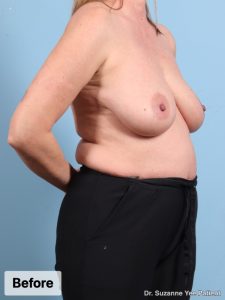
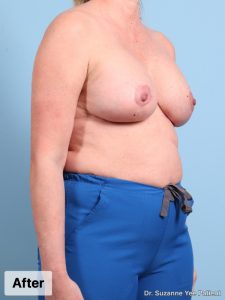
That is the goal. Implant selection is based on your body proportions, existing tissue, and lifestyle, and the before-and-after gallery shows what the practice achieves.
Most women can, especially with submuscular placement and inframammary incisions, which do not affect milk ducts or nipple sensitivity. That said, completing your family first is the recommendation, since pregnancy and breastfeeding change your results.
Rare, but real: capsular contracture, implant rupture or leakage, changes in nipple sensation, implant malposition, and infection. Choosing an experienced surgeon and following post-op instructions is what keeps them low.
Most last 10 to 15 years or longer, though they are not lifetime devices. Regular monitoring and mammograms track their condition, and many patients replace them after 10 to 15 years to maintain appearance or change size.
There is no expiration date, but replacement after 10 to 15 years is the general recommendation. Some patients go earlier to change size or implant type, or to address changes from aging or lifestyle.
None. “Boob job” is the colloquial term for the same procedure. The practice uses the medical term, but plenty of patients search the other one.

 Instagram
 Facebook
 Tiktok
 Youtube
 X
X LinkedIn