Instagram
 Facebook
 Tiktok
 Youtube
 X
X LinkedIn
 (501) 224-1044

Stomach liposuction targets one specific thing: the soft, pinchable layer of fat just under the skin. It cannot touch the deeper visceral fat packed around your organs, the kind that responds to diet and exercise. That distinction is the most important thing to grasp before considering it, because it defines both what the procedure can do and who it suits.
It works by passing a thin tube called a cannula through tiny incisions to remove that subcutaneous layer and refine the contour of the abdomen. It is a shaping tool, not a weight-loss surgery, which is why it fits people already near a stable weight who are bothered by a stubborn lower-belly pocket rather than overall size. It is also extremely common, with 2,087,189 liposuction procedures performed globally in 2024 according to ISAPS.
At Dr. Suzanne Yee Cosmetic & Laser Surgery Center in Little Rock, the goal with stomach liposuction is refinement, not transformation. This guide covers who makes a good candidate, the techniques available, how the procedure works, what recovery involves, the results you can realistically expect, and what it costs.
Key takeaways
- Stomach liposuction removes the pinchable subcutaneous fat to refine your contour. It isn’t a weight-loss surgery, and it can’t reach the deeper visceral fat around your organs.
- The best candidates are close to a stable goal weight with reasonably firm skin. If loose skin or separated abdominal muscles are the real issue, a tummy tuck may suit you better.
- Several techniques exist, including tumescent, ultrasound-assisted VASER, and laser-assisted liposuction. The right one depends on your anatomy and goals, not on which name sounds the most advanced.
- Recovery is manageable for most people. Many return to normal activity within three to five days and regular exercise around two weeks, with final results settling over three to six months.
- The fat cells removed are gone for good, but the cells that remain can still enlarge with weight gain. A stable weight is what protects your results.
Are you a good candidate for stomach liposuction?
Liposuction works best as a finishing touch, not a starting point. The strongest candidates are already close to a stable, healthy weight and want to smooth a specific area that diet and exercise haven’t fully addressed.
If you have spent months frustrated by one stubborn zone, that is exactly the situation liposuction was made for. As a general guide, good candidates have a BMI under 30, sit within about 30 percent of their goal weight, and are in good overall health. Enough skin elasticity matters too, so the skin can settle smoothly afterward.
Being a non-smoker is part of the picture as well. If you do smoke, this is the time to step away from the habit, ideally six weeks before and after surgery. Wanting to feel comfortable in your own clothes again is reason enough to explore your options.
Liposuction or a tummy tuck
This is one of the most common points of confusion, and it is worth slowing down on. Liposuction only removes fat. A tummy tuck does something different, tightening loose skin and repairing abdominal muscles that have separated, often after pregnancy or major weight changes.
| Concern | Stomach liposuction | Tummy tuck |
|---|---|---|
| Stubborn fat pockets | Yes, its main purpose | Often included alongside |
| Loose or hanging skin | Not addressed | Removed and tightened |
| Separated abdominal muscles | Not addressed | Repaired |
| Typical downtime | Shorter | Longer |
The right choice comes down to what is actually bothering you. If it is purely fat, liposuction may be all you need. If skin and muscle are part of the story, a tummy tuck may fit better.
The contouring, not slimming, difference
Here’s the thing many people don’t expect. Liposuction reaches only the fat just under the skin, not the deeper visceral fat wrapped around your organs. A study of women who had large-volume liposuction found their visceral fat and metabolic markers were unchanged afterward.
That is why the scale may barely move even when your shape clearly improves. Thinking of liposuction as contouring rather than slimming keeps your expectations grounded. Once you know what it can and can’t do, the next question is usually how it works.
What are the different types of stomach liposuction?
There isn’t one single way to perform liposuction, and the names can blur together quickly. What they share is the same basic idea, loosening fat and suctioning it out, with different tools used to make that gentler or more precise. You can read more about these liposuction techniques and how they compare.
Tumescent and VASER liposuction
Tumescent liposuction is the foundation for most modern methods. Your surgeon injects a special numbing solution that makes the area firm and shrinks blood vessels, which means less bleeding and an easier recovery.
VASER, or ultrasound-assisted liposuction, adds sound-wave energy that loosens fat before it is removed. Because it is gentler on surrounding tissue, many patients notice less bruising and soreness. Researching these differences before a decision this personal is exactly the right approach.
Laser-assisted liposuction
Laser-assisted options use laser energy delivered through a small cannula to liquefy fat. The same energy interacts with the skin to encourage a little tightening, which can help with mild looseness.
It tends to come with less swelling and bruising than older methods. Whether it suits you depends on your skin and the area being treated, something your surgeon can sort out with you in person.
High-definition sculpting
High-definition techniques remove both surface and deeper fat around the muscles, so the underlying tone shows through for a more athletic look. This is more art than basic fat removal, and it calls for a surgeon with specific advanced training. At Dr. Suzanne Yee Cosmetic & Laser Surgery Center, cosmetic surgeon Dr. Homayoun Pournik brings that focus to body-contouring work like high-definition sculpting.
Non-surgical alternatives
If you aren’t ready for surgery, a few non-invasive options reduce fat without incisions, though results are usually subtler and more gradual. Common choices include:
- CoolSculpting®, which freezes and gradually clears away fat cells.
- EMSCULPT® NEO, which builds muscle while reducing fat.
- Other energy-based treatments that pair mild fat reduction with skin tightening.
These can be a good fit for smaller concerns. For a more defined change, though, they don’t match the sculpting precision of surgery. Once you understand the toolkit, it helps to see how the surgery itself unfolds.
How is stomach liposuction performed?
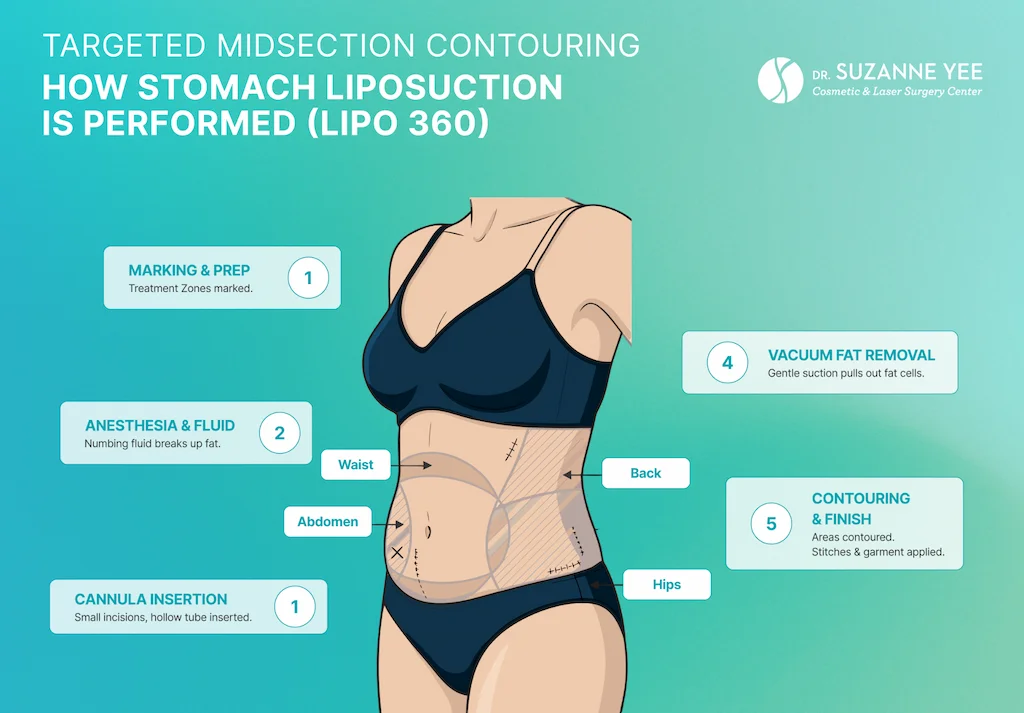
Knowing what actually happens on the day takes a lot of the nervousness out of the decision. Stomach liposuction is usually an outpatient procedure, so you go home the same day. At Dr. Yee‘s accredited Little Rock surgery center, it is done under general anesthesia, so you’re comfortable and won’t feel anything.
For patients who ask who handles that part, general anesthesia is administered by a Certified Registered Nurse Anesthetist (CRNA) as part of the experienced surgical team. Feeling anxious about going under is completely normal, and a calm, well-explained plan is what eases it.
On the day of your procedure
Your surgeon makes a few small, discreet openings near the treatment area. A thin cannula then loosens and gently suctions out the fat. The openings are tiny, and with good aftercare the marks are usually very hard to notice over time.
The procedure can take from about an hour to four or five hours, depending on how much area is treated. Most of that time is spent working carefully, which is exactly what you want for smooth, even results.
Kayla, who worried about pain and scarring before her procedure, shared her experience:
“In June of 2024 I had a tummy tuck. Dr. Yee and her staff were very kind and caring. I struggle with bad anxiety and they always make me feel relaxed and comfortable before and after surgery. My recovery went very smoothly, I was shocked that I experienced little to no pain in the days after surgery. My scar is now over a year old and it’s way less visible than I ever expected.”
Limits on how much fat is removed
Volume matters here, and a good surgeon plans around it. Removing more than about 5 liters of total aspirate (fat plus fluid) in one session is considered large-volume liposuction, which ASPS guidance says should be performed in an accredited facility with closer monitoring for your safety.
When the whole midsection holds onto fat, the stomach can be treated with the flanks and back in one session. Your surgeon will map a plan that fits your anatomy rather than pushing for the most aggressive option. With the procedure clear, the natural next worry is recovery.
What is recovery from stomach lipo like?
The first days call for rest, and that pause can feel frustrating if you’re used to being on the go. Here’s the good news. Recovery is usually more manageable than people fear, and most patients return to normal activity within three to five days.
You can expect to ease back into your regular exercise routine in about two weeks. Mild swelling, bruising, and tenderness are a normal part of healing and settle in a short time. A compression garment supports your new shape while everything calms down, and most patients describe the soreness as similar to a sunburn.
About a week in, you’ll return to the office so your healing can be checked. A few simple habits support a smoother recovery:
- Rest in the first few days, but gentle movement around the house is encouraged early on to support your recovery.
- Wear your compression garment exactly as directed.
- Take short, gentle walks once you’re cleared to move around.
- Stay hydrated and eat nourishing meals.
- Reach out with any question, however small.
If anything feels off, your surgeon would rather hear from you than have you wonder. That kind of open access is part of feeling cared for, so schedule a consultation if you want to talk things through. Once you’ve healed, the question becomes how lasting the change really is.
What results can you expect from stomach fat removal?
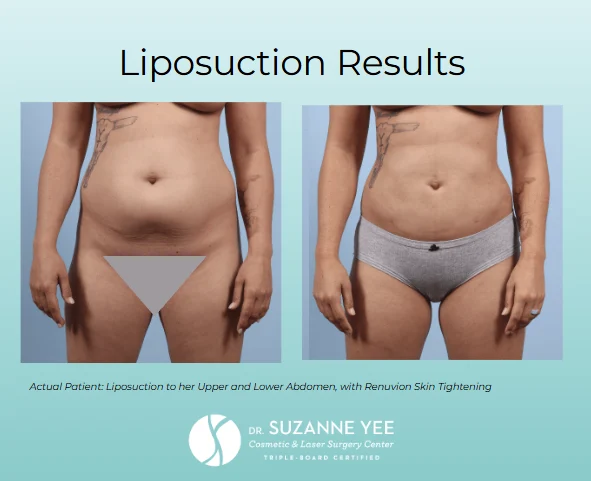
Many patients notice a difference in their shape right away, though swelling can hide the full picture at first. As it fades over the following weeks, your contour keeps refining, with final results typically settling around three to six months.
The change can be genuinely uplifting, especially after working so long for it. The fat cells removed during the procedure are gone for good, which is what makes the results long-lasting.
Kim, who included liposuction among her procedures, shared her experience:
“I’m 62 and decided I needed some changes. I had a breast reduction/lift, tummy tuck and liposuction. My experience at this clinic was amazing. My pain was minimal, which was one thing I worried about beforehand. The staff was so kind and very helpful and answered all my questions. I did my research before coming to the decision to use Dr. Yee. I would recommend Dr. Yee for all my cosmetic surgeries.”
There is an important catch on permanence. While those cells won’t return, the fat cells that remain can still grow with weight gain. One study found a notable share of patients regained some weight within months after the procedure.
A steady weight through balanced eating and regular movement keeps your shape looking its best. One honest note: liposuction smooths and slims, but it doesn’t carve out six-pack definition, since that look comes from muscle rather than fat. Knowing what the procedure realistically delivers makes the cost conversation easier.
How much does stomach liposuction cost, and how do you choose a surgeon?
The financial side can feel stressful when you’re already making a personal decision. There is no single price, because cost depends on the details of your plan. The main factors include:
- The number of areas treated and how much fat is removed.
- The technique used, since some need more time and specialized tools.
- Facility and anesthesia fees.
- Whether liposuction is combined with another procedure.
Insurance does not cover cosmetic liposuction, since it is elective. What helps is knowing exactly what you’re paying for. At Dr. Yee’s Little Rock practice, your quote bundles the surgeon’s fee, anesthesia, facility fees, and follow-up visits into one transparent total. You’re only responsible for your pre-op labs and any prescribed medications.
To keep your goals within reach, the practice offers financing options through Cherry, Alphaeon Credit, CareCredit, PatientFi, and Alle. Knowing your options upfront takes some of the weight off.
Choosing the right surgeon matters even more than the price. Look for a board-certified surgeon, and just as importantly, review their before-and-after photos to see whether their results match the look you want. Researching this carefully before such a personal decision is exactly the right approach.
A consultation isn’t only a chance for the surgeon to evaluate you. It is equally your chance to evaluate her. At Dr. Suzanne Yee Cosmetic & Laser Surgery Center, that visit is in person and unhurried, and nothing is off limits, including questions that feel small.
Before recommending an approach, your surgeon asks about your daily routine, your work, and what you want to feel comfortable doing again. The plan is then built around your anatomy rather than a template. The visit takes place at her AAAHC-accredited surgical center, so you can see exactly where your procedure would happen.
Conclusion
You came here because of that one stubborn area that wouldn’t budge no matter how hard you worked. Now you have a clear picture of whether stomach liposuction is the right tool for it, and how to tell it apart from a tummy tuck.
A good next step is gentle, not rushed. Before-and-after results tell you the most, so browse the photo gallery and look for cases that match your starting point. A personal conversation then fills in the details photos can’t.
Every patient deserves to feel genuinely heard, respected, and confident in their choices. That is the heart of Dr. Suzanne Yee’s approach in Little Rock: exceptional results and genuine care. When the time feels right, reach out to the team or call (501) 493-3661 to start the conversation.
Frequently asked questions
How much weight can you expect to lose from stomach lipo?
Very little, and that is by design. Liposuction is a contouring procedure, not a weight-loss surgery, so the scale may barely change even as your shape clearly improves. Most of the benefit shows up in how your clothes fit.
Can liposuction get rid of visceral belly fat?
No, liposuction only removes the subcutaneous fat just under your skin. The deeper visceral fat around your organs isn’t reachable with liposuction and responds instead to changes in diet, activity, and overall weight.
How long do you have to wear a compression garment after stomach lipo?
A compression garment supports your new shape and helps manage swelling while you heal. Most patients wear one for about six weeks, though the exact timeline depends on your procedure and how your body recovers, so your surgeon gives you a personalized schedule at your follow-up.
Will you have loose skin after stomach liposuction?
It depends on your skin’s elasticity. Firm skin that bounces back well usually settles smoothly over the removed fat. If skin laxity is already a concern, your surgeon may suggest a skin-tightening option or a different procedure.
How long does swelling last after abdominal liposuction?
Mild swelling and bruising are a normal part of healing and ease within a short time. Your contour keeps refining as the swelling fully resolves, with final results usually settling around three to six months.
Can stomach lipo fix stretch marks or separated abdominal muscles?
No, liposuction only removes fat. Stretch marks and separated abdominal muscles are skin and muscle concerns, which a tummy tuck addresses instead. When both fat and skin laxity are involved, the two procedures are sometimes combined.
Can stomach liposuction be combined with Lipo 360?
Yes. When the sides and back hold stubborn fat along with the stomach, treating the full midsection as a Lipo 360 procedure can create a more balanced contour in one session.
How soon can you sleep on your stomach after liposuction?
This varies with your comfort and swelling. Your surgeon gives you specific guidance at your follow-up, so you get a personalized recovery plan rather than a one-size-fits-all rule.
*Disclaimer: This content is for educational purposes only and does not constitute medical advice. A consultation with a qualified board-certified surgeon is required to determine the best treatment plan for your individual needs.