Instagram
 Facebook
 Tiktok
 Youtube
 X
 LinkedIn

 (501) 224-1044

The price you see in an ad is almost never the price you pay. A “boob job starting at” figure usually covers one piece of the puzzle, the surgeon’s time, and leaves out anesthesia, the facility, your implants, and the follow-up care that makes results last.
That gap is where sticker shock lives. Knowing what actually shapes the number, and what a quote should include, is how you plan for this without a nasty surprise later.
One analysis from the American Board of Cosmetic Surgery found that online cost estimates for breast procedures came within roughly 10.62 percent of the real price. Close, but not exact. Your true number depends on choices only you and your surgeon can make together.
At Dr. Suzanne Yee Cosmetic & Laser Surgery Center in Little Rock, cost is handled with one transparent total rather than a low headline price and a stack of add-ons later. This guide walks through what goes into the price, how your implant and surgeon choices move it, financing and insurance, and the after-surgery costs worth budgeting for.
The money side can feel stressful, especially when you’re already making a personal decision this big. Getting the full picture upfront takes some of that weight off.
Key takeaways
Here’s the short version of what shapes a breast augmentation price, so you can skim now and dig into the parts that matter most to you.
- The advertised “starting at” figure is usually just the surgeon’s fee. Your real total also includes anesthesia, the facility, your implants, and follow-up care.
- An all-inclusive quote bundles the major costs into one number. Fee-based pricing lists a low base and adds charges later, so it’s harder to plan around.
- Your implant choice moves the price. Saline usually costs less than silicone; the cohesive gummy bear gel sits at the top of the silicone range, and adding a lift means a second fee.
- The cheapest quote rarely wins once safety and revision risk are counted. Bargain surgery abroad carries far higher complication rates, and fixing problems often erases the savings.
- Cosmetic breast augmentation is almost never covered by insurance. Financing through five lending partners, plus reconstruction coverage after a mastectomy under federal law, can make it manageable.
What goes into the total cost of a breast augmentation, and what does the quote include?
The honest answer to “how much is breast augmentation surgery” starts with a second question: how much of what? A single advertised fee almost always means the surgeon’s time only. The rest, such as anesthesia, the facility, your implants, and follow-up visits, gets added on top unless the quote says otherwise.
That’s the difference between fee-based pricing and all-inclusive pricing. Fee-based pricing shows you a low base number and bills the other pieces separately, so the total climbs as you go. An all-inclusive quote folds the major costs into one figure you can actually plan around.
At Dr. Yee’s Little Rock practice, your quote bundles the surgeon’s fee, anesthesia, facility fees, and follow-up visits into one transparent total. You’re only responsible for your pre-op labs and any prescribed medications, which keeps the surprises to a minimum.
Here’s what typically sits inside a breast augmentation quote versus what you handle separately.
| Usually bundled in the quote | Usually your responsibility |
|---|---|
| Surgeon’s fee | Pre-op labs and testing |
| Anesthesia | Prescribed medications |
| Facility fees | Surgical support bra (sometimes) |
| Follow-up visits | Future maintenance or revision |
Anesthesia is one line most people don’t think about until they see the bill. Surgery is performed under general anesthesia, administered by a Certified Registered Nurse Anesthetist (CRNA) as part of an experienced surgical team, so you’re comfortable and won’t feel anything during the procedure. That’s a real cost, and a real reason an all-inclusive quote is worth asking for.
How do your implant choice and surgical technique change the price?
Once you know what a quote covers, the biggest lever you control on price is what goes inside. Implants come in two material families, and the one you pick, plus a few technique choices, nudges the total up or down.
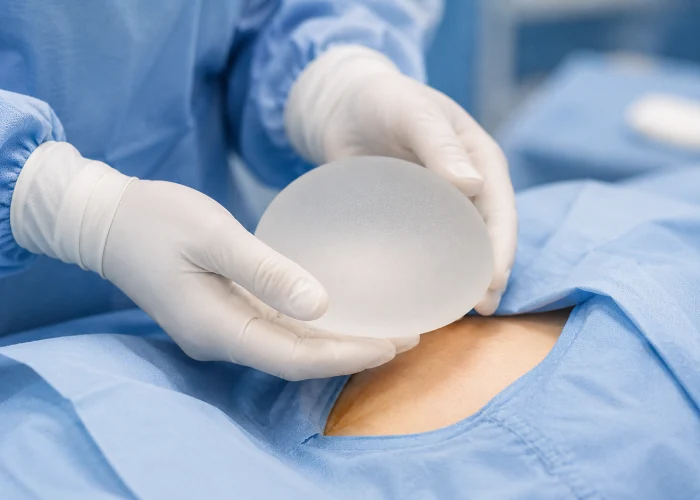
Saline and silicone are the two categories. Saline implants are filled with sterile saltwater after they’re placed, so they usually cost less and need a smaller opening. Silicone gel implants come pre-filled and sit at a higher price, since many people prefer their softer, more natural feel.
Gummy bear implants are not a third category. They’re a type of silicone, specifically one with a highly cohesive, form-stable gel that holds its teardrop shape. Because that cohesive gel is the premium end of the silicone line, gummy bear options generally carry the highest implant price of the group.
| Saline | Silicone (gel) | |
|---|---|---|
| Typical cost | Lower | Higher (gummy bear at top) |
| Feel | Firmer | Softer, more natural |
| Incision size | Smaller | Slightly larger |
| Rupture signal | Obvious quickly | Needs imaging to confirm |
A few surgical choices also affect the fee. The incision location and whether the implant sits under or over the muscle are part of the surgeon’s work, so a more involved approach can shift the price. One safety note worth knowing: smooth implants are the standard choice among careful surgeons. Textured surfaces are linked to a rare cancer called BIA-ALCL, a lymphoma of the immune system.
Then there’s the big one that catches people off guard. If your breasts have lost fullness and also started to sag, implants alone won’t lift them. Pairing your augmentation with a breast lift means a second procedure with its own fee. Fat transfer augmentation, which uses your own fat instead of an implant, is another route that often costs more, since it adds a liposuction step.
None of this means one option is “right.” It’s completely normal to feel torn between choices, and that’s exactly what a consultation sorts out. The best implant is the one that fits your body and your goals, not the one with the lowest or highest number.
How do your location and your choice of surgeon affect what you pay?
Where you have surgery, and who performs it, may move the price as much as the implant does. Cosmetic surgery costs more in high-cost metro areas, simply because rent, staffing, and local demand all run higher there. It’s a big reason “breast augmentation near me cost” varies so widely from one city to the next.
The surgeon’s fee follows the same logic. A highly credentialed, experienced surgeon usually charges a higher professional fee, and that number reflects training, judgment, and the volume of cases behind their results. Feeling unsure about paying more for experience is normal, so it helps to see what that experience actually buys.
Triple board-certified cosmetic surgeon Dr. Suzanne Yee is certified by the American Board of Cosmetic Surgery for both facial and body procedures, plus the American Board of Facial Plastic and Reconstructive Surgery, and the American Board of Otolaryngology for Head and Neck Surgery. She brings more than 35 years of experience to breast and body surgery. Dr. Yee or Dr. Pournik performs your procedure at an on-site, AAAHC-accredited surgical center, so the facility your fee supports meets a national safety standard.
Casey, a breast augmentation patient at the Little Rock office, shared her experience:
“It was great got me in quickly and matched the price of the other cosmetic surgeon that was going to do my breast augmentation before he hurt himself.”
This is also why the lowest quote rarely wins. Chasing the lowest price, especially abroad, comes with real trade-offs: a systematic review of cosmetic surgery tourism found notably higher complication rates, and the cost of fixing a problem often erases whatever you saved. Paying for the right surgeon the first time is usually the more affordable path over the long run.
What are your options for financing and paying for a breast augmentation?
Very few people pay for this out of one paycheck, and there’s no shame in spreading the cost out. Financing is a normal, planned part of how most patients make cosmetic surgery work, so the question is usually which plan fits your budget, not whether you can find one.
The practice offers flexible financing through Cherry, Alphaeon Credit, CareCredit, PatientFi, and Alle, several with qualifying 0 percent APR options and applications that don’t affect your credit score to check. That range lets you pick monthly terms that fit your life instead of forcing one payment structure.
A quick word on tax-advantaged accounts. Because cosmetic breast augmentation is elective, it generally can’t be paid for with an HSA or FSA. Those accounts are reserved for medically necessary care, so confirm your specifics with a tax advisor before counting on them.
Insurance is the other common question, and the answer is usually no for a purely cosmetic procedure. There’s one important exception: under the federal WHCRA of 1998, group health plans that cover a mastectomy must also cover breast reconstruction, including implants, for patients rebuilding after breast cancer. Knowing which category you fall into upfront saves a lot of guesswork.
What hidden or unexpected costs should you budget for after surgery?
The quote is the headline, but a few smaller costs live around the edges, and planning for them keeps the whole thing from feeling like a moving target. Most are modest, and none should be a mystery if you ask about them ahead of time.
Some sit in the pre-op window. You will need pre-op labs and testing before surgery, and those, along with any prescribed medications and sometimes a surgical support bra, are usually billed separately from the quote. A quick budget checklist helps:
- Pre-op labs and any required medical clearance
- Prescribed pain or recovery medications
- A clinical-grade surgical support bra, if not included
- Future maintenance, monitoring, or a possible revision down the road
The bigger line to understand is revision. If you ever need your implants exchanged or a concern addressed, you’re generally responsible for that cost, though it’s less common than headlines suggest. The most frequent issue, capsular contracture, where scar tissue around the implant tightens, occurs in roughly 2.8% to 20.4% of cases between 5 and 10 years after breast augmentation, and an experienced surgeon and modern technique help to keep that number low.
Two things soften the long-term math. Major implant makers include warranties that provide free replacement devices if an implant ruptures, and implants, while not lifetime devices, typically last 10 to 15 years before you’d consider breast implant revision. Budgeting for that eventual visit now means it’s a plan, not a shock.
Emily, a breast augmentation patient at the Little Rock office, described the experience:
“I couldn’t be happier with my breast augmentation results! From my very first consultation, Dr. Yee and the entire team made me feel so comfortable and supported. They were all incredibly friendly and informative, answering all my questions and making sure I felt confident in the choices that I wanted every step of the way.”
How do you get an accurate, all-inclusive quote for your breast augmentation?
Here’s the honest bottom line: no online calculator can give you your number, because your number depends on your anatomy, your implant choice, and your goals. The only way to get an exact, all-inclusive figure is an in-person consultation, and that visit is worth far more than the price it costs.
Think of it as a two-way evaluation. It isn’t just a chance for your surgeon to assess you; it’s equally your chance to decide whether this surgeon and this practice are the right fit. Nothing is rushed, and nothing is off limits, including the questions that feel small or awkward.
At the Little Rock office, Dr. Yee asks about your daily routine, your build, and what you want to feel comfortable doing again before recommending an approach, then reviews implant options and incisions with you. You can view a Crisalix 3D simulation of your potential result and see the AAAHC-accredited surgical center where your procedure would happen, all in the same visit.
Lisa, a breast augmentation patient at the Little Rock office, put it this way:
“I had breast augmentation surgery with Dr Yee in January 2019. She made the entire process very easy, informative, and comfortable. She answered every question honestly and made sure I understood at every step along the way. She explained everything about the procedure and recovery in detail.”
Conclusion
The advertised price is only ever a starting point. Your real number is the sum of your implant, your surgeon, your facility, and the care that follows, which is exactly why a personalized quote beats any online estimate. A breast augmentation you can plan for is one you can feel good about.
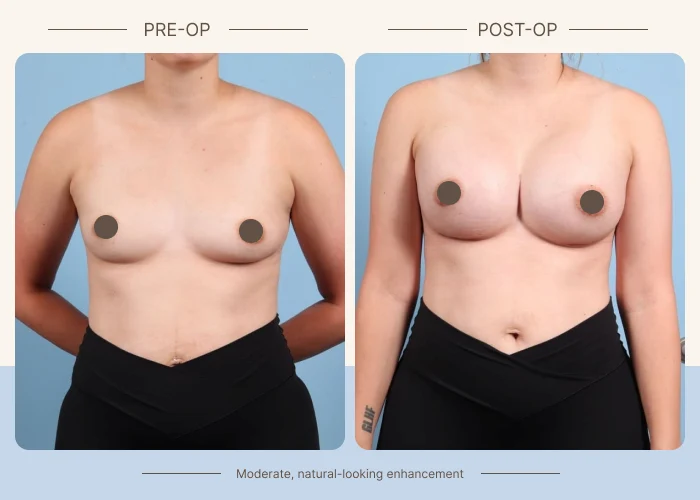
Browsing real patient before-and-after photos that match your starting point is one of the most helpful next moves. When you’re ready, a personal consultation fills in the details that photos and price ranges can’t.
At Dr. Suzanne Yee Cosmetic & Laser Surgery Center in Little Rock, the goal is exceptional results and genuine care, where every patient feels heard, respected, and confident in a decision this personal. When you’d like your own number, reach out to the team or call (501) 224-1044.
Frequently asked questions
How much is a boob job on average in the U.S.?
There’s no single honest average, because the total depends on your implant type, your surgeon’s experience, your region, and whether you add a lift. Anyone quoting one flat number is usually showing you the surgeon’s fee alone. The most accurate figure comes from an in-person consultation built around your specific plan.
Does a low-cost breast augmentation quote usually include anesthesia and facility fees?
Often it doesn’t. A low headline price is frequently the surgeon’s fee only, with anesthesia, facility charges, and implants billed separately. Always ask whether a quote is all-inclusive, since a bundled total is far easier to plan around than a base price that grows.
How much cheaper are saline implants compared with silicone?
Saline implants are generally the more affordable option, since silicone gel implants tend to carry a higher price for their softer, more natural feel. The exact gap varies by practice and by the specific implants chosen. Your surgeon can show you the difference for your plan during a consultation.
Why are cohesive gummy bear implants more expensive than standard silicone?
Gummy bear implants are a type of silicone with a thicker, highly cohesive gel that holds its shape and resists rippling. That premium gel and form-stable design place them at the higher end of the silicone range. They’re one option within the silicone family, not a separate category.
How much does adding a breast lift increase the overall cost of the procedure?
Adding a lift means a second, separate procedure, so it adds its own surgical time and fee on top of the augmentation. Combining the two is common and can be a good fit for the right candidate, giving you one anesthesia and one recovery. Your surgeon will confirm at your consultation whether doing them together makes sense for you.
What financing companies offer monthly payment plans for cosmetic surgery?
Financing is available through Cherry, Alphaeon Credit, CareCredit, PatientFi, and Alle, several with qualifying 0 percent APR options. Applying to check your rate doesn’t affect your credit score. These plans let you spread the cost into monthly payments that fit your budget.
Who pays for the surgical costs if I need a revision due to an implant rupture?
Revision costs are generally the patient’s responsibility, though many implant makers include a warranty that provides free replacement devices for a confirmed rupture, which offsets part of the cost. Choosing an experienced surgeon and modern technique also lowers the chance you’ll need one. Budgeting for an eventual exchange, since implants aren’t lifetime devices, keeps it from being a surprise.
How much do pre-operative medical clearance tests and post-op surgical bras typically cost?
Pre-op labs, any required medical clearance, and prescribed medications are usually billed separately from your quote, and a clinical-grade support bra may be too. These add-ons are modest but worth budgeting for. Your surgeon’s office can tell you exactly which items sit outside the quote so nothing catches you off guard.
*Disclaimer: This content is for educational purposes only and does not constitute medical advice. A consultation with a qualified board-certified surgeon is required to determine the best treatment plan for your individual needs.