
 (501) 224-1044
If you’ve spent years adjusting bra straps that dig grooves into your shoulders, sitting out the workout class because running hurts, or hunching to feel less noticed, you know the truth. This isn’t only about appearance. The ache in your neck, back, and shoulders is real, and so is the exhaustion of carrying it every single day.
You’re far from alone in looking for relief. Surgeons performed 652,676 breast reductions worldwide in 2024, making it one of the most common body procedures there is. Most people who choose it aren’t chasing a particular look. They want to move, sleep, and live more comfortably in their own skin.
At Dr. Suzanne Yee Cosmetic & Laser Surgery Center in Little Rock, one of the plastic surgery options in Little Rock Arkansas, triple board-certified cosmetic surgeon Dr. Suzanne Yee has helped patients across Central Arkansas find that relief for more than 35 years. This guide walks you through the whole process, from deciding whether you’re a candidate and preparing for surgery, to what actually happens in the operating room, what recovery feels like, and the risks worth understanding. Think of it as the conversation you’d want before your first consultation.
Key takeaways
Here’s the short version of what this guide covers about how breast reduction works, from your first visit through healing.
- Candidacy is individual, not a cup size. The strongest candidates have physical symptoms like back, neck, or shoulder pain, stable breast development, and health that supports healing.
- Preparation begins about four to six weeks out: lab work, possible imaging, pausing certain medications and supplements, and stepping away from nicotine before and after surgery.
- The surgery removes excess fat, tissue, and skin, repositions the nipple on its own blood supply, and reshapes the breast through one of three incision patterns chosen for your anatomy.
- A tumescent liposuction technique, when it fits your tissue, can mean smaller incisions and a quicker recovery, with non-strenuous work often possible within a day or two.
- Most complications are minor and uncommon. Choosing an experienced, board-certified surgeon is one of the biggest factors in a smooth result.
Am I a good candidate for breast reduction surgery?
The answer starts with how you feel day to day, not with a measurement. Back, neck, and shoulder pain, shoulder grooving from your straps, or skin irritation in the fold underneath are the classic symptoms that make someone a strong candidate for reduction mammaplasty in central Arkansas. Wanting to exercise, sleep, and dress without constant discomfort is reason enough to explore your options.
Good candidacy also depends on a few health factors. Your breast development should be stable, meaning you’re not actively pregnant or breastfeeding and haven’t had major recent weight swings. Overall health, smoking status, and any history of breast surgery all play into the picture, which is exactly why this is so individualized.
Not everyone arrives certain about surgery, and that’s okay. Some people want to feel comfortable in their body now, while others prefer to wait until after having children, since pregnancy can change breast size and shape.
Neither choice is wrong, and a good consultation helps you sort out which path fits your life. If you’re earlier in that process, there’s no need to rush. You can take the time you need to feel sure that a reduction is the right choice for you before moving forward.
Inside the consultation
This is where what is involved in a breast reduction becomes concrete. The consultation is a hands-on, in-person evaluation.
Your surgeon reviews your medical history, examines and measures your breasts, and talks through how much tissue can come out to ease your symptoms while keeping a natural shape. It’s also your chance to evaluate the surgeon, not just the other way around.
At her Little Rock practice, Dr. Yee asks about your daily routine, your work, and what you want to feel comfortable doing again before recommending an approach. That conversation shapes a plan built around your anatomy and your goals, rather than a template. Researching this carefully before a decision this personal is exactly the right instinct.
When you’re ready to talk through whether you’re a candidate, you can schedule a personal consultation and bring every question with you.
How do I prepare for breast reduction surgery?
Once you’ve decided to move forward, preparation becomes your job, and good preparation genuinely shapes how smoothly things go. Most of it begins about four to six weeks before your date. It can feel like a lot at first, so it helps to take it one category at a time.
Medical tests and imaging
Your surgeon will order a physical exam and standard blood work, and sometimes breast imaging, depending on your age and family history. Lab work is usually done a couple of weeks before surgery, so there’s time to address anything that comes up. If you have a heart history, an EKG may be added. None of this is meant to alarm you; it’s simply how your team confirms your body is ready.
Medications and supplements to pause
Several common medications and supplements thin the blood and raise bleeding risk, so they’re paused ahead of time. That typically includes NSAIDs like ibuprofen and naproxen, plus supplements such as vitamin E, fish oil, and ginkgo. Prescription blood thinners always require individualized instructions from both your surgeon and the doctor who prescribed them, so never stop those on your own.
Stepping away from nicotine
Smoking is one of the few risk factors fully in your control, and it matters more than most people expect. Nicotine narrows blood vessels and slows healing, and in one study, smokers had a wound-complication rate more than double that of non-smokers. If you smoke, stepping away from that habit isn’t just recommended, it’s required, typically for at least six weeks before and after surgery.
Setting up your home
A little setup ahead of time saves you real frustration later. Arrange for a responsible adult to drive you home and stay with you for at least the first 24 hours, and prepare a comfortable spot where you can rest with pillows propping you up. Stock easy meals, keep water and your phone charger within reach, and pick up a few front-closing surgical bras so you’re not reaching overhead. Taking these steps now means that in the future, you can simply focus on healing.
To help make the whole thing more accessible, you can explore financing options through Cherry, Alphaeon Credit, CareCredit, PatientFi, and Alle. Your quote also bundles the surgeon’s fee, anesthesia, facility fees, and follow-up visits into one transparent total, so you’re only responsible for your pre-op labs and any prescribed medications.
What happens during breast reduction surgery step by step?
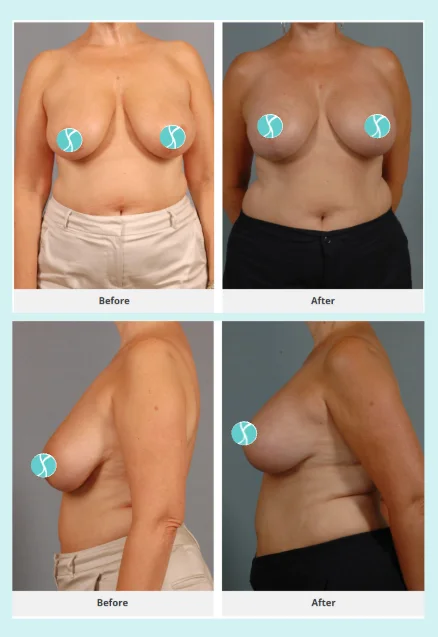
Knowing what happens during a breast reduction, minute by minute, takes a lot of the fear out of it. The procedure has a clear sequence, and your surgeon explains each part beforehand so nothing feels like a surprise. Here’s how the steps generally unfold once you’re in the operating room.
Anesthesia and the markings
Breast reduction is almost always performed under general anesthesia, which means you’re fully asleep and won’t feel anything during the procedure. A Certified Registered Nurse Anesthetist (CRNA) administers your anesthesia and monitors you closely the entire time, keeping you safe and comfortable.
Before the first incision, your surgeon makes careful breast reduction markings while you’re sitting or standing upright. These lines map the new position of the nipple and areola and guide how tissue will be removed and reshaped so both sides look balanced. Gravity matters here, which is why the markings are drawn before you lie down.
Choosing the incision pattern
There are three common incision patterns, and your surgeon chooses based on how much tissue needs to come out and how much the breasts sag. Each one trades a bit more scarring for the ability to reshape larger reductions.
| Incision pattern | What it looks like | Often chosen for |
|---|---|---|
| Donut (periareolar) | A single circle around the areola | Smaller reductions, minimal sagging |
| Lollipop (vertical) | Around the areola plus one vertical line to the crease | Moderate reductions and sagging |
| Anchor (inverted-T) | Around the areola, down to the crease, and along the fold | Larger reductions, more significant sagging |
Removing tissue and repositioning the nipple
With the pattern set, your surgeon removes the excess fat, breast tissue, and skin, then reshapes what remains into a smaller, lifted mound. In most reductions, the nipple stays attached to its own blood and nerve supply and is simply moved to a higher, more natural position. That attachment is what gives you the best chance of keeping sensation and, for some patients, the ability to breastfeed later.
In very large reductions, a free nipple graft is sometimes the safest option. This means the nipple is removed completely and placed back as a graft, which trades nipple sensation for safety when the tissue distance is too great. It isn’t the usual route, but it’s good to understand why a surgeon might recommend it.
Jamie, who went through the full process from her first consult through recovery and follow-up, shared her experience:
“Dr. Yee and her staff provided exceptional care, from my initial consult, through the surgery process, recovery, and follow-up appointments. From the moment I walked in, your Surgery center has had such a welcoming and positive vibe. Your staff made me feel comfortable and at ease.”
Closing up
Once reshaping is complete, the incisions are closed with layered sutures beneath the skin so the deeper tissue is supported as it heals. Drains are used only as needed, not in every case. A randomized study found no meaningful difference in complications whether or not drains were placed.
Not every reduction relies on long incisions, either. A tumescent liposuction technique, a form of cosmetic surgery for stubborn fat deposits, uses a numbing solution to draw out fatty tissue through tiny openings and can mean smaller scars and a quicker recovery for the right candidate.
What is recovery like after breast reduction surgery, week by week?

After everything you’ve just read about the surgery itself, recovery is usually the part people feel most anxious about, and the good news is that it tends to be more manageable than expected. The first day or two calls for rest, and many patients are surprised by how minimal the discomfort is, often managed with over-the-counter pain medication. Slowing down feels strange at first, especially if you’re used to being the one taking care of everyone else.
With a gentler tumescent liposuction approach, recovery tends to move quickly. Many patients return to non-strenuous work within a day or two and resume their normal activities within about two weeks. Swelling typically subsides within a few days, and you’ll usually notice visible improvement within the first couple of weeks.
The longer arc is gentler than people imagine. Your final shape continues to settle over the following several months as the last of the swelling fades and the tissue softens into its new contour. A supportive surgical bra is part of healing, too. Your surgeon will tell you exactly how long to wear it and when you can ease back into exercise, since that timing is personal to you.
You won’t be navigating any of this alone. Dr. Yee and her team monitor your healing closely, checking in between visits and answering questions by phone rather than waiting for you to worry. If anything feels off, you reach out and get a real answer.
Curious what results actually look like? You can browse real breast reduction before-and-after photos to set your own expectations.
What are the risks and possible complications of breast reduction surgery?
Like any surgery, a breast reduction carries some risk, and it’s completely natural to want the full picture before you commit. Here’s the reassuring context first: the large majority of patients heal without any serious issue, and most complications, when they happen, are minor and treatable. In one large study of more than 31,000 reductions, the major complication rate was just 2.8 percent.
The more common, minor concerns tend to be things your team watches for and manages early:
- Slow healing at the incision, most often where the lines meet under the breast
- A small pocket of fluid or minor bruising beneath the skin that the body reabsorbs over time
- Temporary changes in nipple or breast sensation, which usually improve over several months
- Scarring, which fades and flattens over the first year, but never disappears entirely
Scars fade with consistent aftercare, and our guide to minimizing breast reduction scarring covers the techniques that make the biggest difference.
Two questions come up a lot. Sensation changes are common early on and recover for most people over six to twelve months, though they can occasionally be permanent. Breastfeeding may also be affected depending on the technique. If having children is in your future, this is worth raising directly at your consultation.
The single biggest thing within your control is who performs your surgery. A few factors, like a higher BMI or smoking, raise risk, but an experienced, board-certified surgeon and good preparation tip the odds strongly in your favor. Feeling cautious here is healthy, and understanding these concerns is what lets you make the decision with confidence rather than fear.
Cindy, a breast reduction patient who felt closely cared for from consultation through recovery, shared:
“Dr Yee and her team are Fantastic! From consultation to recovery for breast reduction surgery, they have surpassed all my expectations. Dr. Suzanne Yee provided me with expert surgical care that was patient focused, thorough and thoughtful. I am very pleased with my new size and shape. Both of them are carefully monitoring my recovery and answering all my questions at my visits or by phone. Plus, I like that there have been no extra expenses after the surgery and they provide what I need for self care at home. I recommend Dr Yee to anyone electing to have cosmetic procedures or surgeries.”
Conclusion
You came here carrying something heavy, both literally and in the worry of not knowing what surgery would really involve. Now you’ve walked the whole path, from figuring out candidacy and preparing your body, through each step in the operating room, and into a recovery that’s often gentler than feared. That’s a lot of weight to set down.
Browsing real patient photos that match your own starting point is one of the most helpful next steps you can take. When you’re ready, an in-person consultation fills in the details that photos simply can’t show. Every patient deserves to feel heard, respected, and confident in their choice, and that belief shapes how Dr. Suzanne Yee and her team care for people in Little Rock, where the goal is always enhancement, not transformation. When the time feels right, you can schedule your personal consultation at the Little Rock office or call (501) 224-1044 to start the conversation.
Frequently asked questions
How long does breast reduction surgery take?
Most breast reductions take roughly three to five hours, though the exact time depends on the technique and how much tissue is being removed.
How much breast tissue is typically removed during a reduction?
There’s no single number, because the amount is tailored to relieve your symptoms while keeping a natural, balanced shape. Your surgeon determines this during the exam by weighing how much tissue needs to come out against the breast shape you want to keep. It’s a plan built specifically around your anatomy.
Can breast reduction relieve my back, neck, and shoulder pain?
Removing excess weight from the chest commonly reduces strain on the back, neck, and shoulders, along with the grooving that bra straps can leave. Your consultation is the place to discuss your specific symptoms and what relief is realistic.
When can I drive again after breast reduction surgery?
Driving is safe again once you’re off prescription pain medication and can move your arms and react comfortably behind the wheel, which varies from person to person. Your surgeon gives you specific clearance at your follow-up rather than a one-size-fits-all date.
Will I lose feeling in my nipples after breast reduction?
Some change in nipple or breast sensation is common in the early weeks, but for most people, it improves over the following six to twelve months. Permanent changes are possible but far less common.
What size will my breasts be after reduction surgery?
The goal is a size that’s proportionate to your frame and relieves your symptoms, rather than a specific cup size. You and your surgeon discuss your goals at the consultation so the plan reflects what you actually want, which leaves most patients feeling more balanced and comfortable, not just smaller.
*Disclaimer: This content is for educational purposes only and does not constitute medical advice. A consultation with a qualified board-certified surgeon is required to determine the best treatment plan for your individual needs.




 Instagram
 Facebook
 Tiktok
 Youtube
 X
X LinkedIn