Instagram
 Facebook
 Tiktok
 Youtube
 X
 LinkedIn

 (501) 224-1044
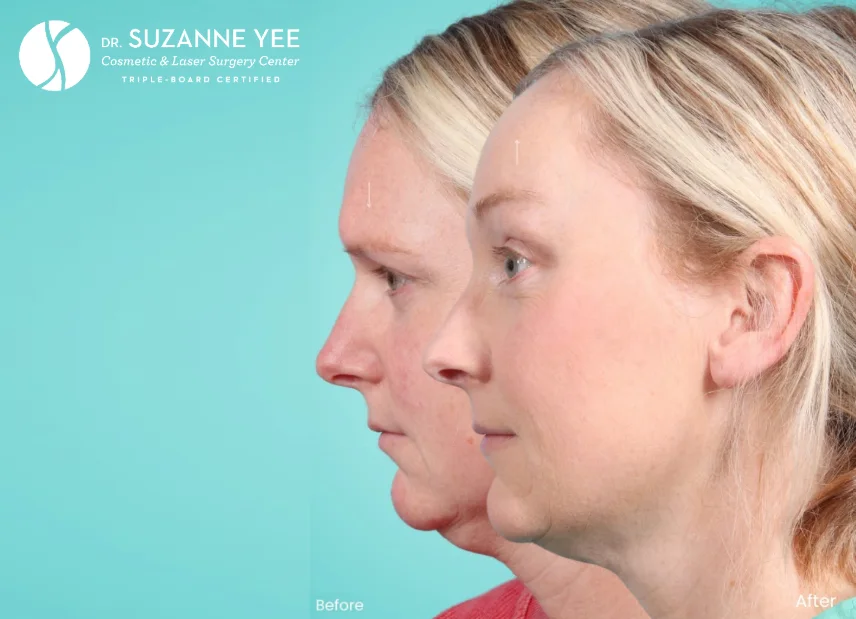
The clearest sign you might be a brow lift candidate has little to do with age: it is when people keep reading your expression wrong. You feel fine, yet you are asked whether you are tired, annoyed, or upset, because heavy brows and deep forehead lines are sending a message your mood is not.
That is the specific problem a brow lift solves, and it is a different problem than an eyelid lift or a facelift addresses. The brow sits above the eyes and drags everything down as it descends; lifting it back toward where it sat years ago resets your resting expression without changing who you look like.
Candidates are also more varied than the stereotype suggests. In one study of more than a thousand patients, nearly two-thirds of the men chose a direct brow lift, compared with fewer than one in ten women, a reminder that the right candidate, and the right technique, looks different from person to person.
At Dr. Suzanne Yee Cosmetic & Laser Surgery Center in Little Rock, the aim is never to make you look like someone else, just more like yourself on a good day. This guide covers the signs worth watching for, how a brow lift compares to an eyelid lift, what is different for men, and how to tell when you are ready.
Key takeaways
- The clearest sign you might need a brow lift isn’t a wrinkle. It is a resting expression that reads as tired or angry.
- A quick mirror test helps decide: relax your forehead completely, then lift the brow skin upward with your fingers. If heaviness still drapes over your lashes with the brow held up, the issue may actually be eyelid skin, not the brow itself.
- Brow lifts and eyelid lifts solve different problems. Sometimes, they’re combined into one surgery for a better effect.
- Men’s brows are anatomically different from women’s. They sit flatter and lower. So, a good browlift means a conservative lift that avoids anything too arched or surprised-looking.
- The right technique depends on your forehead height, hairline, and how much lift you need. Good candidates are healthy adults across a wide age range. This isn’t a procedure reserved for a specific decade of life.
What are the telltale signs you need a brow lift?

Most people don’t come in saying, “I think my brow has dropped.” They come in saying they look exhausted in every photo, or that coworkers keep asking if they’re okay. The wrinkles are almost never the first thing they mention.
In fact, a study on facial expressions using artificial intelligence found that a descended brow measurably increased how angry a face appeared.
Now, why does a drop in the brow cause a dramatic change in your expressions? Here’s why it happens. Due to multiple factors (such as age), your skin loses elasticity, the forehead muscles weaken, and gravity pushes down on the soft tissue of the brow. The change is gradual, so most people only notice after there’s a significant change. People usually notice that they look more awake in their older photos, and that’s how they realize what has happened.
To know if your brow has dropped, you can do a quick check at home. Start by relaxing your forehead, and place your fingers just above your brows. Gently lift the skin upward. If that opens your eyes and lightens your expression, a descended brow is likely part of the picture.
Multiple signs point toward a brow concern:
- Brows that sit low or feel heavy, particularly toward the outer edges near the temples
- A resting face that looks stern or sad even when you are completely fine
- Forehead lines etched in from years of constantly muscling your brows upward
- Vertical frown lines between your eyebrows, that don’t go away even when your face is at rest
- Upper eyelids that look hooded, when the actual problem is the brow weighing down on them from above
Sometimes, the brows sagging down is not because of age. It could just be the natural placement of your brows. Being born with a low-lying brow is not a medical issue, it’s common and normal. On the contrary, age-related drooping of the brow (also known as brow ptosis), is a medical change from your earlier baseline and requires intervention if it’s affecting your quality of life.
Now, moving on to frown lines and forehead wrinkles. Lines that only appear when you raise your brows are mostly okay. When you relax your forehead, a muscle relaxer often softens them up. However, when the lines stay visible even at rest, it’s because the brow has sagged far enough to pull the skin with it.
There are multiple interventions available for a situation like this, but surgery for forehead wrinkles does what topical treatments like a cream can’t. If you want to understand how brow position tends to shift across different decades, the wellness guide by decade is a good place to start.
Noticing these signs is a good first step, but it doesn’t tell the whole story.
Should you get a brow lift, an eyelid lift, or both?
This is one of the most common points of confusion, and is genuinely easy to mix up.
Now, your eyelid could be looking hooded due to a dropping brow, some excess eyelid skin, or a combination of the two. The fix depends on which one is driving the heaviness. One of the best ways to figure this out is the mirror test we mentioned in the last section.
If you lift your brow and most of the drooping disappears, the brow is driving the drop. If your eye still looks hooded after lifting the brow, the eyelid skin is contributing as well.
It’s easier said than done, so, an experienced eye matters in decisions like these. As a triple board-certified cosmetic surgeon, Dr. Yee evaluates the brow and the lid together rather than as separate puzzles. She knows that lifting one without addressing the other can leave you halfway to the result you wanted.
A short comparison makes it clear:
| Concern | What a brow lift does | What eyelid surgery does |
|---|---|---|
| Low, heavy brow | Repositions the brow higher | No effect on brow position |
| Hooding from above | Lifts the hood by raising the brow | Removes excess lid skin directly |
| Excess eyelid skin | Limited effect | Trims and reshapes the eyelid |
| Forehead and frown lines | Smooths them by lifting | No effect |
Upper eyelid surgery, or blepharoplasty, removes excess skin directly from the lid, and when sagging skin is crowding your field of vision, it can improve that, too. A brow lift works from above, raising the whole brow so the lids look less weighed down without touching the lid itself.
Candidacy isn’t binary. Most adults develop some degree of upper eyelid heaviness with age, but that doesn’t mean everyone needs a full forehead lift on top of it.
When both are genuinely contributing, combining them in one surgery is common and usually gives the most balanced result. One recovery, one healing period, nothing left half-addressed. This is also where the line between refreshed and overdone tends to live, which is why getting the assessment right matters more than the procedures themselves.
Daphne, a patient who had a brow lift among several facial procedures, shared her experience:
“I have had a facelift, brow lift, chin implant, fillers, and more. I have only felt confidence and safety with every procedure. She makes you feel safe and secure every step of the way… it doesn’t feel like a doctor’s office but more like going to a friend for help.”
How does a brow lift for men differ from a brow lift for women?

If you’re a man weighing this, you’re far from alone, even if most of the content out there doesn’t speak to you directly.
The anatomy is different, and that changes everything. A male brow typically sits flatter and lower than a female brow, resting right at the bony ridge above the eye rather than arching above it. Lift it too high and the result reads as feminized, or worse, permanently surprised. Neither is the goal.
For men, the goal is restraint. The surgery relieves heaviness and returns the brow toward its natural height. Not higher than it ever was, just back to where it used to sit. That means conservative elevation and a straighter contour rather than any kind of arch.
Hairline matters too, and it often gets overlooked. A receding or thinning hairline limits where incisions can be hidden, which tends to steer the technique toward a natural forehead crease rather than one placed further back in the scalp.
Done well, a brow lift for men shouldn’t look like anything except a more rested version of yourself. If you want a personalized read on where you’d land, you can request a consultation here.
Which brow lift technique fits your hairline and facial structure?
There’s no single best brow lift, only the one that fits your face. The technique is matched to your forehead height, hairline, brow symmetry, and how much lift you need. That’s a relief for most people, because the plan is built around you.
A quick map of the main approaches and who they tend to suit:
| Technique | Often suits | Where incisions go |
|---|---|---|
| Endoscopic | Shorter forehead, mild to moderate drooping | Small openings hidden in the scalp |
| Temporal (lateral) | Outer-brow heaviness and lateral hooding | Within the hairline at the temples |
| Direct | Heavier drooping, men with deep forehead lines | Just above the brow or in a crease |
| Coronal (classic) | Larger lifts, less common today | Across the scalp, ear to ear |
The endoscopic brow lift is the modern workhorse, using small openings behind the hairline and a tiny camera to lift with minimal scarring. A temporal lift is gentler still, focusing only on the outer brow. A direct lift trades a more visible scar for precise control, which is part of why men choose it more often.
One detail patients rarely hear about ahead of time is how the lifted tissue stays put. Dr. Yee uses Endotine® anchors, small absorbable fixtures that hold the brow in its new position while it heals. They’re made of lactic acid, begin dissolving at roughly two months, and are fully gone by about a year. Nothing has to be removed later.
Are you medically and physically ready for brow lift surgery?
Beyond the cosmetic question sits a practical one: are you a good surgical candidate right now? The encouraging part is that the bar is reasonable for most healthy adults. A thorough consultation exists precisely to answer this with you rather than at you.
In general, a good candidate looks like this:
- In good overall health and at a stable weight, well enough for general anesthesia
- A non-smoker, or willing to pause before and after surgery
- Free of uncontrolled conditions that interfere with healing
- Has specific, realistic goals rather than a wish to look like a different person
- Bothered by brow heaviness, forehead lines, or bilateral brow ptosis in daily life
Smoking is worth flagging on its own, because it has an outsized effect on healing. If you smoke, this is also the time to step away from that habit, ideally six weeks before and after surgery. Certain blood-thinning medications and supplements may also need adjusting, which you’ll review honestly during your visit.
Your skin elasticity and bone structure shape the result too. Skin with more spring tends to hold a lift beautifully, and your underlying structure guides how much elevation looks natural on you.
This is where an in-person visit earns its keep. A consultation at Dr. Yee’s AAAHC-accredited surgical center in Little Rock isn’t just her chance to evaluate you. It’s equally your chance to evaluate her.
She asks about your daily routine, your work, and what you want to feel comfortable doing again, then explains why a given technique fits your anatomy. General anesthesia, when needed, is administered by a Certified Registered Nurse Anesthetist (CRNA) as part of the surgical team, so you’re comfortable throughout.
Cost is a fair concern to bring into that conversation, and the practice keeps it transparent. Your quote bundles the surgeon’s fee, anesthesia, facility fees, and follow-up visits into one total. Patients are responsible only for pre-op labs and any prescribed medications. To make things more accessible, the office offers flexible financing through Cherry, Alphaeon Credit, CareCredit, PatientFi, and Alle.
When you’re ready to find out where you stand, you can schedule a consultation for a candid read on your candidacy. Taking the time to ask carefully, before committing to anything, is exactly the right way to approach a decision this personal.
Karla, a patient who weighed whether the time was right, shared her experience:
“I am 6 weeks out of my lower facelift with Dr. Yee. My results are so natural and took years off my appearance. This can be a scary experience, but Dr. Yee and her staff put me at ease before and after the procedure.”
Conclusion
You came here with a simple, slightly frustrating question. Does the tired look in the mirror actually call for a brow lift, or is something else going on? By now you have a real way to answer it, from the mirror test to the brow-versus-eyelid distinction to the signs that you’re medically ready.
Browsing real patient photos that match your starting point is one of the most useful next steps, and the photo gallery is the honest place to begin. When you’re ready, a personal conversation fills in the details that pictures can’t.
That conversation is where Dr. Suzanne Yee and her Little Rock team do their best work, built on the belief that every patient deserves to feel heard, respected, and confident. It’s the heart of her promise of exceptional results and genuine care, enhancement rather than transformation. You can book your consultation or call (501) 224-1044 when the time feels right.
Frequently asked questions
What is the best age to get a brow lift?
There’s no single best age. Candidates commonly range from their late 30s into their 60s and beyond. The right time depends on your skin elasticity and how much your brow has descended, not the number on your birthday.
How long do the results of a brow lift hold up?
You’ll keep aging naturally, but a brow lift keeps you looking well ahead of where you’d be without it. Think of it as resetting the clock rather than stopping it. Your brow continues to settle slowly, just from a younger starting point.
Will a brow lift leave visible scars?
With techniques like the endoscopic approach, incisions are small and tucked into the scalp, so scars are usually hard to spot once healed. Direct techniques place a finer line near the brow or in a forehead crease. Your surgeon matches the technique to your hair and goals.
Can injectables achieve the same results as a surgical brow lift?
Not quite. BOTOX® can soften forehead lines and give the outer brow a slight lift, which is great for mild concerns. When the brow itself has truly descended, only surgery repositions it. Many people use injectables for years before a brow lift becomes the better tool.
How long is recovery after a brow lift?
Most patients return to work in about 7 to 14 days, with bruising and swelling fading over the first few weeks. A headache or forehead tightness in the first days is common, and Dr. Yee talks through what to expect ahead of time so it never catches you off guard. Vigorous exercise is set aside for a few weeks longer. Your final brow position continues to settle over the next 3 to 6 months.
Does a brow lift fix drooping upper eyelids?
It can, when the heaviness is coming from the brow pressing down from above. If the excess skin sits on the eyelid itself, eyelid surgery is the more direct fix. Often the two are combined, which is why an in-person assessment is so useful for telling them apart.
Will a brow lift make me look permanently surprised?
That overdone look comes from lifting too aggressively, not from the procedure itself. A conservative, well-planned lift, especially the restrained approach used for men, avoids it. The goal is a natural resting brow, not a raised one.
*Disclaimer: This content is for educational purposes only and does not constitute medical advice. A consultation with a qualified board-certified surgeon is required to determine the best treatment plan for your individual needs.