Instagram
 Facebook
 Tiktok
 Youtube
 X
X LinkedIn
 (501) 224-1044

The most successful brow lift is the one no one can point to. There is no obvious scar to find, no eyebrow parked too high, just a face that reads as less tired than it did, in a way friends struggle to put their finger on. That is exactly what makes before-and-after photos so tricky to read.
A single image freezes one face, one lighting setup, one stage of healing. It cannot show you how that brow moves when the person laughs, how the result settled six months later, or whether it would even suit your features. The dramatic transformations that earn the most clicks are often the least useful guide to your own outcome.
The procedure behind those photos is more mainstream than it looks, ranking as the 13th most common cosmetic surgical procedure worldwide in 2024.
At Dr. Suzanne Yee Cosmetic & Laser Surgery Center in Little Rock, a triple board-certified cosmetic surgeon has spent more than 35 years on exactly this kind of subtle, photo-honest result. This guide walks through what realistic before-and-afters actually show, who a brow lift suits, where the scars land, and how recovery tends to unfold.
Key takeaways
- A realistic brow lift creates a subtle lift of roughly 2 to 5 millimeters. It reopens a tired upper face and softens forehead lines rather than dramatically changing how you look.
- Brow position and eyelid skin are two separate problems. A brow lift repositions the brow, an eyelid lift removes loose lid skin, and many patients get the most natural result by combining both.
- Technique determines where your scars go. The endoscopic approach hides incisions in the scalp, while a direct lift trades a small scar above the brow for precise control.
- Judge before-and-after photos by a real standard. Standardized medical photos use consistent lighting and angles, while social media images are often skewed by flattering setups.
- Results are long-lasting but not permanent. You keep aging naturally, but a brow lift keeps you looking years ahead of where you’d be without it. Most patients return to desk work in about 7 to 14 days.
Am I a good candidate for a brow lift to refresh my upper face?
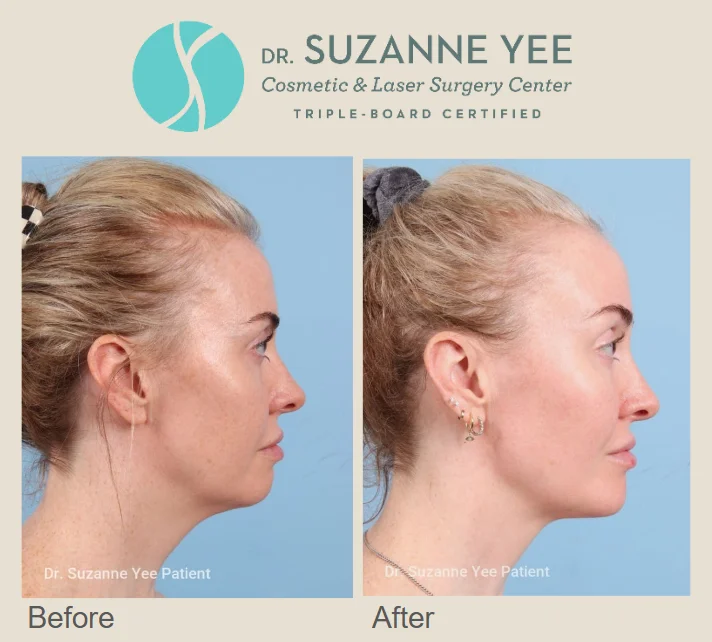
If you catch yourself lifting your forehead in the mirror to “open up” your eyes, that small habit is telling you something. A brow that has drifted down over time creates the exact heavy, tired look a brow lift is built to correct. It’s frustrating to notice, because no amount of rest seems to fix it.
The clearest signs of a descended brow show up in a few ways. Here’s what tends to point toward a brow lift:
- Brows that sit lower or flatter than they did in older photos
- A heavy, hooded feeling at the outer corners of the eyes
- Deep horizontal forehead lines, or frown lines between the brows
- A persistently tired or stern resting expression that doesn’t match your mood
There’s a simple at-home check. Place a finger at the tail of your brow and gently lift it to where it used to sit. If your eyes look more open and rested, a brow lift is likely addressing the real issue. If heavy skin still hangs over your lashes after lifting, your eyelids may need attention too.
Age matters less than most people assume. Candidates commonly range from their late 30s into their 60s and beyond. The right timing depends on your skin and the degree of drooping, not a birthday. If you want to understand what shifts at each stage, the practice’s wellness guide by decade maps it out.
Wanting to look as awake as you feel is reason enough to ask the question. The best way to know where you stand is a hands-on evaluation with triple board-certified cosmetic surgeon Dr. Yee, who can tell brow descent from an eyelid concern in seconds.
That kind of clarity is hard to reach from photos alone. If you’re curious where you land, reach out to our team for a candid conversation.
Do I need a brow lift, an upper eyelid lift, or a combination of both?
This question confuses many people, and for good reason. The brow and the eyelid sit right next to each other, so heaviness in one can look exactly like a problem in the other. Sorting out which is which changes your whole result.
The difference comes down to what’s actually being moved. A brow lift repositions the forehead and brow upward. An upper eyelid lift, or blepharoplasty, removes excess skin from the lid itself without changing where your brow sits.
| Concern | Brow lift | Upper eyelid lift |
|---|---|---|
| What it treats | Low, heavy brow | Excess eyelid skin |
| Main area | Forehead and brow | The eyelid itself |
| Softens forehead lines | Yes | No |
| Best for hooding from | A dropped brow | Loose lid skin |
Here’s the part that surprises people. If you only fix the eyelids when a low brow is the real culprit, the forehead muscle holding the brow up can relax and let it settle even lower. So surgeons often recommend doing both together for a balanced result.
The good news is that pairing the two is well studied. A large study of 6,126 patients found that combining a brow lift with eyelid surgery did not raise the rate of significant 30-day issues. It makes sense to feel unsure which approach is yours, and that’s exactly what a thorough evaluation is for.
What are the different brow lift techniques and where will my scars be?
Scarring is one of the first worries people have, and it’s a fair one. The reassuring reality is that where your scars land depends almost entirely on which technique your surgeon uses. Most modern approaches keep incisions hidden or very small.
Endoscopic brow lift
The endoscopic approach is the modern standard for full-brow rejuvenation. The surgeon makes a few small incisions, about half an inch each, tucked entirely within the scalp, then guides the lift from underneath with a tiny camera. Because everything hides behind the hairline, visible scarring is minimal, and most incisions are hard to spot once healed.
Temporal or lateral brow lift
A temporal lift is the least invasive option, focusing only on the outer third of the brow. Through small incisions behind the temple hairline, it elevates a sagging brow tail and eases hooding at the outer corner of the eye. It’s a focused fix rather than a full-forehead lift.
Direct brow lift
A direct brow lift removes a thin strip of skin right at the top edge of the brow, giving precise control over brow height. The trade-off is a fine scar just above the brow line. This approach is usually reserved for patients with deep forehead creases or thick brow hair that can camouflage the line.
If incision placement is your biggest concern, that’s completely normal. It’s one of the most useful things to map out in person, where your surgeon can show you exactly where your lines would fall.
What do real patients before and after photos show about realistic brow lift results?
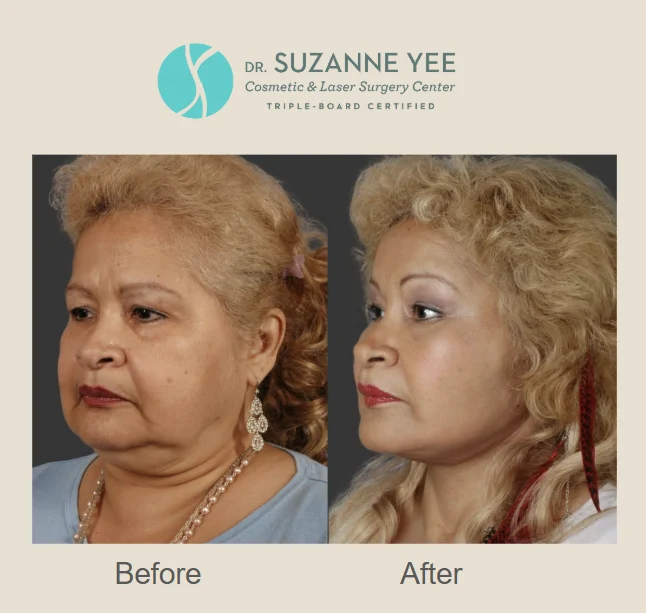
Here’s the honest truth those scroll-stopping photos won’t tell you. A good brow lift is subtle. Clinical measurements put a realistic lift at roughly 2 to 5 millimeters, enough to reopen the eyes and lift the brow tail, but not enough to look startled. You’re scanning a gallery for a rested upper face, not a radically different one.
So what should you actually look for in a before-and-after pair? Train your eye on these subtle, telling changes:
- Less hooding and crowding above the eyes
- A gently restored arch at the outer brow
- Softer horizontal forehead lines and eased frown lines between the brows
- The same face, just more rested, with expressions that still look like yours
The fear of looking permanently surprised is the one almost everyone names, and the evidence is reassuring. A study that ran AI emotional analysis on patient photos found no meaningful change in perceived surprise after surgery.
Perceived sadness actually dropped from about 13.06 percent to 5.42 percent. A well-done lift reads as rested, not shocked.
Seeing real results also means holding the photos to a real standard. Standardized medical photos use the same lighting, angle, and neutral expression before and after, which is the only fair comparison.
To hold the lifted brow in its new position, Dr. Yee places Endotine® anchors, small absorbable supports made of polylactic acid. They begin to dissolve at about two months and are completely gone within a year, so nothing has to be removed later. It’s part of why results in a careful gallery look so settled.
Karla, a patient whose facial result captured this kind of natural change, shared her experience:
“I am 6 wks out of my lower facelift with Dr Yee. My results are so natural and took years off my appearance. This can be a scary experience, but Dr Yee and her staff put me at ease before and after the procedure. I will definitely be using Dr Yee for any future procedures, and highly recommend her and her staff.”
The most useful thing you can do is study photos of patients who started where you are now. To see standardized results, browse real patient before-and-after photos in the brow lift gallery.
What should I realistically expect during my week-by-week brow lift recovery?
Recovery is gentler than most people brace for, but it does ask you to slow down for a stretch. The first few days can feel frustrating, especially if you’re used to running your own schedule.
In the early days, expect tightness, swelling, and mild to moderate soreness across the forehead, usually well managed with the medication your surgeon prescribes. Bruising and swelling gradually fade within the first few weeks. Most patients return to desk work in about 7 to 14 days, with vigorous exercise set aside for a few weeks longer.
Headaches deserve a direct mention, because they’re a normal part of early healing. The forehead muscles were just repositioned, so a tension-like ache in the first days is expected and manageable, not a warning sign on its own. What matters is having a clear plan and a number to call.
That’s where recovery here feels different. Instead of leaving you to piece things together alone, our team checks in proactively between visits, and questions you submit get reviewed personally. Your final, fully settled result keeps developing over the next 3 to 6 months.

How long do brow lift results last and what determines their longevity?
It’s natural to want a number here, but the most honest way to think about longevity isn’t an expiration date. A brow lift doesn’t stop the clock. It resets your starting point, so you keep aging from a younger baseline and stay years ahead of where you’d be without it.
Picture two versions of yourself a decade from now. The one who had a brow lift still ages naturally, but always looks meaningfully ahead of the one who didn’t. That’s the realistic promise of the procedure.
A few things help you hold onto that head start. Sun protection is the biggest, since unprotected sun is one of the fastest drivers of skin aging, so daily SPF, hats, and sunglasses genuinely matter. Steady skin care and avoiding big weight swings help too.
Daphne, a patient whose results have held over the years, shared her experience:
“I can not say enough good stuff about Dr. Yee and her staff. Everybody is so welcoming and kind. I have had a facelift..browlift..chin implant..fillers…ThermiVa…breast lift and implants. I have only felt confidence and safety with every procedure. I had lost my smile over the years from putting myself last on the to-do list and Dr Yee has helped me not only find it but surpass where it was before.”
Should you ever want a refresh later in life, that’s continued natural aging, not the original result failing you.
How do you know if a surgeon is the right fit for your brow lift?
A consultation is where all of this stops being abstract. It’s worth remembering the visit runs both ways. This isn’t only a chance for a surgeon to evaluate you. It’s equally your chance to evaluate them, see the facility, and decide whether it feels right.
In person, Dr. Yee performs a hands-on assessment of your brow position, eyelid skin, and how the two move together, something a screen can’t replicate. She asks about your routine and what you want to feel comfortable doing again, then explains why a specific technique fits your anatomy. Your visit takes place at an AAAHC-accredited private surgical center in Little Rock, so you can see exactly where your procedure would happen.
Cost naturally comes up, and the practice keeps it transparent. Your quote bundles the surgeon’s fee, anesthesia, facility fees, and follow-up visits into one total, with only pre-op labs and prescribed medications billed separately. To make the decision easier on your budget, the office offers flexible financing through Cherry, Alphaeon Credit, CareCredit, PatientFi, and Alle.
Taking your time with a decision this personal is exactly the right instinct. When you’re ready, schedule your personal consultation at the Little Rock office, or call (501) 493-3661.
Conclusion
You came here trying to make sense of a confusing wall of before-and-after photos, unsure which ones reflected a result you’d actually want. Now you have a clearer eye. A realistic brow lift is a subtle, natural refresh that reopens a tired upper face. The scars depend on technique, and the results keep you ahead of the aging curve rather than frozen in place.
The single most helpful next step is to study real patient photos of people who started where you are. So browse the brow lift gallery first, and when the images raise questions, a personal visit fills in the rest.
Every patient deserves to feel genuinely heard and confident in a decision this personal. That thread, exceptional results paired with genuine care, is what Dr. Suzanne Yee brings to brow lift patients across Little Rock and Central Arkansas. When you’re ready to talk it through, request an appointment or call (501) 493-3661.
Frequently asked questions
Is a brow lift painful compared to other facial surgeries?
Most patients describe mild to moderate discomfort rather than sharp pain, usually tightness and pressure across the forehead in the first few days. It’s typically well managed with prescribed or over-the-counter medication. A tension-style headache early on is common and expected as the forehead settles.
Can I get a brow lift under local anesthesia instead of general anesthesia?
At the Little Rock office, brow lift surgery is performed under general anesthesia, so you’re comfortable and won’t feel anything during the procedure. It’s administered by a Certified Registered Nurse Anesthetist (CRNA) as part of the experienced surgical team, with monitoring throughout for your safety.
How much does a brow lift cost, and does insurance cover it?
The cost depends on your technique and the details of your plan, so a personalized estimate comes from your in-person consultation. A brow lift is usually considered cosmetic and not covered by insurance, though a portion may qualify when severe brow drooping clearly impairs vision. Your quote bundles the surgeon’s fee, anesthesia, facility fees, and follow-up visits into one total, with only pre-op labs and prescribed medications billed separately.
What are Endotines and how are they used in a brow lift?
Endotines are small absorbable anchors, made of polylactic acid, that hold the lifted forehead tissue in its new position while it heals. They begin to dissolve at approximately two months and are completely dissolved by one year, so nothing has to be removed later. It’s a key reason the lift stays secure during healing.
Can Botox achieve the same results as a surgical brow lift?
BOTOX® can soften forehead lines and give a slight, temporary lift to the brow, which makes it a nice option for mild concerns. It can’t reposition a truly descended brow or deliver the lasting elevation of surgery, since the effect fades in a few months. Think of it as maintenance rather than a replacement.
Can I still raise and move my eyebrows naturally after a brow lift?
Yes. A well-performed brow lift repositions the brow while preserving your natural movement and expressions. You can still raise your brows and emote normally. The goal is a rested look that still reads as you, not a frozen or startled appearance.
Is it normal for my results to look uneven or asymmetrical during the first week?
Early unevenness is very common and usually comes from swelling settling at different rates on each side, not from a problem with the lift. As swelling resolves over the following weeks, symmetry typically improves. If you’re ever unsure, your surgeon would rather you call and ask than worry alone.
Does a brow lift lift the eyelids too?
A brow lift can reduce hooding at the outer eye by raising a heavy brow, but it doesn’t remove excess skin from the lid itself. When loose lid skin is the main issue, an eyelid lift handles it directly, and many patients combine the two for the most balanced result.
*Disclaimer: This content is for educational purposes only and does not constitute medical advice. A consultation with a qualified board-certified surgeon is required to determine the best treatment plan for your individual needs.