Instagram
 Facebook
 Tiktok
 Youtube
 X
 LinkedIn

 (501) 224-1044

Getting breast implants doesn’t mean giving up breastfeeding later. It’s one of the most common worries women bring to a consultation, and the honest answer is reassuring. Most women with implants who want to breastfeed are able to.
Whether you already have implants and are planning a family, or you’re considering augmentation and thinking ahead, it helps to know how the two fit together. In 2024, 54 percent of breast augmentations worldwide were performed on women aged 18 to 34, right in the childbearing years. That overlap is exactly why this question comes up so often.
This guide comes from the team at Dr. Suzanne Yee Cosmetic & Laser Surgery Center in Little Rock, Arkansas. Triple board-certified cosmetic surgeon Dr. Suzanne Yee is a mother of two who has cared for Arkansas families since the 1990s. Ahead, we’ll cover what the research says about safety, how surgical choices affect your milk supply, the changes to expect, and the steps that improve your odds.
Key takeaways
If you only read one section, make it this one. Here’s what matters most about breastfeeding after breast augmentation:
- Most women with breast implants can breastfeed, and research finds no evidence that silicone or saline makes breast milk unsafe for a baby.
- The incision location matters most. An inframammary (under-the-fold) incision leaves milk ducts undisturbed, while a periareolar (around-the-nipple) incision carries a higher chance of affecting supply or sensation.
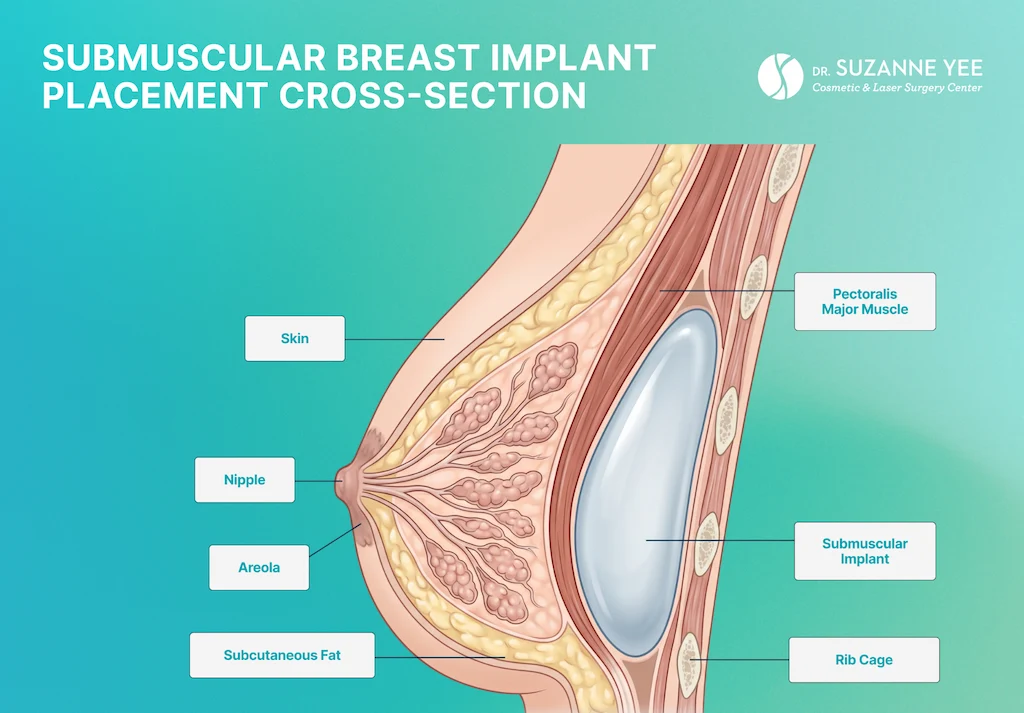
- Placing the implant under the chest muscle helps keep it off the milk-making glands, which supports milk supply and clearer mammograms.
- Breastfeeding itself doesn’t cause sagging. Pregnancy, age, and genetics drive those changes, so nursing won’t undo your augmentation results.
- Planning ahead makes the biggest difference: heal fully before pregnancy, discuss future children at your consultation, and line up a lactation consultant early.
Is it safe to breastfeed with breast implants?
Yes. For the vast majority of mothers, breastfeeding with implants is safe for both you and your baby. This is the worry that tends to surface first, and wanting a clear answer before anything else is completely understandable.
Large reviews back this up. A 2023 meta-analysis of nearly 10,000 women with implants found that most were able to breastfeed. The implant sits either behind your breast tissue or under the chest muscle, not inside the milk-making glands themselves.
Here’s what the research consistently shows:
- Silicone and saline don’t meaningfully pass into breast milk, and babies nursed by mothers with silicone implants develop normally.
- The nutrients, proteins, and protective antibodies in your milk are produced inside the milk glands, which an implant doesn’t occupy.
- Major health organizations, including the FDA and CDC, find no evidence that nursing with implants is unsafe for your baby.
International bodies agree with that picture. ISAPS notes there’s no evidence that implants affect the safety of breastfeeding. Women with implants are, on average, a little less likely to breastfeed exclusively, but that gap is mostly about worry and choosing to supplement, not unsafe milk.
If you’ve been carrying this fear quietly, you can set some of it down. The bigger variables aren’t safety; they’re the surgical choices behind your augmentation, which is where we’ll go next.
How do surgical technique and implant choices affect your milk supply?
Here’s where your decisions actually move the needle. How your milk flows later depends a lot on where the incision is placed and where the implant sits. Two women with the same implants can have very different experiences based on approach alone.
| Surgical choice | Why it matters for breastfeeding |
|---|---|
| Inframammary incision (under the fold) | The surgeon works beneath the breast, leaving the milk ducts and nipple nerves undisturbed. |
| Periareolar incision (around the areola) | Sits near the ducts and nerves, so it carries a higher chance of affecting supply or sensation. |
| Under-the-muscle (submuscular) placement | Keeps the implant off the milk glands and can make mammograms easier to read. |
The logic is physical. Milk travels through tiny ducts to the nipple, and an incision around the areola is the one most likely to cross them, according to the CDC. An incision in the fold under the breast avoids that path entirely.
This is where an experienced surgeon earns their keep. Dr. Yee is triple board-certified by the American Board of Cosmetic Surgery and the American Board of Facial Plastic and Reconstructive Surgery, as well as the American Board of Otolaryngology–Head and Neck Surgery. She favors the inframammary incision with the implant under the muscle, a combination that protects the ducts and the nerves that signal your body to make milk.
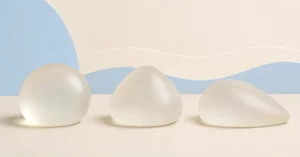
Implant type plays a smaller role than incision and placement, but it still comes up. The practice uses smooth implants only for breast augmentation and does not use textured implants, which are the ones linked to a rare cancer called BIA-ALCL. Very large or high-projection implants can put more pressure on the breast, worth raising if breastfeeding is a priority for you.
None of this means you need to become a surgical expert. It means the conversation you have before surgery matters, and a surgeon who plans around your goals can tilt the odds in your favor. Even so, your body will change through pregnancy, so let’s talk about what to expect.
What physical changes should you expect when breastfeeding with implants?
Pregnancy and breastfeeding change every woman’s breasts, implants or not. They grow as your milk comes in, then settle again after weaning, and some of that change stays. Knowing this ahead of time keeps it from feeling like something went wrong.
One worry comes up again and again: will breastfeeding ruin my results? The reassuring news is that breastfeeding itself isn’t the culprit. An ASPS study found that sagging after pregnancy happens whether or not a woman nurses, driven by pregnancy, age, and genetics.
Loose skin is a separate issue from lost volume. If sagging is your real concern, a breast lift addresses it more directly than implants alone.
Latching can take patience. In one 2025 study, about 21 percent of mothers with implants had some latching difficulty early on. Firmer, fuller breasts can flatten the nipple, which makes it harder for a small mouth to get a deep latch. A lactation consultant can help you find positions that work.
When your milk first comes in, engorgement can feel more intense with an implant underneath, since the swelling has less room to expand. It usually eases within a few days as your supply regulates. If it turns painful, or you notice firm areas that don’t soften, call your surgeon or lactation consultant rather than managing it on your own.
Lisa, a patient at the practice’s Little Rock office who valued a clear, unhurried explanation of what to expect, shared her experience:
“I had breast augmentation surgery with Dr Yee in January 2019. She made the entire process very easy, informative, and comfortable. She answered every question honestly and made sure I understood at every step along the way. She explained everything about the procedure and recovery in detail.”
Feeling unsure about how your body will respond is completely normal, and none of these changes mean you did anything wrong. With a plan in place, most of them are manageable, which brings us to the steps that make the biggest difference.
What steps help you successfully breastfeed after breast augmentation?

You have more control here than it might feel like right now. A few concrete steps, most of them before your baby arrives, stack the odds in your favor:
- Let your surgery fully heal before pregnancy. Implants keep settling for up to a year, so give your body time to reach its new baseline.
- Talk about future children at your consultation, so incision and placement can be chosen with breastfeeding in mind.
- Line up an International Board Certified Lactation Consultant (IBCLC) during pregnancy, not after a problem starts.
- Watch your baby’s wet diapers and weight gain, and supplement with donor milk or formula under medical guidance if your supply runs low.
Your consultation is where you set all of this up. It isn’t only your surgeon evaluating you; it’s equally your chance to evaluate the fit. Ask directly how the incision and placement will be chosen if breastfeeding matters to you, and notice whether you feel genuinely heard.
At the Little Rock office, that conversation is unhurried, and nothing is off limits, including questions that feel small. Consultations and procedures happen at an on-site surgical center accredited by the Accreditation Association for Ambulatory Health Care, so you can see the facility during the same visit.
Some women also want to address post-pregnancy changes later on. If nursing leaves you with less volume than before, a mommy makeover can restore fullness once you’re done having children, with no rush to decide now.
If you’re weighing all of this, schedule a consultation with Dr. Yee to map out an approach built around your family plans.
Cost shouldn’t be the thing that stops you from asking. The office offers flexible financing through Cherry, Alphaeon Credit, CareCredit, PatientFi, and Alle, so you can choose a plan that fits.
Kayli, who chose her cosmetic surgeon after researching across Arkansas and drove two hours for her consultation, shared her experience:
“After three kids I was looking for a boost in my confidence to get a breast augmentation. I did my research on most of the surgeons in Arkansas and after careful consideration and recommendations I found Doctor Yee. I made the two hour drive for consultation and I knew it was the perfect fit.”
Doing this much homework before a decision this personal is exactly the right instinct. With a surgeon who plans around your goals, breastfeeding after augmentation is a realistic goal for most women.
Conclusion
Implants do not have to cost you the chance to breastfeed. For most women, breast augmentation and breastfeeding can coexist, especially when the surgery is planned with your future family in mind.
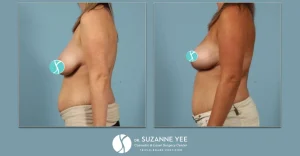
Browsing real patient before-and-after photos that match your starting point is one of the most useful things you can do next. When you’re ready, a personal consultation fills in the details a photo can’t show.
That kind of clarity is what Dr. Suzanne Yee and her Little Rock team aim for with every patient: exceptional results and genuine care, where you feel heard from the first visit through recovery. When you’re ready to talk it through, request your personal consultation or call (501) 224-1044.
Frequently asked questions
Can silicone or saline from my implants leak into my breast milk?
This is the fear that stops many mothers cold, and it’s worth putting to rest. Studies measuring silicon levels in breast milk found no meaningful difference between mothers with silicone implants and those without. Saline is simply salt water, which your body already handles safely.
Does getting breast implants mean I definitely can’t breastfeed?
No. Most women with implants can breastfeed, especially when the incision and implant placement protect the milk ducts. Whether you can depend far more on your surgical approach and your own anatomy than on the implants themselves.
Is it safe for my baby to nurse if I have breast implants?
Yes. Clinical evaluations of babies nursed by mothers with implants show normal development, and major health organizations find no evidence of harm. The nutrients and antibodies in breast milk are made in the milk glands, which the implant doesn’t touch.
Will breastfeeding make my augmented breasts sag?
It’s a common worry, but breastfeeding isn’t what causes sagging. Pregnancy, natural aging, and genetics are the real drivers, and those changes happen whether or not you nurse.
How long should I wait after breast augmentation before getting pregnant?
Most surgeons recommend waiting until your surgery has fully healed, often several months to about a year. Implants keep settling during that time, so letting your body reach its final result first helps protect your outcome.
Can I still breastfeed if I had a breast lift along with my implants?
Often yes, though a lift can involve incisions closer to the nipple, which may affect some women’s supply. If you had both procedures, share that history with a lactation consultant early so you can monitor your milk supply from day one.
Do breast implants make it harder for my baby to latch?
They can in the early days, especially when fuller, firmer breasts flatten the nipple. A little coaching from a lactation consultant on positioning usually solves it, and it gets easier as engorgement eases.
Can I get a breast augmentation while I’m still breastfeeding?
No. Your breasts need to return to their non-nursing size and shape first, which usually takes several months after you finish breastfeeding. Operating before then makes it hard to choose the right implant size and can affect healing.
How long after I stop breastfeeding should I wait to get implants?
Most surgeons suggest waiting at least six months after you’ve fully weaned. That gives your milk production time to stop, and your breast tissue time to settle, so your surgeon can plan around your true baseline. A personal consultation is the best way to confirm the right timing for you.
Will engorgement feel more intense with implants?
It can, because the swelling of your milk coming in has less room to expand around an implant. It typically settles within a few days as your supply regulates. If it becomes painful or you feel firm areas that won’t soften, reach out to your surgeon or a lactation consultant instead of managing it alone.
*Disclaimer: This content is for educational purposes only and does not constitute medical advice. A consultation with a qualified board-certified surgeon is required to determine the best treatment plan for your individual needs.