Instagram
 Facebook
 Tiktok
 Youtube
 X
X LinkedIn
 (501) 224-1044

The alarming headlines about breast implants, implant-related cancer, whole-body symptoms with no obvious cause, ruptures you cannot feel, describe real problems. What the headlines tend to skip is how uncommon most of them are, how narrow the real risk factors turn out to be, and how much of the risk a careful surgical plan simply heads off.
Few medical devices are tracked as closely as breast implants, which are studied for years after they reach the market. One FDA post-approval study followed 99,993 patients to see how saline and silicone implants held up over time. Data like that is what lets you weigh the actual risks of breast augmentation instead of guessing at them.
At Dr. Suzanne Yee Cosmetic & Laser Surgery Center in Little Rock, patients see the whole picture before anything is decided: the everyday issues, the rare ones, and the choices that move the odds. This article covers the short and long-term problems, breast implant cancer, breast implant illness, the FDA’s current safety rules, and the steps that make your procedure as safe as it can be.
Key takeaways
If you read nothing else, here is what breast augmentation safety really comes down to, from the routine risks to the rare ones you have probably seen online.
- Most implant problems are local and manageable, things like capsular contracture, rupture, or shifting, and an experienced surgeon lowers the odds of each.
- BIA-ALCL is a rare immune-system cancer linked almost entirely to textured implants, so a surgeon who uses smooth implants only takes that specific risk off the table.
- Breast implant illness refers to real systemic symptoms some patients report. No study has proven implants cause them, and symptoms often ease after removal.
- Implants are not lifetime devices. Silicone ruptures are often silent, which is why the FDA recommends routine imaging starting a few years after surgery.
- Your biggest safety lever is your choice of surgeon: board-certified, operating in an accredited facility, and willing to walk you through the FDA decision checklist personally.
What are the most common problems with breast implants?

Most problems with breast implants are local, meaning they involve the implant or the pocket around it, not your whole body. They’re also the risks your surgeon plans around every day. Knowing what they are takes away a lot of their power to frighten you.
At Dr. Yee’s Little Rock practice, every procedure takes place in an on-site surgical center accredited by the Accreditation Association for Ambulatory Health Care. A Certified Registered Nurse Anesthetist (CRNA) administers general anesthesia as part of the surgical team. That whole setup exists to keep the risks below as low as they reasonably go.
And even with these issues in the picture, long-term satisfaction with breast enhancement stays high. Worth keeping in mind as we go through each one.
Early surgical concerns
In the first days after surgery, what you watch for looks a lot like any operation: some minor bruising under the skin, temporary swelling, and once in a while a small pocket of fluid your body reabsorbs on its own.
Serious infection is uncommon when the technique is careful, and your surgeon uses sterile, no-touch methods specifically to keep it that way. Anything that does come up is usually caught early at a follow-up visit and handled before it grows into something bigger. This is not meant to worry you. It is simply the routine your care team is trained for.
Capsular contracture
Your body forms a thin scar capsule around any implant, which is normal and expected. Capsular contracture is when that capsule tightens and hardens, which can leave the breast feeling firm or looking distorted. Surgeons grade it on the Baker scale, from mild cases that feel a little firm to more advanced ones that may need treatment.
It is one of the more common reasons a patient comes back for a revision, and it responds well to treatment when it happens. Because implant placement and surgical technique both affect how likely it is, the choices you make with your surgeon carry real weight here.
Rupture and shifting
Implants can rupture over time from ordinary wear, and now and then they shift out of position. In an FDA 10-year study, the risk of silicone rupture sat around 7.8% at the decade mark, which is the whole reason long-term monitoring comes with the territory. Malposition, where the implant settles too low or off to one side, is uncommon and fixable with revision surgery.
Changes in sensation
For a lot of patients, the biggest worry is losing nipple or breast sensation. The reassuring part is that lasting change is rare. In a large study of nearly 5,000 patients, the 10-year risk of a first-time nipple sensation change was just 0.4%. Most of the altered feeling people notice in the early weeks fades as the nerves recover.
Needing a revision later
Now the honest part. Because implants are not permanent, many patients have a second surgery at some point, whether for rupture, contracture, or simply a change of heart about size or type. Revision is common enough that global breast implant removals reached 341,971 in 2024.
That is a planned possibility, not a failure. When the time comes, Dr. Yee performs implant removal and revision, often swapping implants in a single procedure. Treating augmentation as something you maintain over the years, rather than a one-and-done event, keeps the surprises to a minimum.
What is breast implant cancer (BIA-ALCL), and who is at risk?
This is the risk that frightens people most, so let us be precise. BIA-ALCL is a rare cancer, a type of non-Hodgkin lymphoma that develops in the scar capsule around an implant, according to the FDA. It is a cancer of the immune system, not of breast tissue, and once you understand what drives it, the picture shifts.
It’s tied to textured implants
The single most important fact here: BIA-ALCL is linked almost entirely to textured-surface implants, not smooth ones. The FDA traced the large majority of cases, 84% in its global dataset, to one line of textured implants that was later recalled. Among women with textured implants, lifetime risk estimates vary widely but stay low.
This is where a surgeon’s choices matter enormously. Dr. Yee uses smooth implants only and has never used textured or teardrop-shaped implants in her career, precisely because of this risk. For her patients, the implant type most associated with BIA-ALCL simply isn’t on the table.
Warning signs and how it’s treated
BIA-ALCL usually surfaces years after surgery, most often between seven and 10 years out, as swelling or fluid builds up around one breast. Once in a while a lump forms in the capsule. Because it develops slowly and shows itself, it is the kind of change you and your surgeon can catch.
Found early, the outlook is very good. Standard treatment is removing the implant along with the surrounding capsule, and localized cases are often resolved with surgery alone. There is also an even rarer implant-associated cancer, BIA-SCC, still under study, but it remains exceptionally uncommon.
You are not navigating this alone, and no one expects you to memorize the science. The risk is real but preventable, and it hinges largely on a choice your surgeon controls. That is what takes it from a scary headline to a fact you can manage.
What is breast implant illness, and what are its symptoms?
Breast implant illness, or BII, is one of the harder subjects to write about honestly, because the science is still coming together and the experiences behind it are very real. It describes a cluster of whole-body symptoms some patients tie to their implants. If you have read about it and felt a jolt of worry, that reaction makes complete sense.
The symptoms patients report
Patients who describe BII report a wide range of systemic symptoms. The most common are fatigue, brain fog, joint and muscle aches, hair changes, and trouble concentrating. A 2025 meta-analysis of more than 6,000 women documented these patterns in detail.
These symptoms are real to the people living with them, and brushing them off helps no one. At the same time, they overlap heavily with many other common conditions, which is what makes BII so hard to pin down.
The state of the evidence
So where does the research stand? No study has proven that implants directly cause these symptoms, and major medical organizations call the link unestablished rather than confirmed. That kind of uncertainty is frustrating when you just want a clear yes or no.
What the evidence does point to is more encouraging than the uncertainty suggests. Studies consistently find that many patients report meaningful improvement in their symptoms once their implants are removed. Since BII is diagnosed by ruling other causes out, a thorough medical workup with a board-certified cosmetic surgeon is the right first step if you are concerned.
Emily, a patient who valued being fully informed before deciding, shared their experience:
“I couldn’t be happier with my breast augmentation results! From my very first consultation, the entire team made me feel so comfortable and supported. They were all incredibly friendly and informative, answering all my questions and making sure I felt confident in the choices that I wanted.”
What are the FDA’s safety guidelines and screening recommendations?
The FDA treats breast implants as devices that need ongoing oversight, which actually works in your favor. Its rules are built to keep you informed before surgery and monitored afterward. Understanding them helps you know what good care should look like.
The patient decision checklist
In 2021, the FDA finalized a mandatory Patient Decision Checklist alongside a boxed warning on implant labeling. The checklist walks you through the known risks in plain language, rupture, BIA-ALCL, and systemic symptoms among them, before you consent. Your surgeon has to review and sign it with you personally, a duty that cannot be passed off to staff.
That requirement exists to make sure a real conversation happens instead of a stack of forms. It is a good sign, and one you should expect from any surgeon you trust.
Screening for silent ruptures
Silicone ruptures are often silent, meaning the gel stays inside the scar capsule and you feel nothing at all. That is why the FDA recommends imaging to check silicone implants starting 5 to 6 years after surgery, then every two to three years after that. Both high-resolution ultrasound and MRI are accepted, and ultrasound is usually the easier one to get.
This isn’t something to dread. It’s simply the routine maintenance that comes with choosing implants, and it’s how a quiet issue gets caught early.
Implants and your mammograms
Implants can make mammograms trickier, since they are dense enough to hide some breast tissue on the image. The workaround is well established: specialized displacement views, sometimes called Eklund views, gently shift the implant aside so the radiologist can see around it.
The practical takeaway is simple. Always tell your mammogram technologist you have implants so they use the right technique. Your routine breast cancer screening carries on as usual, just with one extra step.
How can you lower your risks and choose a safe breast augmentation?
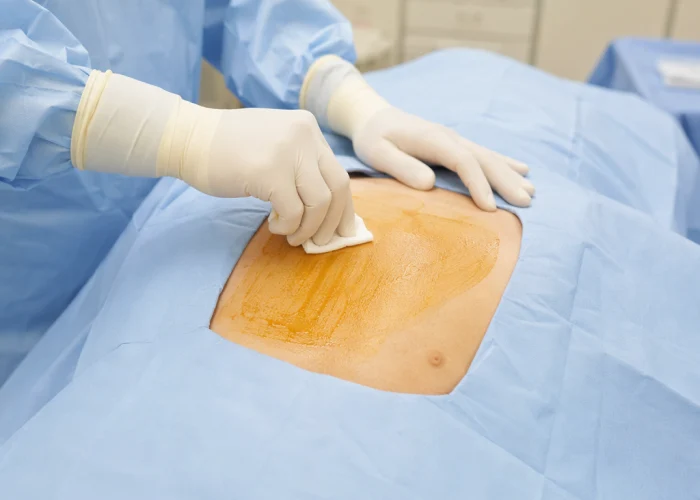
This is the part you actually control, and it is where most of your safety is won or lost. The risks above are not handed out at random. They are shaped heavily by who operates on you, how, and where. Researching this carefully before you commit is exactly the right approach.
Choose a board-certified cosmetic surgeon
Your surgeon’s training is the single biggest factor in your outcome. Look for board certification that reflects real, verified expertise, and don’t be shy about asking which boards a surgeon holds. Dr. Suzanne Yee is a triple board-certified cosmetic surgeon. Her certifications span the American Board of Cosmetic Surgery for facial cosmetic surgery, the American Board of Cosmetic Surgery for body, breast, and extremity, and the American Board of Facial Plastic and Reconstructive Surgery.
Ask to see before-and-after photos of the surgeon’s own patients, and notice whether the surgery itself happens in an accredited facility. Her Little Rock surgical center is accredited by the AAAHC, which means it meets national standards for safety and monitoring.
Placement and technique
Where the implant sits changes your risk profile. Placing it under the chest muscle, known as submuscular placement, is associated with lower rates of capsular contracture and also makes mammograms easier to read. Your surgeon weighs this against your anatomy and your goals rather than reaching for a one-size formula.
Technique matters just as much as placement. The no-touch Keller Funnel delivery method, which she is certified in, limits how much the implant contacts skin, which lowers infection risk and eases the strain on the incision.
Preventing infection before and after surgery
A safe result starts weeks ahead of the procedure, and these steps are requirements, not suggestions. You will need pre-op labs plus a nicotine and drug test, and you have to follow the fasting instructions before anesthesia. If you smoke, this is the moment to step away from it, ideally for six weeks before and after surgery.
Alcohol thins the blood and affects clotting, so plan to stop about two weeks before and two weeks after. Once you are home, following your personalized post-op instructions closely is what keeps infection risk low. For any swelling or discomfort, lean on the guidance your surgeon gives you directly rather than home remedies you find online.
Saline versus silicone safety
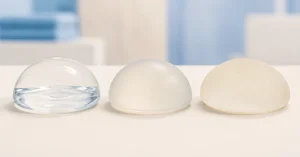
Saline and silicone each carry a slightly different safety profile, and neither is simply the safer choice. Saline ruptures deflate quickly, so you’ll know right away, while silicone ruptures are usually silent and found through imaging. A 5-year study of over 48,000 patients found silicone gel implants did not carry a greater risk of long-term systemic disease. Your surgeon helps you weigh feel, appearance, and monitoring together.
This is also the moment to see the consultation for what it really is. It is not only the surgeon’s chance to evaluate you, it is your chance to evaluate the surgeon. Before recommending anything, she asks about your health history, your goals, and what you want to feel comfortable doing again afterward. Then she explains why a particular approach fits your anatomy instead of handing you a template.
Cost should never be the reason you cut corners on planning. The Little Rock office offers flexible financing through Cherry, Alphaeon Credit, CareCredit, PatientFi, and Alle, so you can pick a plan that fits your budget. Every one of these decisions is easier to make face to face. To talk through your risks and options in person, you can schedule a consultation at the Little Rock office.
Lisa, a patient who wanted to understand every step before her surgery, shared their experience:
“I had breast augmentation surgery with Dr Yee. She made the entire process very easy, informative, and comfortable. She answered every question honestly and made sure I understood at every step along the way. She explained everything about the procedure and recovery in detail.”
Conclusion
The frightening headlines describe real problems. What they leave out is how uncommon most of them are, and how much of the risk a careful surgical plan simply heads off. The common problems with breast augmentation are mostly local and manageable, the alarming ones like BIA-ALCL are rare and tied largely to implant choices, and your surgeon’s skill shapes nearly all of it.
One of the most useful next steps is just to look. Browsing real patient before-and-after photos shows you honest outcomes, and when you are ready, an in-person visit fills in the details a photo cannot.
Every patient deserves to feel heard, respected, and confident in their choices, and that is the standard Dr. Suzanne Yee brings to her Little Rock patients, guided by a philosophy of enhancement, not transformation. Real results and genuine care start with an honest conversation. When you are ready, request your personal consultation or call (501) 289-5460.
Frequently asked questions
Do breast implants hurt, and how much pain should I expect?
You will not feel anything during the surgery itself, since it is done under general anesthesia. Afterward, soreness and tightness across the chest and underarms are normal for the first several days, then ease off steadily. Once you are fully healed, the implants themselves should not cause ongoing pain, and any lasting or worsening pain is worth reporting to your surgeon.
Will I gain weight after getting breast implants?
Implants do not make your body gain weight. Each one weighs only a few ounces, not enough to move the scale in any real way. Weight changes after surgery usually trace back to ordinary life events, like pregnancy or a shift in activity, rather than the implants.
Are breast implants considered permanent lifetime devices?
No. The FDA is clear that implants are not lifetime devices, and the longer you have them, the more likely you are to need a related procedure at some point. Planning for future monitoring and possible replacement is part of choosing implants in the first place.
How often do breast implants need to be replaced?
There is no fixed expiration date, but many patients replace or remove their implants somewhere around 10 to 15 years. The reasons range from normal wear and rupture to simply wanting a different size or type. Routine imaging helps you and your surgeon decide when the timing is right.
Can I still breastfeed safely after breast augmentation?
There is no evidence that saline or silicone implants pose a risk to a breastfed baby. Surgery can sometimes affect milk supply, though placement under the muscle with an incision in the breast fold tends to preserve the milk ducts. If breastfeeding matters to you, raise it during your consultation so the surgical plan accounts for it.
Does having breast implants increase my risk of breast cancer?
Implants do not raise your risk of the common types of breast cancer. They are linked to BIA-ALCL, a rare immune-system cancer found almost exclusively with textured implants. Because smooth implants are not associated with that risk, the type of implant you choose matters here.
Can breast implants interfere with my routine mammograms?
They can hide some breast tissue on a standard mammogram, which is why the technique gets adjusted for patients with implants. Always tell your technologist you have implants so they can use special displacement views. Your regular breast cancer screening stays on schedule, just with that extra step.
What are the most common signs of a breast implant infection?
Signs include localized redness, warmth, swelling, tenderness, slow healing, and sometimes a fever. True infections are uncommon when the surgical technique is careful, but any of these symptoms in the weeks after surgery should prompt a call to your surgeon. Caught early, they are very treatable.
What is the difference between a saline and a silicone rupture?
A saline rupture is obvious: the saltwater leaks out and your body safely absorbs it, so the breast visibly deflates within days. A silicone rupture is usually silent, since the cohesive gel tends to stay inside the scar capsule. That difference is exactly why silicone implants call for routine imaging.
How can I tell if my silicone implant has had a silent rupture?
Often you cannot tell on your own, because a silent rupture usually causes no change in how the breast looks or feels. That is why the FDA recommends periodic ultrasound or MRI screening for silicone implants. Keeping up with those scans is the reliable way to catch a quiet rupture early.
What is the average risk of needing revision surgery?
Large FDA clinical trials show that roughly 1 in 4 breast augmentation patients needs some form of additional surgery within about five years. The reasons include rupture, capsular contracture, or wanting to change size. Choosing an experienced surgeon and sticking to your care plan helps keep that number as low as possible for you.
What does the FDA-mandated patient decision checklist require?
The checklist requires you to review and sign off on the key risks before surgery, including the boxed warning, BIA-ALCL, and breast implant illness symptoms. Your surgeon has to go through it with you personally rather than delegating it. It is designed to make sure you truly understand the decision, and it is a standard you should expect from any practice.
*Disclaimer: This content is for educational purposes only and does not constitute medical advice. A consultation with a qualified board-certified surgeon is required to determine the best treatment plan for your individual needs.