Instagram
 Facebook
 Tiktok
 Youtube
 X
X LinkedIn
 (501) 224-1044

“Non-surgical facelift” is a marketing umbrella, not a single treatment. Underneath it sit very different tools: injectables that relax muscles or restore volume, energy-based devices that tighten skin with heat, and threads that lift it mechanically. They share a pitch, no incisions and little downtime, but they do not share results.
So the useful question is not whether non-surgical options exist; it is how far they can actually take you. Done well, they soften early jowling, refresh tired eyes, and rejuvenate the face gradually. What they cannot do is remove significant loose skin the way surgery does, and any honest guide says so up front.
Demand is climbing fast either way. ISAPS reported nearly 1.24 million non-surgical skin-tightening procedures worldwide in 2024, up almost 39 percent in a single year.
At Dr. Suzanne Yee Cosmetic & Laser Surgery Center in Little Rock, patients can weigh injectables, energy-based tightening, and surgery side by side, so the guidance is not tied to selling one fix. This guide covers what a non-surgical facelift actually includes, today’s main options, how they feel, how they compare to surgery, and how to make the results last.
Key takeaways
If you’re weighing your options for a refreshed look without surgery, here’s the short version of what this guide covers.
- A non-surgical facelift isn’t one procedure but a group of treatments that lift and refresh the face without incisions, mostly by stimulating your own collagen and elastin.
- The most effective approach usually layers several treatments, such as radiofrequency microneedling, dermal fillers, the Y LIFT®, and lasers, to address tightness, volume, and skin quality together.
- These treatments require little to no downtime and use topical numbing rather than general anesthesia, but results build gradually and need periodic maintenance.
- Non-surgical options work best for early to moderate aging. Once sagging is significant, only a surgical facelift can reposition the deeper tissue and remove loose skin.
- No treatment stops aging, but consistent care keeps you looking well ahead of where you’d be without it, which makes honest, in-person guidance the most important first step.
What exactly is a non-surgical facelift, and how does it work?
A non-surgical facelift isn’t one procedure. It’s a label for a group of treatments that refresh the face without incisions, working with your skin rather than surgically adjusting it. Honestly, the name is a marketing term covering several very different tools.
The contrast with surgery is the clearest way to understand it. A traditional surgical facelift lifts the deeper tissue and trims away loose skin through hidden incisions. Non-surgical treatments don’t move or remove tissue. They prompt your body to do the refreshing from the inside.
Most work by stimulating collagen and elastin, the proteins that keep skin firm and springy. Production of both slows with age, which is part of why skin loosens. Heat, micro-injuries, or biostimulating injections can wake that process back up, so skin gradually rebuilds support over weeks.
It helps to know what’s actually changing as a face ages, because no single treatment addresses all of it. The two big drivers are:
- Skin laxity, the loosening and thinning of the skin itself, which energy-based treatments target best.
- Volume loss, the deflation in the cheeks and under the eyes as fat pads and bone shift, which fillers restore.
There’s also a deeper layer called the SMAS, a sheet of muscle and connective tissue that gives the face structure. Surgery lifts it directly, while non-surgical tools reach it only partially. That single fact explains most of what these treatments can and can’t do.
What are the most effective non-surgical facelift alternatives?
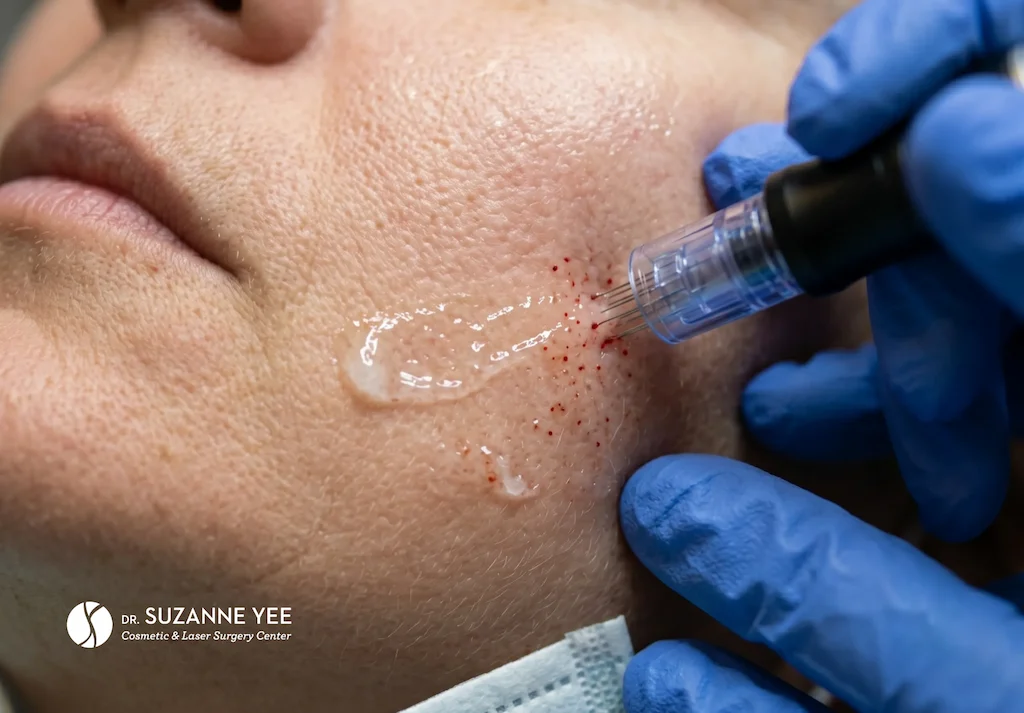
The strongest results usually come from combining a few targeted treatments rather than relying on one. Think of it less as a single facelift and more as a layered plan that addresses skin quality, volume, and tightness together. Here’s how the main options compare.
| Treatment | What it targets | How it works |
|---|---|---|
| Radiofrequency microneedling | Loose skin, jawline, under-chin | Heat plus micro-channels to rebuild collagen |
| Laser skin tightening | Skin laxity, texture, tone | Laser energy stimulates collagen in the dermis |
| Dermal fillers and liquid facelift | Volume loss, folds, hollows | Restores lost volume and lifts from within |
| Y LIFT | Sagging jowls, cheeks, under-eyes | Instant tissue lift held with filler |
| Neurotoxins like BOTOX | Brow position, jawline definition | Relaxes targeted muscles |
| Laser resurfacing and peels | Fine lines, sun damage, tone | Resurfaces the top layers to smooth skin |
You may have seen ultrasound-based options like Ultherapy or thread lifts mentioned elsewhere. Those are offered at some practices and worth asking about, though the toolkit below reflects what’s available here.
Radiofrequency microneedling
This treatment pairs tiny needles with radiofrequency heat to spark collagen deep in the skin. At her Little Rock office, triple board-certified cosmetic surgeon Dr. Yee offers radiofrequency microneedling to sculpt and contour the face, neck, and under-chin area in about half an hour. Most people notice gradual firming after one session, with the best results over a short series.
Dermal fillers and the liquid facelift
When the issue is deflation rather than loose skin, dermal fillers restore the volume that quietly disappears with age. Used across the cheeks, folds, and jawline, they create what’s often called a liquid facelift, smoothing and subtly lifting without surgery.
Collagen-stimulating options like Sculptra® and Radiesse® go further, prompting your own collagen to rebuild over time. In a randomized clinical trial, 85.6 percent of patients treated with a volumizing hyaluronic acid filler still saw improvement well over a year later.
The Y LIFT
The Y LIFT is one of the most facelift-like non-surgical options. A specialized instrument gently lifts the underlying tissue, and hyaluronic acid filler holds it in place, addressing sagging jowls, flat cheeks, and under-eye hollows. The whole procedure takes under 30 minutes, and many patients see the change the next day.
Neurotoxins like BOTOX
BOTOX® and similar neurotoxins relax specific muscles to soften lines and refine the lower face. By easing the muscles that pull the brow down, or by slimming a heavy jaw, a skilled injector can create a subtle lifting effect. It won’t replace volume or tighten loose skin, but it’s a precise finishing touch within a larger plan.
Laser resurfacing and chemical peels
These treatments work on the surface, smoothing fine lines, fading sun damage, and evening out tone. They don’t lift, but the healthier skin they create is the canvas every other treatment depends on.
Not sure which combination fits your face? You can request an appointment to map out a plan with a board-certified cosmetic surgeon who works with all of these tools.
Patients interested in other aesthetic treatments can also consider body sculpting, Little Rock services for areas beyond the face.
What is it actually like to undergo a non-surgical treatment?
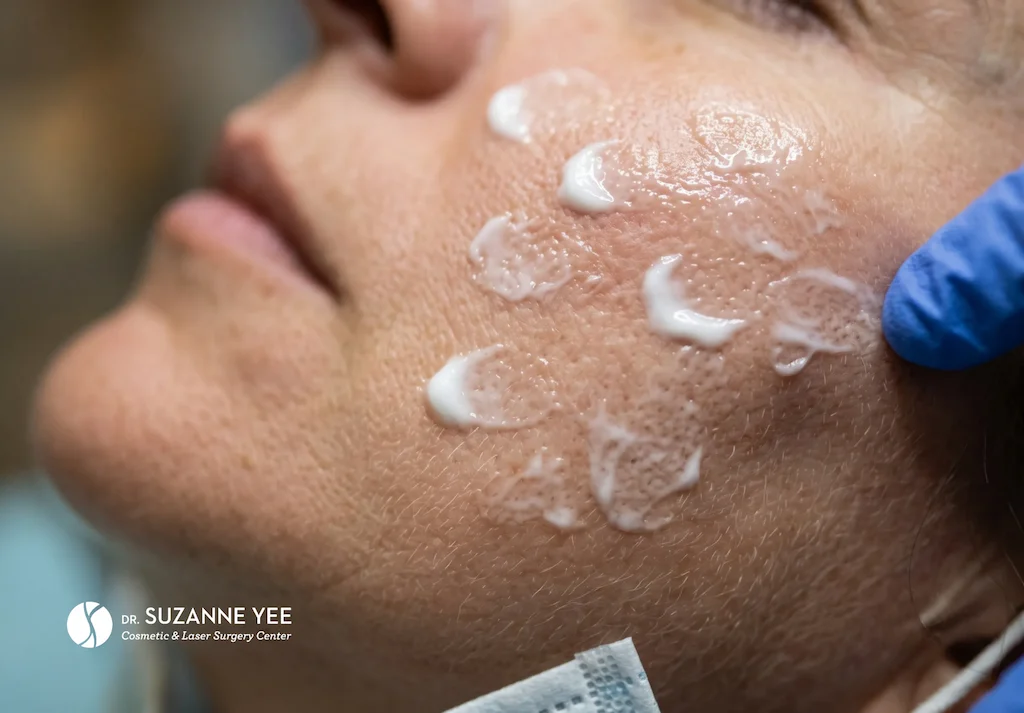
If the idea of any cosmetic treatment makes you nervous, that’s completely normal. These appointments tend to be low-key, held in an exam room rather than an operating room, and you walk in and out the same day.
It usually starts with a conversation about which combination fits you. A thoughtful provider weighs your skin quality, volume loss, and goals before reaching for any one treatment. At Dr. Yee’s AAAHC-accredited surgical center in Little Rock, that planning happens in person, where your skin and facial structure can be assessed by hand.
Comfort is managed differently than in surgery. General anesthesia isn’t required for these treatments. A topical numbing cream takes the edge off, and most patients describe energy-based sessions as a warm, tingling sensation rather than true pain. Fillers feel like quick pinches, often eased by numbing agents in the product.
Here’s what that means for your calendar. A typical visit runs from a few minutes to about an hour. Most approaches build results over a short series of sessions spaced weeks apart, and researching carefully beforehand is exactly the right instinct.
Angela, a Little Rock patient who came in for Botox and fillers, shared her experience:
“I had Botox and fillers, done by Dr. Yee, and I am over the top pleased! She and her team listen and know exactly what to do to achieve the results you need. From the moment you check in until the moment you leave, you feel so cared for.”
How do you choose between a surgical facelift and non-surgical options?
This is the question that matters most. The honest answer is that it depends on how far your aging has progressed. Non-surgical treatments shine for early to moderate changes. Once sagging is significant, they can soften the picture but can’t fully correct it.
| Factor | Non-surgical options | Surgical facelift |
|---|---|---|
| Best for | Early to moderate aging | Significant sagging, loose skin |
| Downtime | Minimal, often same-day | About 10 to 14 days |
| Anesthesia | Topical numbing only | General anesthesia |
| Results | Gradual, maintained over time | Long-lasting structural change |
| Commitment | Series and upkeep | One procedure |
A simple way to gauge it: if gently lifting the skin at your temples restores the contour you miss, energy and filler may be enough. If the looseness is deeper, that points toward surgery. A surgical facelift repositions the deeper SMAS layer and removes excess skin, which non-surgical tools can’t replicate.
During that procedure, Endotine® anchors may be placed to hold the lifted tissue in position. These are small absorbable supports made of lactic acid. They begin dissolving at about two months and are fully gone within a year, so nothing needs to be removed later.
Age plays a role too, though not the way people assume. Patients in their 30s and 40s often use non-surgical treatments to slow visible aging and delay surgery. If you’re curious how concerns evolve over time, our wellness guide by decade breaks down what tends to change and when.
The risk profiles differ too, with non-surgical treatments carrying mostly minor, temporary effects. Neither path is automatically right, which is the point of an in-person visit: it’s as much your chance to evaluate the surgeon as the reverse. Because Dr. Yee performs both surgical and non-surgical rejuvenation, she can walk you through the trade-offs honestly.
Cost is often part of this decision, and it shouldn’t add stress. To make your goals more accessible, you can view financing options through Cherry, Alphaeon Credit, CareCredit, PatientFi, and Allē.
What should you expect during recovery, and how do you maintain your results?
One of the biggest draws of going non-surgical is how little it interrupts your life. Most energy-based and injectable treatments let you return to normal activities right away, a relief if taking real time off isn’t an option.
Temporary effects are part of the process, and knowing them ahead of time makes them far less worrying. The most common include:
- Mild redness or warmth after energy-based treatments, usually settling within a few days.
- Minor swelling or tenderness after fillers, which typically eases quickly.
- Small bruising at injection sites that fades on its own.
Results arrive on their own timeline. Fillers and the Y LIFT show an almost immediate change, while collagen-building treatments reveal themselves gradually. New collagen keeps maturing for two to three months after energy-based treatment. That slow reveal keeps the refreshment subtle rather than sudden.
The honest truth about longevity is that no treatment stops the clock. You’ll keep aging naturally, but consistent care keeps you looking well ahead of where you’d be without it. Maintenance sessions, spaced months apart depending on the treatment, are how you hold onto that head start. For any swelling or sensitivity in the meantime, lean on your provider’s personalized aftercare guidance rather than home remedies.
Kelli, who described her experience from consultation through follow-up, put it this way:
“The whole process was amazing from the initial consultation to the follow-up appointments. I felt comfortable and truly cared about by all of the staff. Dr. Yee is incredibly skilled and I’m so pleased with the results.”
Conclusion
You came here wanting to look refreshed without committing to surgery. Now you know that’s genuinely possible for early to moderate aging. A non-surgical facelift isn’t one procedure but a tailored plan, and how far it goes depends on your skin and goals.
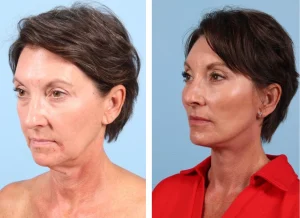
The most helpful next step is also the simplest. Browsing real patient photos that match your starting point shows you what these treatments deliver. When you’re ready, an in-person visit fills in the details a screen can’t.
At Dr. Suzanne Yee Cosmetic & Laser Surgery Center in Little Rock, the philosophy is enhancement, not transformation. Every patient deserves to feel heard, respected, and confident in their choices, from the first consultation through every follow-up. When the time feels right, schedule your personal consultation or call (501) 493-3661 to talk through your options.
Frequently asked questions
Can a non-surgical facelift fix deep wrinkles and severe sagging?
Not completely. These treatments are best for early to moderate changes, where they soften wrinkles and restore volume convincingly. Once skin laxity is advanced, only surgery can fully reposition the deeper tissue.
How much does a non-surgical facelift cost?
Cost depends on which treatments you choose and how many sessions you need, so there’s no single price. Flexible financing through Cherry, Alphaeon Credit, CareCredit, PatientFi, and Allē can spread it into manageable payments.
Are the results of a non-surgical facelift permanent?
No treatment is permanent, because your face keeps aging naturally over time. What these treatments do is keep you looking well ahead of where you’d be without them, and periodic maintenance preserves that advantage.
Is there any downtime after a non-surgical facelift?
For most energy-based and injectable treatments, downtime is minimal, and many patients return to their day right away. You might have temporary redness, swelling, or minor bruising for a few days, while more intensive resurfacing can require a little more recovery.
What is the best age for a non-surgical facelift?
There’s no single right age. Many patients start in their 30s and 40s to address early changes, while others begin well into later decades. What matters more is your skin quality and what you hope to achieve.
Can I combine different non-surgical treatments in one session?
Often, yes, and combining treatments frequently produces the most natural result. A common approach layers volume, tightening, and skin-quality treatments, sequenced safely for your skin and goals.
Does a non-surgical facelift hurt?
Most patients describe these treatments as very tolerable rather than painful. Topical numbing cream is used for energy-based and microneedling treatments. Many fillers also contain a numbing agent, so you may feel warmth or quick pinches at most.
Can a non-surgical treatment get rid of a double chin or jowls?
It can often improve them, especially in earlier stages. Radiofrequency microneedling can tighten under-chin skin, and filler can sharpen a soft jawline. If the laxity is significant, a board-certified cosmetic surgeon may recommend a surgical option.
Can you give yourself a facelift with at-home devices?
At-home gadgets and facial massage can support healthy skin, but they can’t match the depth or precision of professional treatments. For meaningful, lasting change, an in-person consultation with a triple board-certified cosmetic surgeon is the dependable path.
*Disclaimer: This content is for educational purposes only and does not constitute medical advice. A consultation with a qualified board-certified surgeon is required to determine the best treatment plan for your individual needs.