Instagram
 Facebook
 Tiktok
 Youtube
 X
 LinkedIn

 (501) 224-1044

If you’re thinking about a tummy tuck, you’ve probably asked yourself some version of, “Okay, but how bad does it really hurt?”
The honest answer: most people describe it as a strong feeling of tightness or pressure across the abdomen, not a stabbing or shocking pain. The discomfort is real, but it’s also predictable and temporary. It tends to peak early, then eases on a pretty reliable schedule.
You won’t feel the surgery itself since you’ll be asleep under general anesthesia. What really matters is how you’ll feel in the days and weeks afterward. The good news is that pain control has come a very long way.
In one study, using a layered, “multimodal” pain plan cut the amount of narcotic medication patients needed by about two-thirds. Modern surgery often combines long-acting numbing medicine with this kind of thoughtful plan, so the worst part of recovery is usually shorter and milder than most people expect.
At Dr. Suzanne Yee Cosmetic & Laser Surgery Center in Little Rock, your comfort is planned for from the operating room onward. This guide walks you through what pain typically feels like at each stage of recovery, what can make one tummy tuck feel different from another, how surgeons manage pain, and what you can do at home to stay as comfortable as possible.
Key takeaways
If you’re skimming, here’s the quick version so you can zero in on your main concern:
- You feel nothing during the surgery because you’re under general anesthesia. Discomfort begins afterward and feels more like deep tightness than sharp pain.
- Pain is most noticeable in the first several days, then eases steadily. Many patients step down to over-the-counter medicine and return to desk work around two weeks.
- The abdominal muscle repair in a full tummy tuck is the main source of deep soreness, which is why a mini tummy tuck feels milder.
- Long-acting numbing medicine, prescription pain medication, and a compression garment work together, so most patients need opioids only briefly, if at all.
- Simple home habits like supported sleeping, gentle early walking, and pillow splinting make a real difference in day-to-day comfort.
How much pain should you expect during tummy tuck recovery?
The honest answer is that the first few days are usually the hardest, and things get easier from there. Right after a tummy tuck, you are more likely to feel groggy than sore because a long-acting numbing medication is still doing its job. As it wears off, you will start to notice a deep tightness across your abdomen.
That tightness is most noticeable during the first few days to about a week, then it fades. It’s completely normal to feel frustrated during that early stretch, especially if you’re used to being active. The table below shows the general arc.
| Recovery phase | What many patients feel | What helps |
|---|---|---|
| The first day | Groggy, deep tightness, not sharp pain | Long-acting numbing medicine, rest, first short steps |
| First several days | The most noticeable soreness | Prescription pain medicine, short walks |
| Around two weeks | Soreness eases, many return to desk work | Stepping down to over-the-counter medicine |
| Weeks three to six | Occasional tightness, numbness near the incision | Gentle activity, no strenuous movement |
| Six weeks and beyond | Comfort returns as swelling settles | Clearance for more activity, patience |
By about two weeks, most patients are comfortable enough to return to desk work and have switched to over-the-counter medicine. Some tightness and numbness near the incision may last a few more weeks as the nerves settle. That is a normal part of healing, not a sign of trouble, and it is the kind of pattern Dr. Yee reviews with every patient.
Kayla, who worried about pain before her tummy tuck, shared her experience:
“In June of 2024 I had a tummy tuck. Dr. Yee and her staff were very kind and caring. I struggle with bad anxiety and they always make me feel relaxed and comfortable before and after surgery. My recovery went very smoothly, I was shocked that I experienced little to no pain in the days after surgery.”
What makes some tummy tucks more painful than others?
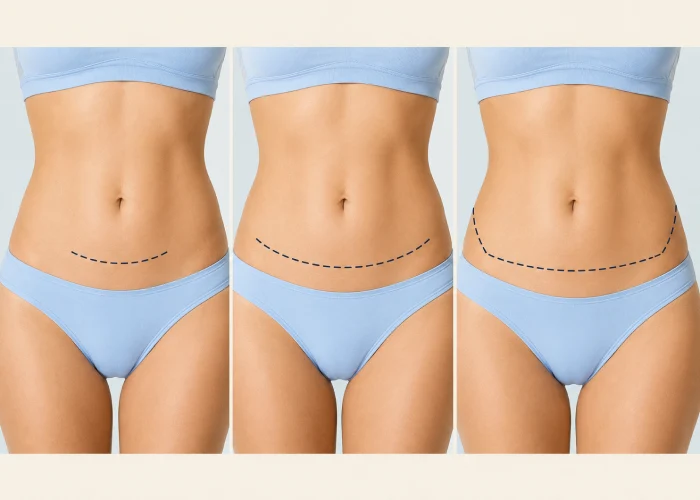
Two people can have the same procedure on paper and still have very different recoveries. A big part of that comes down to how much work is happening beneath the skin. Keeping that in mind can help you set expectations that fit your own surgery, not someone else’s story online.
The deepest soreness after a full tummy tuck usually comes from repairing separated abdominal muscles, a condition called diastasis recti. That muscle tightening is what tends to cause the most deep discomfort, especially when you move, cough, or even breathe.
- A mini tummy tuck addresses only a small amount of loose skin and involves no muscle repair, so it feels milder and heals faster.
- A full or extended tummy tuck includes muscle tightening and additional tissue work, which can lead to more soreness.
- Adding liposuction to refine the contour is common and, with a good pain plan, does not necessarily mean a harder recovery.
- Personal factors like your age, general health, and natural pain tolerance shape how the same surgery feels for you.
People often compare it to a C-section, but the two heal differently, so it is not really fair to rank one as worse. Many patients who have had both say the tummy tuck feels more like lingering tightness, while the C-section feels like a sharper, more localized ache.
Combining a tummy tuck with liposuction is pretty common and, for the right candidate, can be a great option. Your surgeon will let you know whether doing both together makes sense for you, and it is completely normal to have questions about that.
How do surgeons manage pain after a tummy tuck?

Pain control is not just one prescription. It is a layered plan that starts before you wake up and carries you through the first few weeks at home, which can make the days ahead feel a little less overwhelming.
It all starts in an on-site surgical center accredited by the Accreditation Association for Ambulatory Health Care, where general anesthesia is given by a Certified Registered Nurse Anesthetist (CRNA) as part of an experienced surgical team. You stay comfortable and do not feel anything during the procedure. During surgery, a long-acting numbing medication called Exparel is placed in the tissue and can last up to 2 days.
From there, the plan eases as you heal. Dr. Yee and Dr. Pournik can prescribe oral pain medication for the early days, and then you typically transition to over-the-counter options as the soreness fades. That layered approach is why so many patients only need stronger medication for a short time, if at all. A compression garment can also make a big difference by supporting the healing tissue and easing the pulling sensation when you move.
You will not be managing any of this alone, and that can make a big difference when you are tired and healing. To help ease the financial side, the office offers flexible financing through Cherry, Alphaeon Credit, CareCredit, PatientFi, and Alle. Your quote includes the surgeon’s fee, anesthesia, facility fees, and follow-up visits in one clear total, and you are only responsible for your pre-op labs and any prescribed medications.
What can you do at home to stay comfortable while you heal?
The way you set up your space and move through the day can make a real difference in how you feel. The first few days may feel slow, so it helps to give yourself permission to rest.
Start by focusing on how you rest. Sleeping in a semi-reclined position, with your upper body raised and your knees slightly bent, helps relieve pressure on your incision. Gentle walking matters just as much. Short walks around the house the day after surgery can help keep your blood moving and lower the risk of clots.
A few small habits make the day-to-day easier:
- Hold a pillow gently against your abdomen when you cough, sneeze, or laugh to help cushion the pressure.
- If small drains are placed to carry off excess fluid and they aren’t used for everyone, follow the care instructions you’re given until they come out at a follow-up appointment.
- If you smoke, this is also the time to step away from that habit, ideally six weeks before and after surgery.
- Plan to stop alcohol about two weeks before and two weeks after surgery, since it can thin the blood and affect clotting.
- Set up a recovery station within easy reach and arrange help for the first week, since you’ll avoid lifting and strenuous activity for at least six weeks.
The care does not stop when you leave the office. Between visits, Dr. Yee’s team checks in proactively, so you are not left wondering what comes next. Your questions are reviewed personally rather than passed around, and that kind of follow-through is what patients tend to remember most.
Jamie, who came through her surgery and recovery at the Little Rock office, shared her experience:
“Dr. Yee and her staff provided exceptional care, from my initial consult, through the surgery process, recovery, and follow-up appointments. From the moment I walked in, your Surgery center has had such a welcoming and positive vibe. Your staff made me feel comfortable and at ease.”
Conclusion
A tummy tuck hurts less sharply than most people brace for. The discomfort is real, but it feels like a deep tightness across the abdomen rather than the stabbing pain many people imagine. Abdominoplasty recovery follows a predictable path, and you are not left to figure it out alone.
When you are ready, looking through real patient before-and-after photos can help you feel more grounded. Additionally, a personal consultation then brings the conversation you most need and fills in the details that photos cannot show.
Every patient deserves to feel heard, respected, and confident in their choices. That kind of care should carry you from your first question through your final follow-up. To talk through what your recovery could look like, schedule your personal consultation with Dr. Suzanne Yee in Little Rock, or call (501) 224-1044.
Frequently asked questions
What is the most painful part of a tummy tuck recovery?
The first two or three days are usually the most uncomfortable. The deepest soreness comes from muscle repair in a full tummy tuck, and it feels more like tightness than sharp pain.
Is a tummy tuck more painful than a C-section?
They heal differently, so it’s hard to say that one is definitely worse. Many patients who have experienced both say a tummy tuck feels more like lingering tightness, while a C-section feels like sharper, more localized pain.
How long do you have to stay hunched over after a tummy tuck?
You may find it more comfortable to stand slightly bent for the first several days while the tightness is greatest. Most patients straighten up gradually over the first week or two as the pulling sensation eases.
Why does my stomach feel so tight after abdominoplasty?
That tightness is expected and comes from repairing the abdominal muscles and removing loose skin. It’s a normal part of healing and should loosen as the swelling goes down over the following weeks.
How long do you need to take prescription pain medicine after a tummy tuck?
Most patients need prescription pain medication only for a short period in the first few days, then switch to over-the-counter options. Because a long-acting numbing medicine is used during surgery, many people are surprised by how manageable it feels.
When can I start sleeping on my stomach or side again?
Plan to sleep propped up in a semi-reclined position at first, since it takes tension off your incision. Your surgeon will confirm when it’s safe to resume sleeping on your side or stomach.
How long do surgical drains have to stay in after a tummy tuck?
Drains aren’t used for everyone. When they are placed, they usually stay in until the drainage slows enough for your surgeon to remove them at a follow-up appointment.
Can I take over-the-counter ibuprofen or Tylenol for tummy tuck pain?
Many patients switch to over-the-counter pain relievers as the initial soreness fades. Always follow the specific guidance your surgeon gives you, since your plan takes your health history and other medications into account.
Is it normal to have burning pain or numbness around the tummy tuck incision?
Yes, some burning, tingling, or numbness around the incision is common as the nerves settle, and it usually improves over the following weeks and months. Always mention anything that concerns you to your care team.
What helps ease the pain when coughing or sneezing after a tummy tuck?
Holding a pillow gently but firmly against your abdomen helps support the healing tissue and cushion the tightness. It’s a small habit that makes sudden movements much more comfortable early on.
How long do you have to wear a compression garment or binder after surgery?
A compression garment supports healing tissue, reduces swelling, and eases the pulling sensation when you move. Your surgeon will give you a specific timeline based on your procedure and how you’re healing.
When is it safe to drive after having a tummy tuck?
You should not drive while taking prescription pain medication or while your movement is still limited. Most patients wait until they are off narcotic pain medicine and can move comfortably, and your surgeon will confirm when you’re ready.
*Disclaimer: This content is for educational purposes only and does not constitute medical advice. A consultation with a qualified board-certified surgeon is required to determine the best treatment plan for your individual needs.