Instagram
 Facebook
 Tiktok
 Youtube
 X
 LinkedIn

 (501) 224-1044

A panniculectomy and a tummy tuck both remove loose skin from the lower belly, but they aren’t two names for the same operation. A panniculectomy takes away the overhanging apron of skin and fat, called a pannus or panniculus. A tummy tuck goes further by tightening the abdominal wall and reshaping the belly button, and that difference changes both your result and your recovery.
Skin-only removal is far more common than many people expect. In American College of Surgeons NSQIP data covering 11,137 abdominal contouring cases, 57.4 percent were functional panniculectomies done for medical reasons. The rest were cosmetic tummy tucks.
If you’ve lost a lot of weight, an apron of skin that stays behind can feel like it’s hiding the work you put in. Wanting it gone is a completely reasonable goal, and you’re far from the only person weighing these two options.
At Dr. Suzanne Yee’s Cosmetic & Laser Surgery Center in Little Rock, contouring after weight loss is planned around your exam, not a procedure name. The practice is led by a triple board-certified cosmetic surgeon.
She’s certified by the American Board of Cosmetic Surgery (ABCS) in Facial Cosmetic Surgery and in Body, Breast, and Extremity. Her third board is the American Board of Facial Plastic & Reconstructive Surgery (ABFPRS).
This guide compares the two operations, shows which one suits an apron belly, and walks through surgery, recovery, scars, and your consultation.
Key takeaways
- A panniculectomy removes the hanging apron of lower-belly skin and fat, while a full tummy tuck also tightens separated abdominal muscles and repositions the belly button.
- A panniculectomy is usually done to relieve medical problems like rashes, skin breakdown, and hygiene trouble, and it doesn’t flatten or reshape the stomach the way a tummy tuck does.
- After major weight loss, an extended tummy tuck or a fleur-de-lis tummy tuck can remove loose skin across the hips or in both directions, with a longer scar.
- Tummy tuck recovery typically means going home the same day, light walking the day after surgery, about two weeks off work, and no strenuous activity for at least six weeks.
- Removed skin doesn’t grow back, so holding a stable weight before and after surgery protects your result, while final results keep developing for 6 to 12 months.
What’s the difference between a panniculectomy and a tummy tuck?
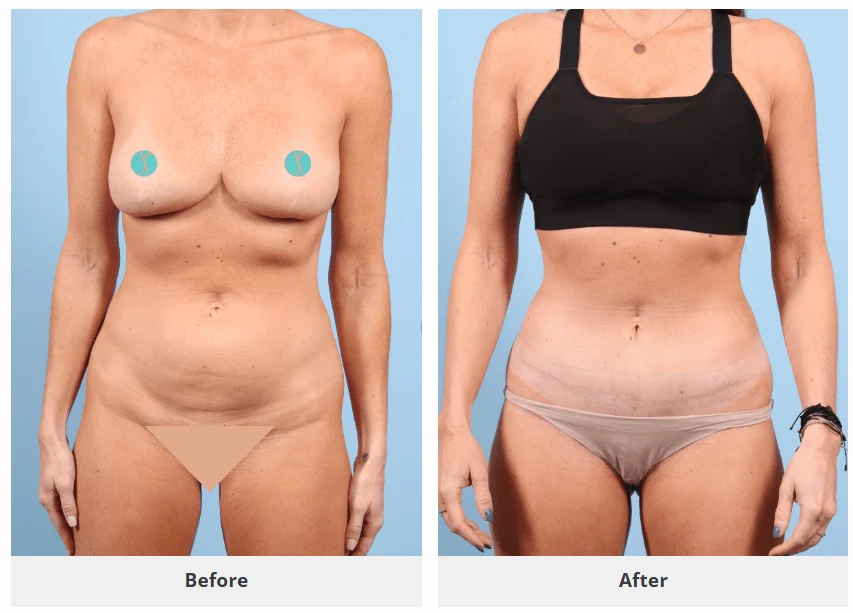 (Procedure details: Mini Tummy Tuck with Liposuction to the lower abdomen)
The simplest way to see the difference is to ask what each operation is trying to fix. A panniculectomy solves an overhang problem, while a tummy tuck solves a shape problem.
| Feature | Panniculectomy | Full tummy tuck |
|---|---|---|
| Main goal | Remove the hanging apron | Flatten and reshape the abdomen |
| Tissue removed | Lower-belly skin and fat | Skin and fat above and below the navel |
| Muscle tightening | Not included | Usually included |
| Belly button | Usually left as is | Repositioned and reshaped |
| Typical scar | Low, hip to hip | Low, plus around the belly button |
Tissue and muscle
A panniculectomy lifts away the pannus, the fold of skin and the soft fat right under it that hangs over the pubic area. It doesn’t elevate the upper belly skin, and it doesn’t tighten the muscles underneath. A tummy tuck lifts and redrapes skin from the whole front of the abdomen. It usually also repairs separated muscles, a condition called diastasis recti.
That muscle repair is why a tummy tuck (often paired with liposuction) can flatten a belly pouch that sit-ups never touched. If your main frustration is the overhang itself, though, the muscle work may not be what you need.
Belly button and scars
Both operations usually leave a low horizontal scar that runs toward the hips and can often sit beneath underwear. A full tummy tuck adds a small scar around the belly button, because the navel is repositioned and reshaped to suit the flatter abdomen. You can learn more about that step in this guide to the belly button during a tummy tuck.
Surgeons often describe a panniculectomy as functional and a tummy tuck as cosmetic. Both are legitimate reasons to have surgery, and knowing which one fits your goal is the next step.
Which procedure is better for removing an apron belly after weight loss?
If the apron is the problem and your stomach shape doesn’t bother you, a panniculectomy may be enough. If you also want a flatter, firmer abdomen, a tummy tuck in one of its forms is usually the better match. Many people land somewhere in between, and that’s completely normal.
Skin removal alone
A panniculectomy is often considered when the pannus is causing physical problems that haven’t improved with good skin care. Common reasons include:
- Rashes or skin breakdown in the fold that keep coming back
- Trouble keeping the area clean and dry
- Chafing or discomfort when you walk or exercise
- An apron heavy enough to limit your daily activities
A tummy tuck for shape
A full tummy tuck suits loose skin above and below the navel, especially when the muscles have separated. A mini tummy tuck treats skin only, below the belly button, so it’s rarely enough for an apron after major weight loss. It’s a popular operation for a reason.
According to ISAPS, surgeons performed 1,036,236 tummy tucks worldwide in 2024.
Extended and fleur-de-lis tummy tucks
After major weight loss, loose skin often wraps around the sides. An extended tummy tuck carries the incision across the abdomen and around the hips, treating the flanks and lower back too.
A fleur-de-lis tummy tuck adds a vertical incision down the midline to a horizontal incision along the lower abdomen, forming a T-shaped scar. It removes excess skin in both directions, which helps when loose skin gathers side to side as well as top to bottom.
Dr. Suzanne Yee matches the technique to your anatomy, choosing the most natural-looking result rather than the most extensive operation. Advanced abdominoplasty, including the fleur-de-lis technique, is the named specialty of her colleague.
That’s Dr. Homayoun Pournik, a cosmetic surgeon who spent 12 years operating on the abdominal wall as a transplant surgeon.
Timing matters as much as technique. In a 2017 practice guideline, the American Society of Plastic Surgeons suggests holding a stable weight for 2 to 6 months before body contouring. The practice also recommends being within 10 to 15 pounds of your goal and finished having children.
Narges, who was cared for by both surgeons and their nursing team, shared her experience:
“Great atmosphere, professional staff, and amazing results! I highly recommend Dr. Yee, Dr. Pournik, and the entire team. The nurses, Rachel and Bri, were absolutely wonderful!! Everyone was welcoming, knowledgeable, and made me feel comfortable. I couldn’t be happier with the care I received and the outcome.”
Whichever way you lean, choosing the operation that matches your real concern is a thoughtful place to start. Once you know which one fits, the next question is what actually happens in the operating room.
What happens during panniculectomy or tummy tuck surgery?
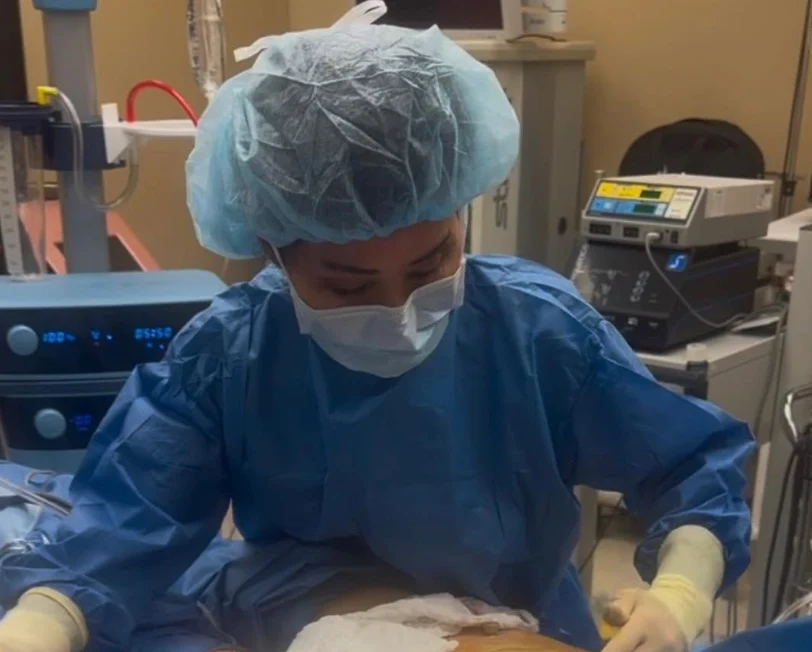
Both operations start the same way, with markings and general anesthesia so you’re comfortable and won’t feel anything. At Dr. Suzanne Yee Cosmetic & Laser Surgery Center, tummy tucks are performed in the practice’s own AAAHC-accredited surgical center. General anesthesia is administered by a Certified Registered Nurse Anesthetist (CRNA) as part of our experienced surgical team, ensuring your safety and comfort throughout the procedure.
The main incision sits low on the abdomen, between the hip bones, and its length depends on how much skin needs to come away. In a panniculectomy, your surgeon removes the overhanging skin and fat and closes the incision. The upper belly skin stays where it is.
A tummy tuck adds more steps. The skin is lifted, the muscles are usually tightened, and the belly button is brought out through a new opening in the redraped skin.
Most tummy tucks involve muscle repair, though not everyone does, and a mini tummy tuck treats skin only. Depending on the technique and how much correction you need, a tummy tuck takes about two to four hours.
Small drains are placed when needed to clear fluid under the skin, not automatically for every patient. It’s natural to feel uneasy about drains. They’re simple to manage, and your team shows you exactly how before you go home. The recovery that follows is where the two operations differ most in how they’re planned.
What does recovery look like after an apron belly removal procedure?
Recovery after a tummy tuck follows a fairly predictable path, and knowing it ahead of time makes planning much easier. It’s an outpatient procedure, so you return home the same day and start light walking the day after surgery.
Most people take about two weeks off work. Strenuous activity waits for at least six weeks, which includes heavy lifting and hard workouts.
| Milestone | Tummy tuck guidance |
|---|---|
| Going home | Same day |
| Light walking | The day after surgery |
| Time off work | About two weeks |
| Strenuous activity | Avoid for at least six weeks |
| Final results | Fully develop in 6 to 12 months |
Panniculectomy recovery varies with how much tissue is removed, so ask your surgeon to map out a timeline for your own case. Asking how muscle repair, or its absence, will shape your own recovery is a smart question to bring.
Slowing down can feel frustrating, especially if exercise helped you lose the weight in the first place. The weeks of patience are what let the result settle properly.
Kayla, who had a tummy tuck in 2024, described how her recovery went:
“In June of 2024 I had a tummy tuck. Dr. Yee and her staff were very kind and caring. I struggle with bad anxiety and they always made me feel relaxed and comfortable before and after surgery. My recovery went very smoothly, I was shocked that I experienced little to no pain in the days after surgery. My scar is now over a year old and its way less visible than I ever expected. So happy with my results and I will continue services with Dr. Yee and her staff in the future.”
What risks, scars, and long-term results should I expect?
Most people go through abdominal contouring without serious issues. Like any surgery, both operations carry possible concerns, such as slow wound healing, a small pocket of fluid the body reabsorbs, or minor bruising beneath the skin.
Your surgeon checks for each of these at your follow-up visits, and good preparation lowers the odds of a setback further.
A review of 306 patients by Johns Hopkins researchers found healing concerns were more common after panniculectomy than after tummy tuck. Your surgeon reviews your health history before surgery and requires pre-op testing, so any concern is caught early.
Preparing for surgery
Higher BMI and smoking are two of the best-known factors that slow healing after abdominal surgery. That’s why the steps before surgery count as much as the operation itself:
- You’ll need pre-op labs, a urine pregnancy test, and a drug and nicotine test before surgery.
- If you smoke, this is also the time to step away from that habit, ideally six weeks before and after surgery.
- Alcohol can thin the blood and affect clotting, so plan to stop about two weeks before and two weeks after surgery.
- You must arrange a ride home and someone to help you for the first 24 to 48 hours.
Scars and lasting results
The low horizontal scar is usually placed so underwear or swimwear can cover much of it, while a fleur-de-lis adds a vertical line. Scars mature through collagen remodeling over roughly 3 to 12 months, softening and fading as they do. This guide to tummy tuck scars covers what helps along the way.
Skin that’s removed doesn’t grow back, so a stable weight protects your result. You’ll keep aging naturally, but from a firmer, flatter starting point than before surgery. It’s completely natural to worry about a scar, and most people find the trade feels worth it once the apron is gone.
What happens at your consultation?
Many people start by browsing tummy tuck before-and-after results, then bring what they noticed to the visit. Your consultation takes place in person at the Little Rock office, where Dr. Yee or Dr. Pournik examines your skin, muscles, and the apron itself.
That hands-on exam decides which tummy tuck approach fits you best, whether full, extended, or fleur-de-lis. Before recommending anything, your surgeon asks about your daily routine, your work, and what you want to feel comfortable doing again. Nothing is rushed, and no question is too small or too personal.
This isn’t just a chance for your surgeon to evaluate you. It’s equally your chance to evaluate them, see the AAAHC-accredited surgical center, and decide whether the fit feels right.
Your quote bundles the surgeon’s fee, anesthesia, facility fees, and follow-up visits into one transparent total. You’re only responsible for your pre-op labs and any prescribed medications. The practice also offers flexible financing through Cherry, Alphaeon Credit, CareCredit, PatientFi, and Alle.
Susan, who had a tummy tuck along with breast surgery, shared what the follow-up felt like:
“I had a tummy tuck and breast augmentation in January 2022. Dr. Yee and her staff were so compassionate and caring throughout every one of my appointments and they took such good care of me the day of surgery! They checked on me often after surgery and I am beyond pleased with my results. Best decision I ever made!”
Conclusion
A tummy tuck reshapes the whole abdomen by tightening muscle and repositioning the belly button, while a panniculectomy removes only the hanging apron. If your goal is a flatter stomach rather than relief from the fold alone, a tummy tuck is usually the operation that gets you there.
Browsing tummy tuck results shows what reshaping can look like after weight loss. An in-person exam then answers what photos can’t, which is how much skin and muscle work your own body needs.
Dr. Suzanne Yee wants you to understand every option before you decide. The recommendation you get in Little Rock is an honest read, not a sales pitch. Request an appointment or call (501) 224-1044 to start that conversation.
Frequently asked questions
What is a panniculus?
A panniculus, also called a pannus, is an apron-like fold of skin and fat that hangs from the lower abdomen. It often develops after major weight loss, once stretched skin can no longer shrink back. It can cover the pubic area and trap moisture underneath.
Is a panniculectomy the same thing as a tummy tuck?
No. A panniculectomy removes the overhanging apron, while a tummy tuck also lifts the upper belly skin, usually tightens the muscles, and repositions the belly button. The two can overlap, which is why an exam matters more than the name.
Will a panniculectomy give me a flatter stomach?
It can make the lower abdomen smoother by removing the hanging fold, but it doesn’t tighten the muscles underneath. If a pouch remains from separated muscles, a tummy tuck is the operation that addresses it.
Does a panniculectomy create or reposition a belly button?
Usually not. A standard panniculectomy removes tissue below the navel and leaves the belly button in place. Repositioning the navel is part of a full tummy tuck.
Can a tummy tuck and panniculectomy be performed together?
Yes, some surgeons combine removal of the apron with muscle repair and wider contouring in one operation. That means one anesthesia and one recovery, though the surgery is longer and the recovery is bigger. Your surgeon will confirm at your consultation whether doing them together makes sense for you.
What kind of scar does a panniculectomy leave?
Most leave a horizontal scar across the lower abdomen that runs toward the hips. A fleur-de-lis approach adds a vertical scar. Scars soften and fade over the following year, and scar care helps them settle well.
Should I wait until my weight is stable before having surgery?
Yes. A stable weight gives your surgeon an accurate picture of how much skin to remove and helps protect your result. If you plan to lose more weight, it’s usually best to reach your goal first.
How soon can I walk after a tummy tuck?
Light walking starts the day after surgery, and it’s an important part of healing. Strenuous activity waits for at least six weeks.
Does insurance cover a panniculectomy after weight loss?
Sometimes. Insurers generally consider it when the apron causes documented medical problems like recurring rashes or infections, while a tummy tuck is usually treated as cosmetic. For a tummy tuck, the quote bundles the surgeon’s fee, anesthesia, facility fees, and follow-up visits. Only pre-op labs and prescribed medications are separate.
*Disclaimer: This content is for educational purposes only and does not constitute medical advice. A consultation with a qualified board-certified surgeon is required to determine the best treatment plan for your individual needs.