Instagram
 Facebook
 Tiktok
 Youtube
 X
X LinkedIn
 (501) 224-1044
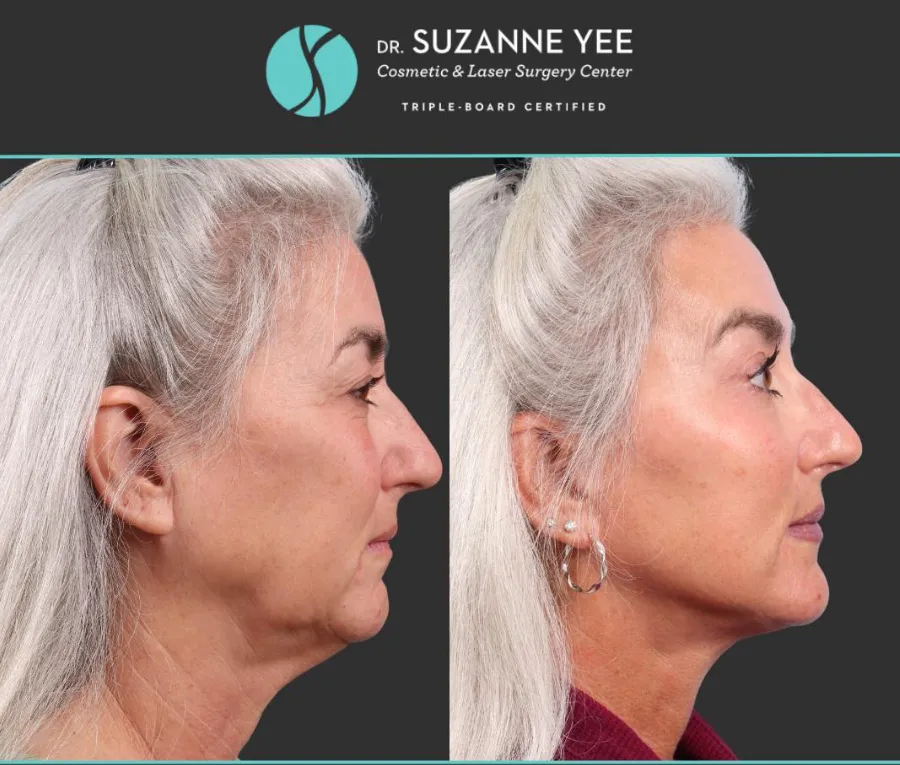
You’ve been staring at the same photos for the past 20 minutes, swiping between “before” and “after” shots and trying to see yourself somewhere in between. The jawline looks sharper. The neck looks smoother. But the question that won’t leave you alone is the simplest one: would I actually look like that?
That curiosity is more common than you might think. According to ISAPS, surgeons performed over 646,000 facelift procedures worldwide in 2023, a 19.4 percent increase from the year before. Patients are researching results more carefully than ever, and before-and-after galleries have become one of the most trusted tools for setting expectations.
At Dr. Suzanne Yee Cosmetic & Laser Surgery Center in Little Rock, plastic surgery face procedures have centered on artistry and natural-looking outcomes for more than two decades. This article walks through what real facelift results look like area by area and how different techniques compare in photos. It also covers what recovery looks like week by week and how to evaluate whether a facelift is right for you.
Key takeaways
Here’s what you’ll learn from real facelift before-and-after results and the research behind them.
- Facelift photos consistently show sharper jawlines, smoother necks, and lifted cheeks, with studies documenting visible jowl elevation and improved neck angles that hold for years.
- Recovery follows a predictable pattern: swelling peaks around day three, fades roughly 50 percent by week one, and resolves enough for most patients to return to work within 10 to 14 days.
- Modern facelift techniques lift deeper tissues rather than pulling skin tight, which is why a lot of patients feel they looked more youthful without appearing “done.”
- Choosing a board-certified cosmetic surgeon with documented before-and-after results is the single most reliable way to predict how natural your own outcome will look.
What changes can you see in real facelift before and after photos?
Before-and-after photos tell the story that statistics alone can’t. When you’re trying to picture your own results, these images are the closest thing to a preview. They show you exactly where a facelift makes a difference, from the jawline down to the neck and across the midface.
| Facial area | What photos typically show | How long the change lasts |
|---|---|---|
| Jawline and jowls | Sharper jaw contour, lifted jowls | Jowls stay lifted years; some gradual relaxation over time |
| Neck and chin | Smoother neck, reduced banding, defined chin-neck angle | Long-lasting with proper surgical technique |
| Cheeks and midface | Fuller, lifted cheek contour | Deep-plane methods offer extended midface improvement |
| Eyes and brows | Brighter eyes, less hooding (when combined with blepharoplasty) | Blepharoplasty results hold for years |
Jawline and jowl improvement
Jowl improvement means lifting the soft fullness along the lower jaw that gradually blurs the clean line between your chin and neck. This is the area most people notice first when they look in the mirror and feel like something has shifted.
The jawline is often the most dramatic area of change in facelift photos. A study of facelift patients measured an average jowl elevation of six millimeters, with results holding well at the five-year mark.
You can see this clearly when comparing the side profile. The jaw goes from rounded and undefined to a crisp, angular contour that looks natural rather than pulled. Spending time with these details is one of the smartest things you can do before making a decision.
Neck and chin contour
Neck rejuvenation addresses the loose skin, visible banding, and softened chin-to-neck angle that can make you look older or heavier than you feel. If the neck is a concern for you, this is often the most emotionally satisfying area to see change.
The angle between the chin and neck becomes sharper and more defined, with one study documenting a 13-degree improvement in the neck angle. Loose skin and banding smooth out, and the double-chin effect fades.
When a facelift is combined with jowl reduction and neck contouring, the results are even more pronounced. One review of 434 deep-plane facelift patients showed high satisfaction with neck contour at 12 to 18 months after surgery.
Cheeks and midface lift
In before-and-after photos, you’ll notice the cheeks look fuller and more lifted. Gravity pulls the midface downward over time, and a facelift repositions that tissue back where it started. A study of 93 patients found that 96.7 percent appeared more youthful after a deep-plane facelift, with an average apparent age reduction of nearly 12 years.
The midface change is subtle but powerful. Friends might say you look “rested” without pinpointing what changed.
Combined procedures for the eyes and brows
Combining procedures means addressing the upper face at the same time as the lower face, so the overall result looks balanced and harmonious. If hooded eyelids or a heavy brow are part of what you see in the mirror, this pairing can make a noticeable difference.
Many people choose to combine their facelift with eyelid surgery for a more complete result. Adding forehead rejuvenation surgery is another common pairing that addresses the upper face.
In photos, these combinations create a brighter, more open look around the eyes. Research shows that roughly 50 percent of facelift patients add blepharoplasty, and the combination boosts satisfaction without significantly increasing risk.
What types of facelifts do patients choose and how do results compare in photos?

Not every facelift is the same procedure, and understanding the differences can feel overwhelming at first. The technique your surgeon uses directly shapes what your before-and-after photos will look like, how long results hold, and how quickly you’ll recover.
| Technique | Best suited for | Recovery |
|---|---|---|
| Deep plane | Moderate to significant aging, midface and neck | 2 to 3 weeks |
| SMAS | Moderate aging, jawline and lower face | 2 to 3 weeks |
| Mid facelift | Midface aging, flat cheeks, deepening smile lines | 1 to 2 weeks |
| Mini facelift | Early aging, mild jowling | About 1 week |
Deep plane facelift
A deep plane facelift works by going beneath the muscle layer to reposition the foundation of your face, not just the surface skin. This means the underlying structure moves as a unit, which is why results tend to look natural rather than tight.
Before-and-after photos show fuller cheeks, a more defined jawline, and a smoother neck, all without a pulled appearance. A meta-analysis of nearly 2,900 patients found 94.4 percent satisfaction with deep plane results, compared to 87.8 percent for SMAS techniques.
Results tend to look the most natural in photos because the skin drapes over repositioned tissue rather than being stretched. That natural quality is what matters most to most people researching this procedure. Our deep dive into why deep plane facelift results look natural and last longer explains the technique in more detail.
Mini facelift
A mini facelift procedure, one with a shorter recovery, uses shorter incisions near the ears to address early jowling and mild lower-face laxity. Photos show more modest improvement compared to a full facelift, but recovery is faster, with many patients resuming daily activities within about a week.
If you’re in your 40s or early 50s and want a subtle refresh without the downtime of a more extensive procedure, a mini facelift may be a strong fit.
Mid facelift
A mid facelift is designed to rejuvenate the middle third of the face, the cheeks and the area just beneath the eyes. Through small, well-hidden incisions, the surgeon lifts and repositions sagging cheek fat pads to restore a fuller, higher cheek contour and soften the deepening smile lines that come with midface descent. Because it leaves the jawline and neck untouched, before-and-after photos show a refreshed midface rather than a full lower-face change.
A mid facelift is often a good fit for patients in their late 30s to 50s whose aging is concentrated in the cheeks and under-eye area, and it pairs naturally with eyelid surgery or a brow lift since those procedures address the same region. Recovery typically takes about one to two weeks, and your surgeon will discuss whether a targeted midface lift or a more comprehensive technique best matches your goals.
SMAS and traditional techniques
An SMAS facelift focuses on tightening the muscle layer (called the SMAS) beneath the skin, without the deeper tissue release of a deep plane approach. It’s a well-established method with decades of track record.
A review found a 93.7 percent success rate with lower overall complication rates than deep plane methods. Photos from SMAS facelifts show reliable jawline and lower-face improvement.
Your surgeon will recommend the technique that best matches the degree of aging and the results you’re hoping to see. It’s completely normal to feel overwhelmed by the options, and that’s exactly what the consultation is for.
Age and result differences
Your age at the time of surgery influences how your results look and how long they last. Skin elasticity, tissue quality, and the degree of volume loss all play a role in what your surgeon can achieve.
If you’re in your 50s, you may see especially impressive long-term results because your skin still has good elasticity. Research shows that having a first facelift before age 53 tends to mean longer-lasting results and a more significant rejuvenation angle.
If you’re in your 60s or 70s, you can still see meaningful improvement, though results may not last quite as long. Wherever you are in that range, the goal is the same: looking like a refreshed version of yourself.

What does facelift recovery actually look like week by week?
Recovery is one of the biggest concerns you might have, and for good reason. The uncertainty of not knowing what to expect can feel harder than the procedure itself. Knowing what happens each week takes a lot of the anxiety out of the healing process.
Days one through three
The first few days are about rest, patience, and letting your body do its work. This is the stage where things look the worst before they start looking better, and knowing that ahead of time makes a real difference.
The first day after surgery, you’ll feel groggy from anesthesia and your face will feel tight. Keeping your head elevated is important during this stage. By day two, your surgeon will check your incisions and change your dressings.
Day three is typically the peak of swelling and bruising. Your face may look puffy and asymmetric, which is completely normal.
Week one to two
Swelling starts to go down noticeably by the end of the first week, with bruising shifting from dark purple to yellow as it fades. By the end of week two, you’ll likely feel comfortable returning to work and light daily activities.
You can typically cover any lingering bruising with makeup at this point. You may be pleasantly surprised by how quickly the worst of it passes.
Weeks three and four
This is the point where your patience really starts to pay off. The swelling is settling, and the shape you’ve been waiting to see is finally coming through.
By week three, roughly 70 to 90 percent of the swelling has resolved. Your facial contours are becoming more defined, and you’re starting to see the shape of your final result. Light exercise is usually cleared around this time, though strenuous activity should wait until your surgeon gives the green light, typically at four to six weeks.
Months one through three and beyond
The final stretch of healing is quieter but just as important. Residual swelling fades gradually, and your face settles into its final, natural-looking contour. You’ll likely feel completely normal by two to three months.
Scars, which start out pink, continue to fade over six to 12 months and become barely noticeable within a year. If you’re someone who researches every detail before making a decision, that thoroughness will serve you well during recovery too.
Jamie, a facelift patient who experienced the full recovery process firsthand, shared their experience:
“Dr. Yee and her staff provided exceptional care, from my initial consult, through the surgery process, recovery, and follow-up appointments. From the moment I walked in, your Surgery center has had such a welcoming and positive vibe. Your staff made me feel comfortable and at ease. I have recovered …”
Will your facelift scars be visible and will the results look natural?
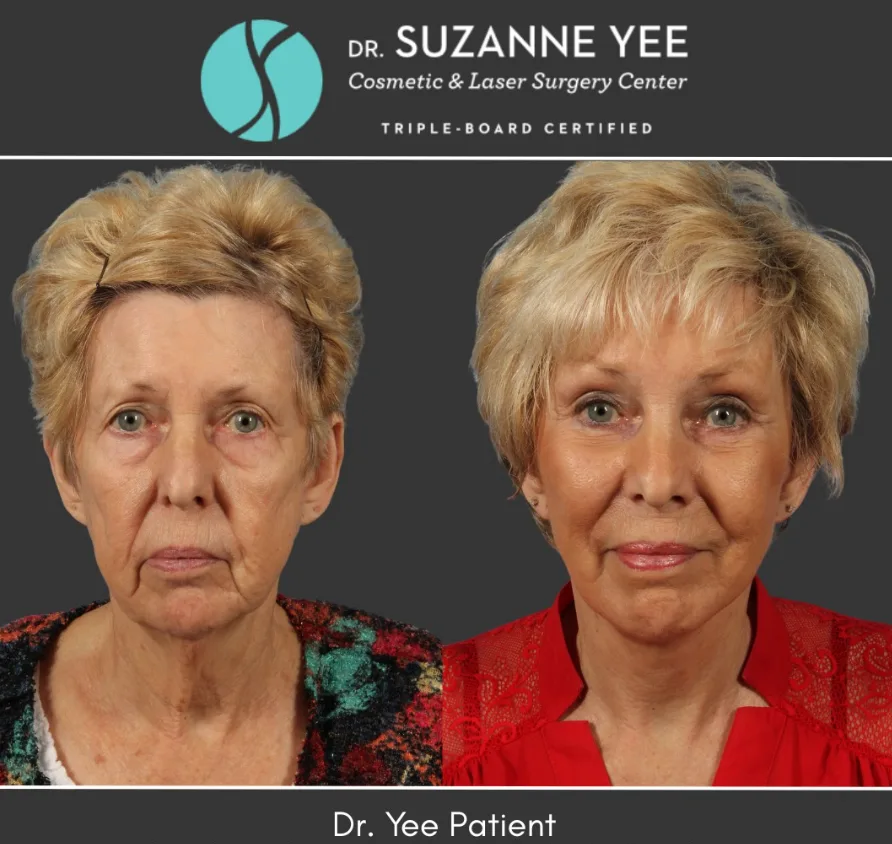
This might be the question that matters most. You want to look refreshed, not like you’ve had “work done.” The good news is that modern techniques are specifically designed to deliver natural-looking results with well-hidden scars.
Incision placement and scar healing
Incision placement is the strategy your surgeon uses to hide any evidence of surgery in the natural contours of your face. The goal is to make scars practically invisible once they heal. Feeling concerned about scarring is completely natural, and knowing what to expect can ease some of that worry.
Your surgeon places facelift incisions along the hairline and around the ears, tucking them into natural creases where they’re difficult to spot. Scars go through a predictable healing process: pink and slightly raised for the first few weeks, gradually flattening and lightening over three to 12 months, and fading to pale, soft lines by the one-year mark.
Scar dissatisfaction is uncommon. In the prior-mentioned study of 93 patients, only 2.2 percent expressed concern about their scars.
Natural results vs. the “pulled” look
The concern about looking “done” or “pulled” is one of the most common worries people bring to this research. It makes sense, because the goal is to look like yourself, just refreshed.
The secret to a natural facelift is technique. Modern approaches like the deep plane method lift the deeper muscle and tissue layers, allowing the skin to drape naturally rather than being pulled tight. This is why well-done facelifts don’t have that “windblown” or overly tight look you might associate with older techniques.
Dr. Yee’s approach focuses on artistry and precision, creating outcomes that look like a refreshed version of you. Her philosophy of “enhancement, not transformation” means the goal is always to preserve what makes your face yours.
Longevity and maintenance
Longevity refers to how long your facelift results remain visible before natural aging gradually catches up. How long you enjoy the outcome depends on a mix of technique, genetics, and your daily habits.
As Dr. Yee often tells her patients, a facelift won’t stop you from aging — but it puts you about 10 years ahead of the game. Protecting your skin from sun damage, avoiding smoking, and maintaining a consistent skincare routine all help you hold onto that head start.
Non-surgical maintenance treatments like injectables or non-invasive collagen boosting treatments can also help preserve your results over time without additional surgery. Knowing that your results are something you can actively support is reassuring for most people who make this investment.
What should you consider before getting a facelift?
Deciding to move forward with a facelift involves more than choosing a date on the calendar. It’s a deeply personal decision, and taking the time to think it through carefully is a sign you’re approaching it the right way. Here are the factors that matter most when you’re weighing your options.
Timing and age
Timing is about finding the point where what you see in the mirror no longer matches how you feel inside. There’s no single “right” age for a facelift.
If you’re in your 40s to 60s, you’re in the most common range, and data shows that those under 50 tend to stay especially far ahead of natural aging over the long term. If you’re in your 60s or 70s, meaningful improvement is still very much within reach.
The right time is when the signs of aging bother you enough to act, and when your overall health supports a smooth recovery.
Health and candidacy
Candidacy is about whether your body is in a good position to heal well and produce lasting results. Your overall health matters more than your age for both safety and outcomes.
Good candidates for a facelift are in overall good health, maintain a stable weight, and either don’t smoke or are willing to quit before surgery. A large study of 11,300 cases found that the overall major complication rate was just 1.8 percent, though smoking and certain health conditions can raise that number.
Choosing your surgeon
This is the decision that shapes everything else. Look for a board-certified cosmetic surgeon with documented before-and-after results that match the natural style you’re looking for. Review their photo gallery and pay attention to whether patients look like themselves, just refreshed.
Triple board-certified cosmetic surgeon Dr. Yee is certified by the American Board of Cosmetic Surgery (ABCS) for both Facial Cosmetic Surgery and Body, Breast, and Extremity, as well as the American Board of Facial Plastic and Reconstructive Surgery (ABFPRS). Her AAAHC-accredited private surgical center in Little Rock provides reconstructive and aesthetic surgical care in a safe, comfortable setting for your procedure.
The consultation as a two-way conversation
The consultation is a two-way conversation where you’re evaluating the surgeon just as much as they’re evaluating you. That shift in perspective matters, because this is your face and your decision.
An in-person consultation gives your surgeon the chance to assess your facial structure, skin elasticity, and goals, then recommend a personalized plan. You should feel heard, not rushed.
To help make your goals more accessible, flexible financing is available through Cherry, Alphaeon Credit, CareCredit, PatientFi, and Alle, so you can choose a payment plan that fits your budget.
L C, a patient who chose their cosmetic surgeon after researching board certification carefully, shared their experience:
“I had 2 cosmetic surgery procedures prior to choosing Dr. Yee for my recent surgery. She is Board Certified and many cosmetic surgeons are not, so be careful. I was most impressed with the detailed preparations she required and followed me through prior to the actual surgery. Dr. Yee holds more than…”
Conclusion
You probably started this article the way most people do — scrolling through photos, quietly wondering what might be possible for you. That curiosity is worth honoring. And now you’re in a much better place than when you started, with a clearer understanding of what facelift results actually look like, how techniques compare, and what the recovery journey involves.
If you’re not quite ready to pick up the phone, that’s completely fine. Browsing before-and-after photos from real patients who started where you are is one of the most grounding next steps you can take — it turns “what if” into something you can actually see. And when the time feels right, a personal consultation fills in the details that photos alone can’t capture, like how your unique facial structure, skin quality, and goals all shape what’s possible.
At Dr. Suzanne Yee’s Little Rock office, the philosophy is simple: enhancement, not transformation. Every patient deserves to feel heard, respected, and confident in their choices — and to walk away still looking like themselves, just refreshed. Reach out to our team or call (501) 224-1044 whenever you’re ready to start the conversation.
Frequently asked questions
How long does facelift recovery take?
Most patients return to work and light activities within 10 to 14 days. Swelling resolves gradually over one to three months, and scars continue to fade for up to a year. The full healing process varies by individual and technique, but the first two weeks are the most noticeable recovery period.
Will facelift scars be visible?
Incisions are placed along the hairline and around the ears, hidden within natural creases. Scars start pink and gradually fade to pale, soft lines over six to 12 months. By the one-year mark, they’re typically difficult to spot without looking closely.
Do facelift results look natural?
Modern techniques lift the deeper muscle and tissue layers rather than pulling the skin tight. This is why well-performed facelifts look refreshed, not “done.” In a study of 93 patients, 96.7 percent appeared more youthful while still looking like themselves.
What is the best age for a facelift?
There’s no single best age. Most patients are in their 40s to 60s, when sagging skin and deeper wrinkles become more noticeable. Research shows that patients who have their first facelift before age 50 tend to enjoy the longest-lasting results.
Can men get facelifts?
Men make up a growing segment of facelift patients. The surgical approach is adjusted to preserve masculine features like a strong jawline and natural hairline placement. Results in male patients show defined contours without feminization.
Does a facelift change my smile?
A well-performed facelift should not change your smile. The procedure targets the lower face, jawline, and neck without affecting the muscles that control your expressions. Temporary tightness in the first few weeks is normal and resolves as the tissues settle.
Are deep plane facelifts better?
Deep plane facelifts address deeper tissue layers and tend to produce longer-lasting, more natural-looking results, especially for the midface and neck. That said, they’re not the right choice for everyone. Your cosmetic surgeon can recommend the technique that best matches your anatomy and goals.
Can I combine a facelift with eyelid surgery?
Combining a facelift with an eyelid lift procedure in central Arkansas is one of the most common pairings. Your cosmetic surgeon can evaluate whether adding blepharoplasty would help achieve a more complete, harmonious result during your consultation.
Mini facelift vs full facelift: which is right for me?
A mini facelift targets mild jowling and lower-face laxity with shorter incisions and faster recovery. A full facelift addresses more significant aging across the mid and lower face, jawline, and neck. The right option depends on the degree of aging and your cosmetic goals.
Is a facelift painful?
Most patients describe post-surgical discomfort as tightness and mild tenderness, not sharp pain. Prescription medications manage any discomfort during the first few days, and most patients switch to over-the-counter pain relievers by day four or five.
How much younger will I look after a facelift?
Research suggests an average apparent age reduction of about 12 years, though results vary by individual and technique. The goal is to look like a refreshed, well-rested version of yourself, and that’s exactly what most patients experience.
*Disclaimer: This content is for educational purposes only and does not constitute medical advice. A consultation with a qualified board-certified surgeon is required to determine the best treatment plan for your individual needs and any questions you may have about a medical condition or procedure.