Instagram
 Facebook
 Tiktok
 Youtube
 X
 LinkedIn

 (501) 224-1044

You’ve probably thought about having a tummy tuck a hundred times and imagined what the result would look like: a flatter stomach and clothes finally fitting the way they should be. However, there’s something that keeps you from finally making it happen.
You may start to ask yourself if it’s painful or how much time you need to heal and get back to your usual routine. Deciding to have a tummy tuck is a big decision. Thus, it’s normal to worry and think about recovery.
A tummy tuck, also called abdominoplasty, is one of the most common body procedures in the world. Surgeons performed 1,036,236 of them globally in 2024, according to ISAPS. So the procedure itself is safe and studied. For most people, the real worry is the recovery. However, surgeons know exactly how healing progresses week by week, and once you know it too, most of the fear goes away.
At Dr. Suzanne Yee Cosmetic & Laser Surgery Center in Little Rock, recovery is planned as carefully as the surgery itself, and not something you’re left to figure out on your own. You get a clear plan and a team that checks in before you have to call.
Here’s what’s ahead. This guide walks you through the week-by-week recovery, from the first groggy hours to the point when your final shape settles in. You’ll also learn the aftercare habits that make healing smoother and how the timeline shifts depending on the type of tummy tuck you have.
Key takeaways
Here’s an overview of what tummy tuck recovery looks like:
- Recovery is gradual. It doesn’t happen overnight. Although you go home the same day, you need to take about two weeks off work, and wait at least six weeks before doing anything strenuous. Final results usually settle over 6 to 12 months.
- As you recover, movement helps. You need to stand up and start moving the very day of surgery, with gentle walking added the next day. Staying lightly mobile matters more than staying still.
- Aftercare does the quiet work. Your compression garment, hydration, a low-sodium diet, and careful scar care all shape how smoothly and comfortably you heal.
- Swelling and numbness are normal parts of healing, not signs that something is wrong. Both fade over the weeks and months as your body settles and the nerves recover.
- The type of tummy tuck changes the timeline. A mini heals faster than a full or extended version, and combining procedures means one longer recovery instead of several.
What do the first few days after a tummy tuck actually feel like?

The first few days after a tummy tuck are often the part that patients worry about most, and that is completely understandable. The good news is that, while this stage is the most limited, it is also short and, with the right support, very manageable.
Waking up: pain, nausea, and headaches
The tummy tuck procedure is done under general anesthesia, so the patient is asleep and won’t feel anything during surgery. At Dr. Yee‘s practice, anesthesia is given by a Certified Registered Nurse Anesthetist (CRNA). The CRNA is part of an experienced surgical team focused on your safety and comfort throughout the procedure.
As the anesthesia wears off, some grogginess, mild nausea, or a headache may occur. But it is common, and none of it means anything has gone wrong. Staying hydrated helps, and your care team will know what to do if you feel queasy. Thus, it’s important to let them know how you are feeling.
Comfort in these first few days is carefully planned. Your surgeon uses Exparel, a long-acting numbing medication that lasts up to 2 days. Oral pain medication may also be prescribed to keep you comfortable as you settle in at home.
Sleeping propped up
For the first week or so, you won’t be lying flat. Instead, you’ll sleep sort of half sitting up, propped on pillows or in a recliner with your knees bent just a little. The reason is simple: it takes the pressure off your incision and your healing belly. That means less pulling, less aching, and a lot more comfort while your body does its repair work. It feels odd at first, no question. But most patients get used to it quickly.
Getting up and moving
The same day after surgery, you’re not supposed just to lie there. Your surgeon wants you up and moving. The day after the procedure, you can take short, gentle walks around the house. This helps you heal and recover faster by keeping your blood circulating and reducing the risk of blood clots.
You will be moving a little bent at first, but that’s common and expected since your abdomen is still tight. No one expects you to stand up straight yet. Just take it slow.
Caring for incisions and drains
Caring for your incision is simple. Your dressings should stay dry and in place for the first couple of days while your incision does its earliest healing. You’ll also start wearing a compression garment, a snug wrap that supports your healing tissues and helps control swelling.
In some cases, small drains are placed to remove excess fluid, though they aren’t used for everyone. If you have them, your surgeon will remove them at a follow-up once the fluid has slowed enough, and you’ll get simple care instructions until then.
You can usually take your first gentle shower once your surgeon gives the go-ahead.
None of this is something you handle alone. That support is a big part of why the first days feel more manageable than most people expect. Once you’re through them, recovery opens up week by week.
What does tummy tuck recovery look like week by week?
You don’t have to wait too long to recover. Recovery moves in phases, and as days pass, it becomes easier and more manageable. When you understand the full tummy tuck recovery time in advance, the process feels far less overwhelming.
Week 1
The first week is the quietest. During this time, you’re resting, keeping your walks short and frequent, wearing your compression garment, and leaning on whatever help you’ve arranged at home. Most patients plan for about two weeks off work, and some of that first week is simply about letting your body do its early healing.
This is also the time when Dr. Yee sees you the day after surgery for your first follow-up, so any questions get answered early rather than left to worry over. That kind of proactive check-in, before you even think to reach out, is part of how the practice cares for you through recovery.
Weeks 2 and 3
By now, the sharpest discomfort has usually eased into soreness you can easily manage. Many patients move more easily, stand a little straighter, and return to desk work if their job isn’t physically demanding. Although you still have to avoid lifting and straining.
Daily life starts to feel more normal. Most patients describe this as the turning point, the stretch where they stop feeling like a patient and start feeling like themselves.
Weeks 4 and 5
Energy continues to improve during these weeks, and a significant amount of early swelling has usually subsided. Clothes may start fitting differently, and day‑to‑day life may feel much more like your pre‑surgery routine.
However, you’re still not fully cleared for everything, so it’s important to resist the urge to dive back into all activities at once. Taking things slowly here genuinely protects your long‑term result.
Week 6 and beyond
Around the six‑week mark, many patients are cleared to gradually return to more vigorous activity, including exercise, once their surgeon confirms it’s safe. This is when earlier restrictions are lifted.
Any lingering numbness, tingling, or itchiness around the incision typically continues to fade over the next several months as nerves recover. This is a normal part of healing and not usually a setback.
Swelling and your final result
Swelling is the slowest part of the story, and patience pays off. You’ll see a visible change in your shape early on, but your contours keep refining over time. Many patients see a clearer sense of their results around three months.
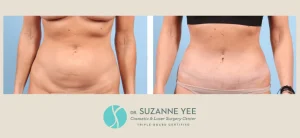
Final results usually take 6–12 months to fully develop, as the last of the swelling settles and your tissues soften and smooth out. Looking at real tummy tuck before-and-after photos can help you understand how results evolve over that first year.
Your scar over the first year
Your tummy tuck scar changes most noticeably during the first year. It is placed low on the abdomen, several inches below the typical underwear line, so that it can be hidden by underwear or swimwear.
At first, the scar often appears firm and pink. Over the next 3 to 12 months, it gradually softens and lightens as the tissue remodels. Knowing this ahead of time can make the early appearance feel less worrisome.
What aftercare habits make recovery smoother and safer?

Your everyday habits during recovery play a real role in how comfortable you feel and how well your results take shape. None of these habits is complicated, but each one gives you more control at a time when that reassurance matters.
Your compression garment
You’ll wear a compression garment for about six weeks after surgery. It supports healing tissue, helps control swelling, and gently encourages your new contour to take shape.
Many patients find it reassuring to have a compression garment, as it feels like a steady, supportive hug around the midsection. Your surgeon will explain how many hours a day to wear it and when it’s appropriate to cut back.
Activity, lifting, and staying mobile
Plan to avoid strenuous exercise and heavy lifting for at least six weeks, or until your surgeon clears you. This includes lifting small children, so arranging extra help at home in advance is one of the smartest preparations you can make.
At the same time, avoiding all movement isn’t healthy either. Create a cozy spot to rest, but keep up with short, gentle walks throughout the day instead of staying in one place. Light movement supports your circulation and keeps your recovery progressing well.
Eating, drinking, and healthy habits
What you eat and drink directly affects swelling, comfort, and how you feel overall. A few simple habits can make a meaningful difference:
- Drink plenty of water to stay well hydrated.
- Keep meals lower in sodium, since salt makes your body hold onto extra fluid and can worsen swelling.
- Add fiber‑rich foods to help ease the constipation that anesthesia and pain medications can cause.
If you smoke, this is a crucial time to stop, ideally for six weeks before and after surgery, because smoking interferes with healing. Pausing alcohol for about two weeks before and after surgery also helps, since alcohol can thin the blood and affect clotting.
Caring for your scar
Once your incision has closed and healed, gentle scar care can help it mature more favorably.
Your surgeon may recommend specific products, such as Silagen, a silicone‑based gel designed to support scar healing. Silicone gel is well supported by research: a meta-analysis of randomized trials found that it can significantly improve scar appearance.
Keeping the area out of direct sunlight and not smoking also supports better scar outcomes. Feeling worried about scarring is very common, and it helps to know you have proven tools to support healing.
Kayla, a patient who was surprised by how comfortable her early recovery felt, shared:
“In June of 2024 I had a tummy tuck. Dr. Yee and her staff were very kind and caring. I struggle with bad anxiety and they always make me feel relaxed and comfortable before and after surgery. My recovery went very smoothly, I was shocked that I experienced little to no pain in the days after surgery.”
How does recovery differ across the types of tummy tuck?

Not every tummy tuck is identical. The right approach for your body also shapes your recovery. Generally, smaller procedures have shorter, gentler timelines, while more extensive ones require a bit more patience.
- Mini tummy tuck: Targets only the lower abdomen via a shorter incision, focusing on skin tightening without muscle repair. Recovery is typically faster.
- Full (traditional) tummy tuck: Treats the entire abdomen and usually tightens the abdominal muscles, so you’ll follow the standard set of activity precautions.
- Extended tummy tuck: Extends around the hips to address the flanks and lower back, so the incision is longer, though core precautions are similar.
Here’s a simplified comparison:
| Type | What it addresses | Recovery note |
|---|---|---|
| Mini tummy tuck | Lower belly only, short scar | Often back to work in 1 to 2 weeks |
| Full (traditional) | Whole abdomen, muscle tightening | About 2 weeks off work, 6 weeks before strenuous activity |
| Extended | Abdomen plus flanks and lower back | Longer incision, same core precautions |
Some patients combine liposuction with a tummy tuck for added contouring. This is a common pairing and can be an excellent option for the right candidate.
Others include a tummy tuck as part of a mommy makeover, often combined with breast surgery, which means one anesthesia session and one recovery period instead of several separate ones.
Importantly, combining well‑matched procedures doesn’t automatically make recovery harder. A large study of 55,596 patients found no significant increase in risk when appropriate procedures were combined. Whether that approach makes sense for you is something your surgeon will help determine in person.
How can a consultation help you plan a smoother recovery?
The most accurate way to understand your individual recovery is to discuss it in person before surgery. A consultation isn’t just a chance for your surgeon to evaluate you. It’s equally your chance to assess the surgeon, the team, and the plan.
At an in‑person visit to the Little Rock office, your procedure is performed by either Dr. Yee or Dr. Homayoun Pournik. Together, you’ll review your goals, medical history, and day‑to‑day lifestyle.
Before recommending a treatment plan, your surgeon will discuss your work demands, your typical routine, and what activities you’re most eager to get back to comfortably. This helps tailor your recovery plan to your actual life rather than a generic timeline. During the visit, you can also see a 3D preview of your potential results using Crisalix imaging.
You’ll tour the AAAHC-accredited surgical center where your procedure would take place, something online photos can’t fully convey. Cost is part of a transparent conversation as well. Your quote typically bundles the surgeon’s fee, anesthesia, facility fees, and follow‑up visits into a single comprehensive total. You’re usually responsible only for your pre‑operative lab work and any prescribed medications.
To help make your goals more accessible, the practice offers flexible financing through Cherry, Alphaeon Credit, CareCredit, PatientFi, and Alle. That way, cost is one less thing standing between you and a confident decision.
Jamie, a patient who especially valued feeling supported at every stage, shared:
“Dr. Yee and her staff provided exceptional care, from my initial consult, through the surgery process, recovery, and follow-up appointments. From the moment I walked in, your Surgery center has had such a welcoming and positive vibe. Your staff made me feel comfortable and at ease.”
What should you do next?
Recovery from a tummy tuck moves through predictable phases, from the first groggy hours to a final shape that settles over 6 to 12 months. Seen as a roadmap rather than an unknown, the process feels less mysterious and more like a structured plan.
Looking through before‑and‑after photos of patients whose starting points resemble your own is a helpful next step. When you’re ready to talk through the details, an in‑person consultation can answer questions that photos alone can’t.
Furthermore, you deserve to move through recovery with real support, and that’s exactly what care looks like at Dr. Suzanne Yee Cosmetic & Laser Surgery Center in Little Rock. Every patient should feel listened to, respected, and confident in their decisions. That’s the heart of the practice’s promise: exceptional results paired with genuine care.
When you’re ready, book your consultation or call (501) 289-5460 to get started.
Frequently asked questions
How long do I need to take off work after a tummy tuck?
Most patients plan around two weeks off, though the exact time depends on how physical your job is. Desk‑based roles may resume sooner, while jobs that involve lifting or being on your feet may require more time. Your surgeon will customize this timeline during your consultation.
Why do I have to walk bent over after a tummy tuck?
Right after surgery, your abdomen feels tight from the repair and tightened tissues, so standing fully upright can be uncomfortable. Walking with a slight forward bend relieves this tension and is completely normal. As swelling decreases over the next few weeks, you’ll gradually stand straighter.
When can I drive again after tummy tuck surgery?
You should wait until you’re no longer taking prescription pain medication and can move, brake, and react comfortably without straining your incision. For many patients, this is around two weeks, but it varies. Always wait for your surgeon’s approval before you start driving.
How long do surgical drains stay in after a tummy tuck?
Not all patients need drains. When they’re used, they remain in place until drainage decreases to a low, acceptable level. Your surgeon removes them during a follow‑up visit once that point is reached. Until then, you’ll have simple instructions for keeping the area clean and tracking output.
What is a seroma, and can I prevent it?
A seroma is a small pocket of fluid that can collect under the skin during healing. Often, your body reabsorbs it on its own. Wearing your compression garment as directed and following your activity limits are the best ways to lower the risk. If you notice increasing swelling in one spot, contact your care team so they can evaluate it.
How long do I wear the compression garment?
Most patients wear a compression garment for about six weeks after surgery to support healing and manage swelling. Your surgeon will specify how many hours per day to wear it and when you can begin tapering off. Many patients feel more secure and supported with it on.
When can I resume exercise and lift weights after an abdominoplasty?
Plan to avoid strenuous exercise and heavy lifting for at least six weeks, or until your surgeon clears you. Gentle walking is encouraged throughout recovery, but true workouts and weight lifting need to wait until your body has healed enough. Gradually easing back protects the results you’ve worked for.
Is the numbness in my lower abdomen permanent?
Some numbness across the lower abdomen is very common after a tummy tuck and is usually temporary. As nerves recover over the weeks and months following surgery, most patients notice sensation gradually returning. If anything feels concerning or persistent, bring it up at a follow‑up appointment.
How long does tummy tuck swelling take to go away?
Swelling is often the last part of recovery to fully resolve. Much of the noticeable swelling improves in the first several weeks. A clearer idea of your result often appears around three months, while the final subtle changes can take 6 to 12 months. Staying hydrated and limiting sodium support this process.
How long does it take for a tummy tuck scar to fade?
Your scar remodels throughout the first year. It typically appears firm and pink at first, then gradually softens and lightens. Gentle scar care, sun protection, and any products your surgeon recommends all help. You’ll receive a personalized scar care plan so you aren’t left guessing.
*Disclaimer: This content is for educational purposes only and does not constitute medical advice. A consultation with a qualified board-certified surgeon is required to determine the best treatment plan for your individual needs.