Instagram
 Facebook
 Tiktok
 Youtube
 X
 LinkedIn

 (501) 224-1044
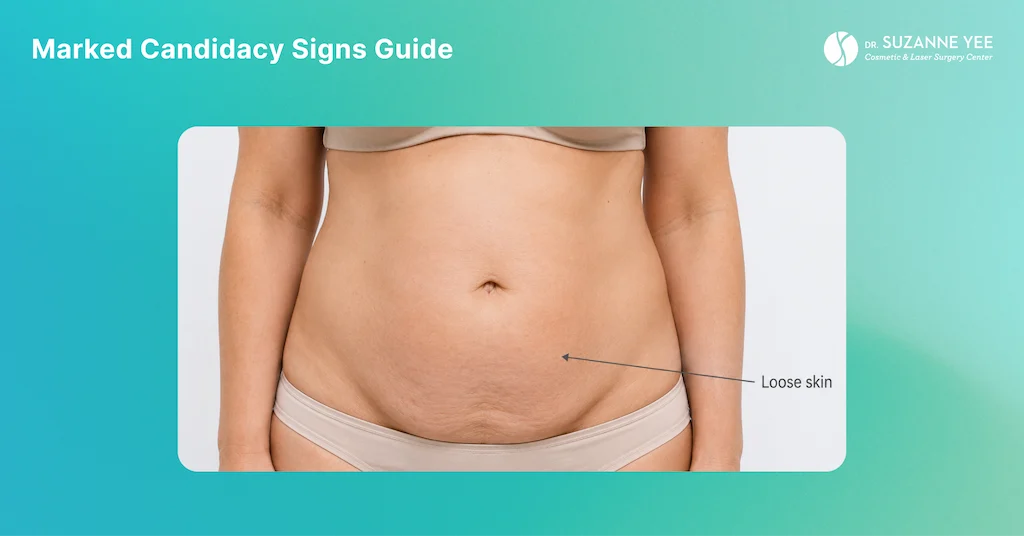
If you’ve worked hard to flatten your stomach but still see loose skin or a stubborn pooch, you’re not alone, and you may be wondering whether a tummy tuck could finally help.
Not everyone who wants a flatter stomach is a good candidate for a tummy tuck, though. Understanding where you stand before you book a consultation can save you time, money, and frustration. A tummy tuck is designed to address loose skin and separated abdominal muscles, most often after pregnancy or major weight loss, not isolated pockets of stubborn fat.
That difference explains why diet and exercise stop working for so many people. Once skin loses its elasticity, it won’t tighten on its own. And once the muscles down the center of your abdomen separate, no number of crunches can fully close that gap. Both are structural changes and usually require surgery.
It’s also a very common situation. In 2024, surgeons performed more than 945,000 abdominoplasty (tummy tuck) procedures on women worldwide, according to ISAPS.
At Dr. Suzanne Yee Cosmetic & Laser Surgery Center in Little Rock, a triple board-certified cosmetic surgeon has restored firmer midsections for over 35 years. This guide walks you through the physical signs that suggest you could be a good candidate, the health requirements you’ll need to meet, and the real pros and cons of surgery.
By the end, you’ll have a clearer sense of whether a tummy tuck fits your body, your lifestyle, and your goals.
Key takeaways
Here’s a quick overview of what this article covers:
- A tummy tuck addresses loose abdominal skin and separated muscles, two things diet and exercise can’t fix. It isn’t a weight-loss procedure.
- Good candidates are usually at a stable weight near their goal, have finished having children, are non-smokers, and are generally in good health.
- The main benefits are a flatter midsection, repaired core muscles, and relief from skin-fold irritation. Results last when you keep your weight steady.
- The main trade-offs include a low, permanent scar, real recovery time, standard surgical risks, and a cost that insurance usually doesn’t cover.
What physical signs suggest you’re a good candidate for a tummy tuck?
Knowing whether you might “need” a tummy tuck really comes down to the type of changes you’re seeing in your midsection. A tummy tuck (abdominoplasty) is built to address skin and muscle, not stubborn fat alone. Learning which one is driving your concern is the first real step.
Loose or hanging skin that won’t tighten
Skin stretches to accommodate pregnancy or weight gain. Past a certain point, it loses the ability to snap back. That’s not a failure of willpower. It’s simply biology.
If your skin folds or hangs, even after you’ve lost weight or toned up, diet and exercise can’t remove that excess tissue. In these cases, surgical removal is the only thing that truly addresses it.
Depending on how much loose skin you have, a full or mini tummy tuck may be recommended.
Separated abdominal muscles (diastasis recti)
During pregnancy or after significant weight changes, the two muscle bands that run down the front of your abdomen can pull apart. This separation is called diastasis recti.
Clinically, diastasis recti is usually defined as a gap of about two centimeters or more between those muscles. You might notice:
- A stubborn lower-belly pooch
- A ridge or “doming” down the middle when you sit up or strain
Core exercises can strengthen the muscles, but they can’t stitch them back together once that separation exists. A tummy tuck allows your surgeon to repair that separation from the inside, bringing the muscles back into better alignment.
Stubborn belly fat near loose skin
A tummy tuck on its own is not a fat-removal procedure. However, many patients also have stubborn fat sitting right next to loose skin. In those cases, your surgeon can often combine a tummy tuck with liposuction to refine your contour in a single procedure.
It’s worth noting that the deeper fat around your organs, the kind that makes the belly feel firm rather than pinchable, can only be reduced through diet and exercise, not surgery.
Stable weight and a finished family
Timing matters just as much as anatomy.
- You’re generally in a good place for surgery when you’re at a steady weight within about 10–15 pounds of your goal. Big weight changes afterward can stretch the skin again and soften your results.
- If you’re planning more children, it’s usually best to wait. A future pregnancy can re-stretch your skin and undo the muscle repair, which can mean losing much of the benefit of surgery.
There’s no strict age cutoff for a tummy tuck. Candidacy spans many life stages, and what matters far more is your overall health and surgical safety.
Wanting to feel comfortable and at home in your body again is more than enough reason to explore this. The clearest way to know whether you qualify is through an in-person evaluation, during which Dr. Suzanne Yee examines your skin, muscles, and fat.
She’ll walk you through which technique, if any, fits your body and your goals. If you’re unsure where you stand, scheduling a consultation is the best way to get a clear, honest answer.
What health requirements must you meet for a tummy tuck?
Physical signs tell you whether a tummy tuck could help. Your overall health tells you whether it’s safe to move forward. These tummy tuck requirements exist to protect you, not to gatekeep you. In many cases, you and your surgeon can work through them together.
General health and stable conditions
Because a tummy tuck is done under general anesthesia, your body needs to be in a safe range for surgery. Well-managed conditions usually aren’t dealbreakers, but uncontrolled issues like heart disease or poorly controlled diabetes need to be stabilized before surgery is considered.
A weight and BMI range that’s safe
Many surgeons look for a body mass index (BMI) under about 30. Some may operate slightly above that range after a careful review of your health and risk factors.
This isn’t about chasing a “perfect” number. It’s about lowering anesthesia and healing risks.
If your BMI is above that range right now, it doesn’t automatically close the door. Reaching a more stable, lower-risk weight first simply makes you a safer candidate.
Not smoking, before and after
Smoking significantly affects healing. It narrows blood vessels, limits oxygen delivery to tissues, and slows down your recovery.
If you smoke, this is the moment to consider stepping away from that habit seriously. Most surgeons recommend stopping at least six weeks before surgery and staying smoke-free for at least six weeks after surgery.
Your surgeon may also ask you to pause alcohol for about two weeks before and after surgery, since it can thin the blood and affect clotting.
Scar tissue, medications, and clotting risk
Past abdominal surgeries, like a C-section, can leave scar tissue that shapes the plan, though they rarely rule you out. You’ll need pre-op labs and testing, and you must share any blood-thinning medications you take. These steps are requirements, not suggestions, and they’re how your surgeon keeps your procedure as safe as possible.
Most of these boxes are simpler to check than they first appear, and researching this carefully is exactly the right approach. Once the safety picture is clear, the real question is whether the payoff is worth it for you.
What are the pros of a tummy tuck, and is it worth it?
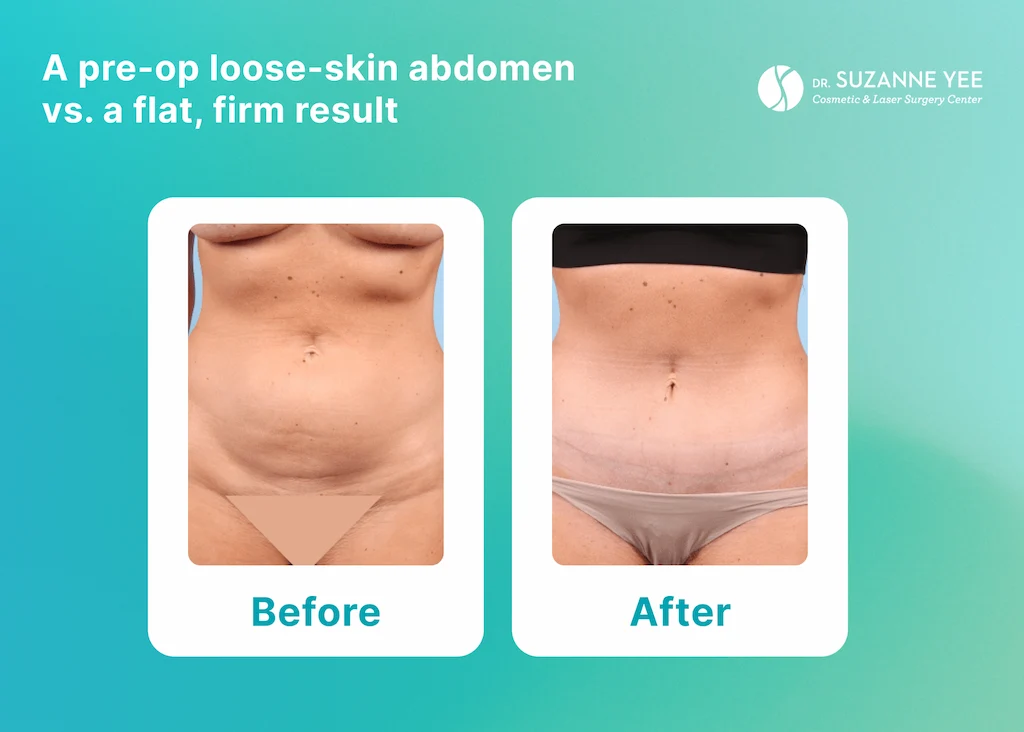
Whether a tummy tuck is “worth it” is a very personal decision. It can help to see the benefits laid out clearly.
For the right candidate, the impact extends beyond appearance to daily comfort, confidence, and even function.
Here’s a quick look at what a tummy tuck can realistically address:
| What it addresses | What you can expect |
|---|---|
| Loose, hanging skin | Removed for a smoother contour |
| Separated muscles | Repaired to flatten the wall |
| Stubborn lower-belly pooch | Reduced, often with liposuction |
| Skin-fold irritation | Relief from rashes and chafing |
A flatter, firmer midsection
The most visible benefit is contour. By removing excess skin and tightening the muscle wall, a tummy tuck flattens the midsection and redefines the waistline in a way workouts can’t match. It’s an enhancement of your own shape, not a reinvention of it.
Repaired core muscles and real relief
Repairing diastasis recti does more than flatten your belly. In one study from the American Society of Plastic Surgeons, women who had their separated muscles repaired reported less back pain and better bladder control after childbearing. Removing a heavy skin fold can also clear up the chronic rashes that used to hide underneath.
Long-lasting results and quiet confidence
Tummy tuck results can be very long-lasting when you keep a steady weight and healthy habits. Your body keeps aging naturally, but the repair holds, so you stay ahead of where you’d be without it. Many patients say the biggest change is that it’s quieter than they expected, like finally wearing a fitted shirt without having to adjust it all day.
Kim, who combined her tummy tuck with other body procedures, shared her experience:
“I’m 62 and decided I needed some changes. I had a breast reduction/lift, tummy tuck and liposuction. My experience at this clinic was amazing. My pain was minimal, which was one thing I worried about beforehand. The staff was so kind and very helpful and answered all my questions. I did my research before coming to the decision to use Dr. Yee.”
For all the upside, an honest picture means weighing the other side too.
What are the cons and trade-offs to weigh before a tummy tuck?
Every meaningful decision has another side. A good tummy tuck candidate understands the downsides just as clearly as the benefits. These points aren’t meant to scare you off. They’re simply the realities to plan for.
A permanent scar
A tummy tuck leaves a horizontal scar low on the abdomen, several inches below your natural underwear line, and hidden by most bikini bottoms and undergarments. Feeling uneasy about scarring is completely natural, and it helps to know your surgeon uses careful closure techniques to keep it thin and low.
Surgical risks (kept low)
As with any surgery, a tummy tuck carries some risk. The most common is a seroma, a small pocket of fluid your body usually reabsorbs on its own. Less common concerns include minor bruising or slower healing, and the vast majority of patients heal without any issues.
Choosing a triple-board-certified cosmetic surgeon at an accredited center is one of the biggest factors that keeps those numbers low. At Dr. Yee’s Little Rock practice, general anesthesia is administered by a Certified Registered Nurse Anesthetist (CRNA) as part of an experienced surgical team, helping keep you safe and comfortable.
A recovery commitment
Recovery does require some adjustment. A tummy tuck is an outpatient procedure, so you go home the same day, but plan to take about two weeks off work. You will start light walking the day after surgery, then avoid strenuous activity for at least six weeks.
Final results take shape over the next 6 to 12 months. The first few days can be frustrating if you are used to doing everything on your own, but many patients say the hardest part was simply slowing down, and that it was worth it.
The cost and insurance reality
A tummy tuck is a significant financial investment, and insurance usually doesn’t cover it because it’s classified as elective. But cost is something you can manage.
Your quote bundles the surgeon’s fee, anesthesia, facility fees, and follow-up visits into one transparent total, and you’re only responsible for pre-op labs and any prescribed medications.
Flexible financing through partners like Cherry, Alphaeon Credit, CareCredit, PatientFi, and Alle can spread the cost into a monthly plan that better fits your budget.
What should you expect at your tummy tuck consultation?
Reading about candidacy can only take you so far. The real answer depends on your body, health, and goals. A consultation is when you end the guessing, and it’s not just a chance for your surgeon to evaluate you. It’s just as much your chance to evaluate her.
During your in-person visit, Dr. Yee and Dr. Pournik will examine your abdomen and talk with you about your daily routine, your goals, and what you want to be able to do comfortably again before recommending an approach.
You will also see the AAAHC-accredited surgical center where your procedure would take place, and you can view a Crisalix 3D simulation of your potential result. Nothing is rushed, and no question is too small to ask.
Kayla, who came in nervous about her tummy tuck, shared her experience:
“In June of 2024 I had a tummy tuck. Dr. Yee and her staff were very kind and caring. I struggle with bad anxiety and they always make me feel relaxed and comfortable before and after surgery. My recovery went very smoothly. I was shocked that I experienced little to no pain in the days after surgery. My scar is now over a year old and it’s way less visible than I ever expected.”
That kind of care, from the first visit through recovery, is the heart of the approach here.
Conclusion
A stubborn belly that survives diet, exercise, and even shapewear is usually a structural problem, not an effort problem.
Skin that has lost its elasticity and abdominal muscles that have separated are exactly what a tummy tuck is designed to address, and exactly what more effort cannot change.
Being a good candidate has less to do with being “perfect” but more with your overall health and goals.
One of the most helpful next steps is to browse real patient before-and-after photos that resemble your starting point. When you’re ready, an in-person consultation can fill in the details that photos and articles simply can’t.
If a tummy tuck isn’t the right fit right now, that same conversation can point you toward other options, such as a mommy makeover or non-surgical alternatives that better match your needs and timing.
At Dr. Suzanne Yee Cosmetic & Laser Surgery Center in Little Rock, the goal is always enhancement, not transformation. Every patient deserves to feel heard, respected, and confident in their choices. That promise is reflected in exceptional results and genuine care. When you’re ready to talk it through, reach out or call (501) 224-1044.
Frequently asked questions
Can you get a tummy tuck if you have a higher BMI?
In most cases, yes, with some planning. Most surgeons prefer a BMI under about 30 to keep anesthesia and healing risks low. Some will operate at a somewhat higher BMI after a careful health review. If you’re above that range, working toward a more stable weight first can make you a safer, stronger candidate.
How long do you need to be at a stable weight before a tummy tuck?
Ideally, you’ll want to hold a fairly steady weight for about six to 12 months before surgery. Big swings afterward can soften your results.
A good rule of thumb: if you’re within roughly 10–15 pounds of your goal weight and have been there for a while, you’re probably in a good range to start considering surgery.
Is there an age limit for a tummy tuck?
There’s no strict age cutoff. What matters most is your overall health, your healing capacity, and whether surgery is likely to be safe and worthwhile for you.
Can you get a tummy tuck if you’ve had a C-section?
Yes, in most cases. A C-section or other abdominal surgery can leave scar tissue that may slightly change the surgical plan, but it rarely rules you out. Your surgeon will review your history and examine your abdomen to tailor the approach.
Can you get a tummy tuck if you have diastasis recti?
Yes. In fact, a tummy tuck is one of the most reliable ways to correct diastasis recti. During surgery, your surgeon stitches the separated muscles back together, which helps flatten your abdominal wall and can restore core strength that exercise alone often can’t fully achieve.
Will a tummy tuck get rid of my stretch marks?
Sometimes, partly. During a tummy tuck, the skin between your navel and the lower incision is removed. Any stretch marks on that skin are removed with it. Stretch marks above the belly button usually remain, though they may be moved lower on the abdomen.
Does a tummy tuck help you lose weight?
Not in the same way a diet does. A tummy tuck contours your midsection by removing excess skin and, in some cases, fat, but it isn’t a weight-loss procedure. Most patients see it as the final step after reaching a stable weight.
Is it safe to get pregnant after a tummy tuck?
It’s generally safe, but pregnancy can reverse your results by stretching the skin and separating the repaired muscles again. That’s why surgeons recommend waiting until you’re done having children.
How long do you have to stop smoking before a tummy tuck?
The standard guidance is to stop about six weeks before and six weeks after surgery. Smoking narrows blood vessels and slows healing, so taking a break during that window gives your body the best chance to heal.
Does insurance ever cover the cost of a tummy tuck?
In most cases, no, because a standard tummy tuck is elective. Part of a procedure may occasionally be covered if it’s deemed medically necessary, and when insurance doesn’t apply, financing plans can make the cost more manageable.
How long is the recovery period before returning to work?
Most patients plan for about two weeks off, depending on how physically demanding the job is. You’ll begin light walking the day after surgery and gradually ease back, avoiding strenuous activity for about six weeks. Your care team checks in with personalized guidance throughout recovery.
*Disclaimer: This content is for educational purposes only and does not constitute medical advice. A consultation with a qualified board-certified surgeon is required to determine the best treatment plan for your individual needs.