
 (501) 224-1044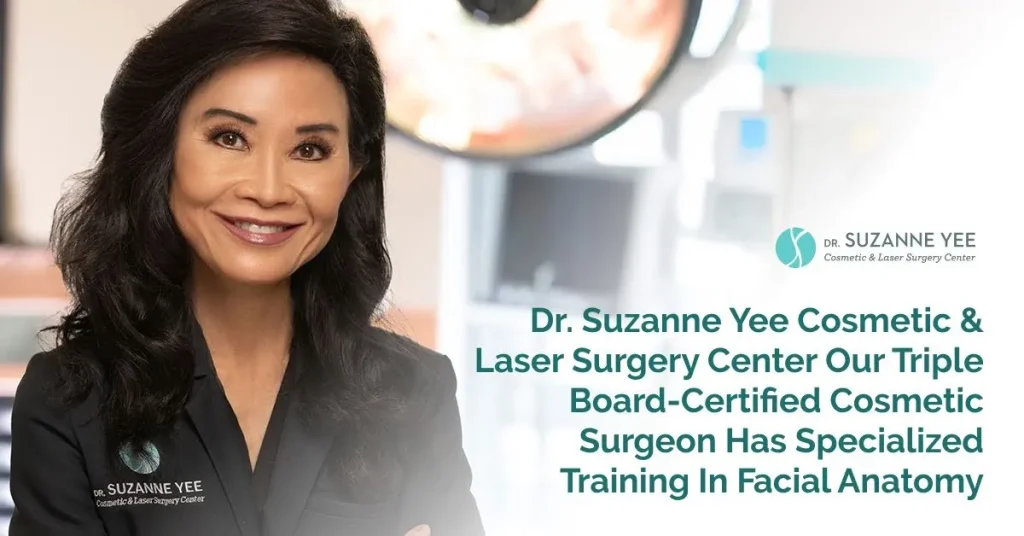
You’ve noticed it for a while now, that heaviness above your eyes that makes you look tired even after a full night’s sleep. You tilt your chin up slightly in photos, angle the light differently, wonder if anyone else can see what you see. Maybe you’ve started avoiding eye contact on video calls, or you catch yourself pressing your fingertips against your brow just to feel how your eyes used to be. It’s not vanity. It’s the quiet frustration of not looking the way you feel.
You’re not alone in that feeling. According to the ISAPS (International Society of Aesthetic Plastic Surgery), eyelid surgery became the most commonly performed cosmetic surgical procedure in the world in 2024, with approximately 2.1 million blepharoplasty procedures performed globally, a 13.4 percent increase over 2023.
At Dr. Suzanne Yee Cosmetic & Laser Surgery Center our triple board-certified cosmetic surgeon has specialized training in facial anatomy, combined with her artistic approach and onsite AAAHC-accredited surgical center, ensures the highest standards of safety and personalized care. This guide covers everything you need to know about upper eyelid surgery, including how hooded, droopy, and heavy lids differ, the step-by-step procedure,and the results you can realistically expect.
Six Key Facts About Upper Blepharoplasty

- Upper blepharoplasty removes excess skin, muscle, and fat from the upper eyelids to restore a more open, youthful appearance and can improve vision obstructed by sagging skin.
- Hooded eyes, droopy eyelids, and heavy lids are different conditions, and a proper evaluation determines whether blepharoplasty alone or combined with ptosis repair or a brow lift is needed.
- The procedure typically takes 45 to 60 minutes under general anesthesia, though local anesthesia with sedation may be appropriate in select cases, and most patients return to light activities within 7 to 10 days.
- Upper blepharoplasty produces lasting structural improvement, with scars hidden in the natural eyelid crease becoming virtually invisible.
- Functional upper blepharoplasty for vision obstruction may be covered by insurance with documented visual field testing.
What Is Upper Blepharoplasty and How Does It Work?
Upper blepharoplasty is an upper eyelid cosmetic surgery that removes or repositions excess skin, underlying orbicularis muscle, and protruding orbital fat from the upper eyelids, giving you a smoother, more open eyelid contour. If you’ve ever worried that surgery might make you look “overdone,” it’s worth knowing that the goal isn’t a dramatic change. It’s a natural rejuvenation that lets you look like a refreshed version of yourself.
The procedure serves a dual purpose. Cosmetically, it reduces hooding, puffiness, and that perpetually tired appearance that can make you look years older than you feel. Functionally, it restores the superior visual field when redundant skin, known as dermatochalasis, blocks your upper field of vision.
Your surgeon places a fine incision within the natural supratarsal crease, which hides the scar when your eye is open. Precise markings are made while you’re sitting upright to ensure accurate tissue removal.
During the procedure, your surgeon carefully removes or re-drapes redundant skin, conservatively trims or repositions orbital fat pads in the medial and central compartments, and may use muscle-sparing techniques to reduce complications and preserve natural movement.
According to the ASPS, blepharoplasty is consistently one of the most commonly performed facial cosmetic procedures, with 120,755 procedures performed in the United States in 2024 alone. Understanding how the surgery works is the foundation for every decision that follows, from choosing the right surgeon to setting realistic recovery expectations.
What Is the Difference Between Hooded Eyes, Droopy Eyelids, and Heavy Lids?
These three terms sound interchangeable, but they describe distinct conditions that require different surgical approaches. Getting the diagnosis right is everything because the wrong procedure will give you the wrong result.
Hooded eyes, clinically called dermatochalasis, occur when excess eyelid skin drapes over the natural crease due to skin laxity from aging or genetics. This is the condition upper blepharoplasty directly addresses by removing the redundant skin.
Droopy eyelids, known as ptosis, are a different issue entirely. With ptosis, the eyelid margin itself sits abnormally low because of levator muscle or aponeurosis dysfunction. This requires a separate ptosis repair procedure, such as levator advancement or Muller’s muscle surgery, rather than simple skin excision.
Heavy lids are a subjective sensation or appearance caused by skin excess, fat prolapse, or both, and blepharoplasty reduces the “weight” by removing the redundant tissue.
Here’s the thing. Some patients have both dermatochalasis and ptosis simultaneously, which requires a combined surgical approach. A thorough pre-operative exam, including MRD-1 measurement, blink assessment, and Bell’s phenomenon testing, determines the correct diagnosis and treatment plan.
| Condition | What’s Happening | Primary Cause | Surgical Solution |
| Hooded Eyes (Dermatochalasis) | Excess skin drapes over the natural eyelid crease | Aging, genetics, sun damage, skin laxity | Upper blepharoplasty (skin excision) |
| Droopy Eyelids (Ptosis) | The eyelid margin sits too low, partially covering the pupil | Levator muscle weakness or aponeurosis detachment | Ptosis repair (levator advancement or Muller’s muscle procedure) |
| Heavy Lids | A sensation of weight or fullness above the eyes | Excess skin, fat prolapse, or both | Upper blepharoplasty with conservative fat removal |
| Combined Dermatochalasis + Ptosis | Both excess skin and a low-sitting eyelid margin | Aging affecting both skin and muscle structures | Combined blepharoplasty + ptosis repair |
During your consultation at Dr. Yee’s practice, a comprehensive eyelid evaluation determines whether you have hooded eyes, ptosis, or a combination. This ensures your treatment plan is precisely tailored to your anatomy. Understanding which condition you have is the first step toward choosing the right procedure.
Who Is a Good Candidate for Upper Eyelid Surgery?

If you’ve been wondering whether your concerns are valid for surgery, know that candidacy isn’t about severity comparisons. It’s about your anatomy, your goals, and whether the procedure can safely deliver the improvement you’re looking for.
You may be a good candidate if you have:
- Excess upper eyelid skin or noticeable hooding
- Fat prolapse creating fullness above the eyes
- Symptomatic visual field obstruction from sagging skin
- Realistic expectations about what surgery can achieve
- Most patients are in their 40s to 60s, but younger patients with hereditary heavy lids can also benefit
If timing is your main question, our guide to the right age for eyelid surgery walks through what to consider in each decade.
Before surgery, you may receive a comprehensive eye exam, including:
- Dry eye assessment
- Review of prior ocular surgeries
- Glaucoma screening
- Thyroid eye disease evaluation
- MRD-1 (margin reflex distance) measurement
Upper blepharoplasty may not be recommended if you have:
- Uncontrolled systemic disease
- Active eye infection
- Severe unmanaged dry eye
- Uncontrolled thyroid orbitopathy
- An inability to stop blood-thinning medications
- If brow descent is a significant contributing factor to your eyelid appearance, a brow lift consultation may be recommended instead of, or in addition to, blepharoplasty
A qualified surgeon will help you understand which approach addresses the root cause of your concern, and for patients who choose to combine procedures, having a supportive team makes all the difference.
As Kelly described her experience,
“I had several procedures done all at once on my face and I couldn’t be happier. Everything and everyone in Dr. Yee’s office is very welcoming. The atmosphere and staff has made my journey so easy. Angie has been there for me every step of the way alongside Dr. Yee and every question I have had has been answered along the way!”
How Is Upper Blepharoplasty Performed Step by Step?
Knowing exactly what happens during surgery takes much of the uncertainty out of the experience.
Here’s a step-by-step look at how upper blepharoplasty typically unfolds, from consultation through your ride home.
- Consultation and pre-operative planning: Your surgeon conducts a comprehensive eyelid evaluation, takes clinical photographs, and discusses the surgical plan tailored to your anatomy and goals.
- Day-of preparation: You arrive without makeup or contact lenses. General anesthesia is administered, keeping you fully comfortable throughout the procedure. In select cases, local anesthesia with sedation may be used as an alternative.
- Precise marking and incision: With you sitting upright, your surgeon carefully marks the natural eyelid crease. A fine incision is placed within this fold, ensuring the scar will be hidden when your eye is open.
- Tissue adjustment: Excess skin is excised, orbital fat pads are conservatively trimmed or repositioned, and muscle is managed with sparing techniques to preserve natural movement and reduce complications.
- Closure: Fine sutures are placed for optimal healing and minimal scarring. These are typically removed at five to seven days, though absorbable sutures or tissue adhesives are sometimes used.
- Recovery monitoring: After a brief observation period, you’re discharged with a responsible adult. You’ll go home with instructions for cold compresses, head elevation, eye lubrication, and pain management.
The entire procedure typically takes 45 to 60 minutes for upper eyelids alone. Dr. Yee performs upper blepharoplasty in her onsite AAAHC-accredited private surgical center in Little Rock. It ensures the highest safety standards with the comfort and privacy of a boutique facility. Most patients are surprised by how straightforward the process feels once they understand each step. That clarity and care extend beyond her own patients as well.
After undergoing surgery at another facility, Brenda Arent turned to Dr. Yee for guidance during a difficult recovery.
“Dr. Yee helped me in understanding what is normal and not normal after the surgery that I had as well as referring me to wound care,” she shared. “I had a very good experience with her and her staff. All very friendly and informative.”

What Does Upper Blepharoplasty Recovery Look Like Day by Day?
The first few days of recovery cause the most anxiety for patients, especially when bruising peaks and you wonder if everything looks the way it should. It does. Here’s what to expect at each stage.
| Timeline | What to Expect | Key Instructions |
| Day 0 (Surgery Day) | Immediate swelling, tightness, mild soreness, watery eyes, blurred vision from ointment | Begin cold compresses (20 min on, 20 min off), keep head elevated, rest |
| Days 1 to 3 | Swelling and bruising peak at 48 to 72 hours; deep purple to blue-black bruising near incisions | Continue cold compresses, rest, head elevation; avoid bending, lifting, and eye strain |
| Days 4 to 5 | Swelling begins to decline noticeably; pain significantly decreased | Transition to warm compresses; gentle activity around the house is fine |
| Days 5 to 7 | Sutures typically removed; bruising shifts to green and yellow; many patients comfortable with limited social contact | May return to desk-based work by day 7 to 10; avoid strenuous activity |
| Week 2 | Bruising largely resolved; mild residual swelling and occasional numbness | Makeup may be worn if incisions are healed; contact lenses typically cleared at 1 to 2 weeks |
| Weeks 3 to 4 | Subtle residual swelling continues to resolve; incision lines begin to pale | Non-strenuous exercise can resume with surgeon approval; continue sun protection |
| Months 3 to 6 | Eyelid contour settles into final shape; scars mature and blend into natural crease | Final results visible |
Dr. Yee provides detailed, personalized recovery instructions and checks in with patients throughout healing. Her Little Rock team is available by phone to answer questions at every stage of recovery. Knowing that the bruising and swelling are temporary, and that each day brings visible improvement, makes the process much more manageable.
What Are the Risks and Complications of Upper Eyelid Surgery?
Reading a list of potential complications can feel intimidating, but understanding them is actually one of the most empowering things you can do before surgery. Knowledge helps you ask the right questions and recognize what’s normal during recovery.
Upper blepharoplasty carries a low overall risk profile when performed by an experienced surgeon. Contemporary studies report that significant complication rates remain in the low single-digit percentage range, with most complications being minor and transient. Here are the specific risks to be aware of.
- Lagophthalmos (incomplete eyelid closure): Most commonly caused by over-resection of skin or muscle. This is usually transient and resolves on its own, but it requires careful lubrication and monitoring during the healing period. Revision is rarely needed.
- Dry eye exacerbation: Surgery can temporarily worsen dry eye symptoms. Pre-existing dry eye should be evaluated and optimized before surgery to minimize this risk.
- Asymmetry: Small pre-existing asymmetries are common in everyone’s face and may become more or less apparent after surgery. Careful pre-operative measurements reduce but don’t entirely eliminate this possibility.
- Over-resection and eyelid retraction: Excessive skin or fat removal can cause chronic exposure. Conservative removal techniques and muscle-sparing approaches are specifically designed to prevent this.
- Bleeding, infection, and scarring: These are uncommon when the procedure is performed by an experienced surgeon in an accredited setting.
Risk mitigation comes down to one decision: choosing a board-certified surgeon experienced in eyelid anatomy. This is a crucial factor in achieving a safe outcome with natural results.
How Much Does Upper Blepharoplasty Cost?
Cost is one of the most practical questions patients have, and it makes sense to want a clear picture of the financial commitment before moving forward. The total cost of upper blepharoplasty depends on several factors, including surgeon experience, geographic location, facility fees, and anesthesia.
| Cost Factor | Typical Range |
| ASPS national average surgeon fee | $3,359 (upper blepharoplasty) |
| Arkansas ambulatory surgery center average | Approximately $2,250 |
| Arkansas outpatient hospital average | Approximately $3,179 |
| Dr. Yee’s practice (total estimate) | $3,200 to $6,000 |
| Combined upper + lower blepharoplasty | Often less than two separate procedures |
The total cost includes surgeon fee, facility fee, anesthesia, and post-operative care. According to ASPS, the average surgeon fee for upper blepharoplasty is $3,359, though this doesn’t include facility or anesthesia fees. Combining upper with lower blepharoplasty often costs less than scheduling two separate procedures.
If your upper eyelid sagging significantly impairs your vision, functional blepharoplasty may be covered by insurance. Coverage typically requires visual field testing demonstrating a superior visual field of 30 degrees or less, with documented improvement when the lid is taped.
Clinical photographs and physician documentation are also required. According to a PubMed analysis, 96% of insurance policies provide some coverage for functional blepharoplasty when proper documentation is submitted.
Our Little Rock practice offers flexible cosmetic surgery financing to make upper blepharoplasty accessible. Dr. Yee provides a transparent, detailed cost breakdown during your consultation, with no hidden fees. Financing options include CareCredit, Cherry, Alphaeon Credit, and PatientFi, all of which offer manageable monthly payment plans.
What Results Can You Expect and How Long Do They Last?
Most patients say the moment they feel confident looking in the mirror again, without pressing their brow or tilting their chin, is when it really hits them. The improvement is visible early, but the full picture takes time to emerge.
You’ll notice a more open eyelid appearance within one to two weeks as bruising and swelling resolve. Your tissues continue to settle and scars mature over three to six months, with subtle refinement continuing up to a year.
Incisions placed in the natural crease heal to thin, well-concealed lines that become virtually invisible when your eyes are open. Sun protection, avoiding smoking, and quality skincare help preserve your results. Adjunctive treatments like neuromodulators, dermal fillers, or facial laser treatment can extend outcomes over time.
View real upper blepharoplasty results in our eyelid surgery before-and-after photo gallery. Dr. Yee’s approach emphasizes enhancement, not transformation, achieving a naturally refreshed, more youthful you.
What Should You Expect During Your Consultation?
A consultation isn’t just a chance for your surgeon to evaluate your concerns. It’s equally your opportunity to work through the questions to ask your plastic surgery clinic before treatment, see examples of real results, and decide if you feel comfortable moving forward.
During your consultation at Dr. Yee’s Little Rock practice, she’ll evaluate your upper eyelid anatomy, measure skin excess, assess for ptosis or brow descent, and review your eye health history. You’ll discuss your cosmetic and functional goals in detail. From there, you’ll receive a personalized assessment of whether upper blepharoplasty alone, or combined with ptosis repair or a brow lift, is the best approach for your anatomy.
You’ll also receive a transparent cost estimate and information about financing options, so there are no surprises. The atmosphere is warm, welcoming, and unhurried. Dr. Yee and her team are known for treating every patient like family, taking the time to answer every question and make sure you feel genuinely informed before making any decisions.
As long-time patient Cathy Metcalf put it,
“I always have a great experience in Dr. Yee’s office. I have used her for years and won’t go anywhere else. You are treated special when you are there and you know with her credentials you will get the best of treatment and care.”
What Are Your Next Steps?
If you’re considering upper blepharoplasty, here’s a practical roadmap to help you move forward with confidence.
- Research board-certified surgeons with specific experience in eyelid surgery and facial anatomy.
- Read patient reviews and look for consistent themes about results, communication, and care.
- View before-and-after galleries to see real results from patients with similar concerns.
- Schedule consultations with two to three surgeons to compare approaches and find the right fit.
- Prepare a list of questions about technique, recovery, risks, costs, and what to expect.
- Take time to reflect on your goals and make sure you feel confident in your decision.
Our patient, Mona, experience shows what that process can look like:
“I came in for a consultation. I met with Dr. Yee and discussed the procedure and gave me 2 options to choose from. She is very nice, knowledgeable and was able to explain in layman terms my procedure. She has an excellent staff that treats you like a new. Highly Recommend Dr. Yee and staff.”
To schedule a personal consultation with Dr. Suzanne Yee at our Little Rock, AR, practice, contact our practice online.
Conclusion
Upper blepharoplasty is a safe, well-established procedure that precisely targets excess skin, muscle, and fat on the upper eyelids, restoring a more open, youthful appearance and, when indicated, improving vision obstructed by drooping skin.
Understanding the difference between hooded eyes, true ptosis, and heavy lids is essential to choosing the right surgical approach, and working with a qualified, board-certified surgeon ensures that your treatment plan matches your unique anatomy and goals.
If you’re ready to learn more, Dr. Suzanne Yee and her team in Little Rock are here to guide you with compassionate, personalized care, because “you, just refreshed, confident, and beautiful” is always the goal.
Frequently Asked Questions
How long does upper blepharoplasty take?
Upper blepharoplasty typically takes 45 to 60 minutes when performed on the upper eyelids alone. If combined with lower eyelid surgery, the total procedure time is closer to two hours.
What is the difference between ptosis repair and upper blepharoplasty?
Upper blepharoplasty removes excess skin and fat from the eyelid, while ptosis repair addresses a weak levator muscle that causes the eyelid margin itself to droop. Some patients need both procedures, which is why an accurate diagnosis during your consultation matters.
Will there be visible scars after upper eyelid surgery?
Scars are placed within the natural eyelid crease and become virtually invisible when your eyes are open. Over three to six months, the incision lines fade to thin, pale marks that blend into the surrounding skin.
Can upper and lower blepharoplasty be done at the same time?
Yes, many patients choose to have both procedures performed together. Combining upper and lower blepharoplasty in little rock AR is safe, reduces total recovery time compared to two separate surgeries, and is often more cost-effective.
What is the recovery time for upper blepharoplasty?
Most patients return to desk work and light activities within 7 to 10 days, with bruising largely resolved by week two.




 Instagram
 Facebook
 Tiktok
 Youtube
 X
X LinkedIn